A photo booth wedding rental typically costs between $450 and $1,800 depending on the booth style, rental duration, and add-ons like custom backdrops or instant social sharing. Most couples book three to four hours of coverage timed to the reception, and the best vendors lock in dates six to nine months ahead of the wedding. Beyond price, the details that matter most are the type of booth, what is actually included in the package, and how far in advance you need to reserve your slot.
Wedding photo booths have become one of the most requested reception add-ons in the country. According to The Knot’s 2026 Real Weddings Study, roughly 40 percent of couples now include some form of photo booth or interactive photo experience in their wedding budget, up from about a quarter of couples a decade ago. That growth has also brought more variety, including 360-degree video booths and AI-generated photo styles, which means the decision is no longer as simple as picking a backdrop and some props.
Key Takeaways
- A standard open-air photo booth rental runs $450 to $900 for a three-hour block; enclosed booths and 360 booths run $800 to $1,800.
- Most packages include an on-site attendant, unlimited prints, a digital gallery, and one custom backdrop, but props and guest books often cost extra.
- A 360 photo booth records slow-motion video for social sharing, while a traditional booth produces printed strip photos, and many couples now book both.
- Booking six to nine months before the wedding date secures the most availability, especially for Saturday weddings during peak season (May through October).
- Always confirm power requirements, space needs (typically 8 by 8 feet minimum), and a written cancellation policy before signing a contract.
How Much Does a Photo Booth Wedding Rental Cost?
Pricing depends primarily on booth style, hours booked, and travel distance from the vendor’s home base. Below is a realistic breakdown based on current market rates reported across wedding vendor directories and industry pricing surveys.
- Open-air photo booth: $450 to $900 for three hours, including an attendant and unlimited prints.
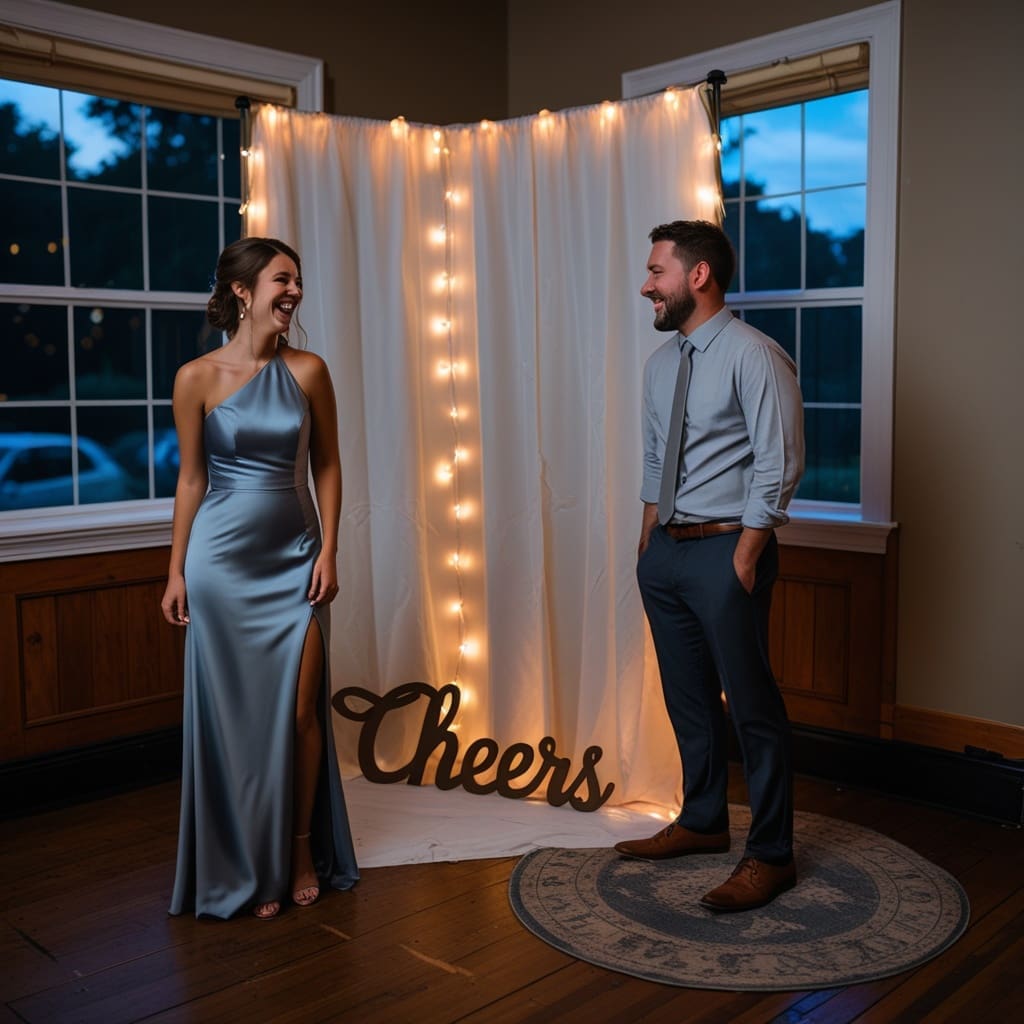
- Enclosed booth (the classic curtain-style booth): $600 to $1,100 for three hours.
- 360 photo booth rental: $800 to $1,800 for two to three hours, including a spinning platform, LED lighting rig, and instant video export to guests’ phones.
- AI photo booth: $700 to $1,400 for three hours, priced higher due to software licensing and faster processing hardware.
- Add-on hours: $100 to $200 per additional hour on top of the base package.
According to WeddingWire’s 2026 Newlywed Report, the average couple spends about $33,000 on their wedding, and photo booth rentals typically represent 2 to 3 percent of that total budget. That places most bookings in the $650 to $1,000 range once travel fees and a single add-on (such as a scrapbook or extra hour) are factored in.
What Is Included in a Typical Photo Booth Rental Package?
A standard contract bundles several services together rather than charging piecemeal, though the exact inclusions vary by vendor. A typical three-hour package looks like this:
- Setup and breakdown: Vendors arrive 60 to 90 minutes before the reception start time to assemble lighting, backdrop, and props.
- On-site attendant: One staff member stays for the full rental window to troubleshoot equipment and guide guests, included in roughly 90 percent of packages.
- Unlimited prints: Most vendors offer unlimited 2×6 or 4×6 prints per session rather than capping the total number of photos.
- Digital gallery: A shareable online link with every image, usually delivered within 24 to 72 hours after the event.
- One custom backdrop: A single backdrop matched to the wedding colors; additional backdrop options typically cost $50 to $150 extra.
- Basic prop set: Hats, signs, and glasses, though a themed prop box often runs $25 to $75 more.
Items frequently not included unless requested are guest books, a second backdrop, social media kiosks, or a scrapbook attendant who helps guests glue photos into an album. Ask for an itemized quote rather than a flat number so you know exactly what falls inside the base price.
Photo Booth vs 360 Booth: Which Is Right for Your Wedding?
A traditional photo booth produces printed still photos, while a 360 booth captures slow-motion video as a guest stands on a rotating platform. The right choice comes down to what you want guests walking away with and what fits your reception layout.
Traditional booths work best for smaller venues and formal receptions where a printed keepsake matters. Guests can take a strip home immediately, and prints often double as a live guest book when paired with an album station. Because the footprint is compact, roughly 8 by 8 feet, a traditional booth fits into tighter reception rooms without crowding the dance floor.
A 360 booth needs more clearance, usually 10 by 10 feet at minimum, and works better for receptions with 100 or more guests where high-energy video content gets shared instantly on social media. Many couples researching how a 360 booth setup differs from a traditional photo booth at receptions find that the video format tends to generate more guest engagement per hour, since a single 360 clip can be reposted by multiple guests, while printed photos stay with one person.
Couples who cannot decide between the two formats increasingly book both, splitting the reception into a two-hour block for the traditional booth and a one-hour block for the 360 setup during peak dancing time.
Cost is the other deciding factor. A 360 booth rental averages $300 to $600 more than a standard open-air booth for the same rental window, largely due to the platform hardware and additional lighting rig required.
What Wedding Photo Booth Ideas Are Trending Right Now?
Beyond the classic strip-and-props format, several newer booth styles are showing up at receptions across the country. Per Bunn DJ Company’s 2026 vendor survey of Raleigh-area weddings, requests for non-traditional booth formats grew by nearly 35 percent year over year.
- Themed prop stations: Custom neon signage matched to the couple’s monogram, replacing generic paper props.
- Guest book integration: A dedicated attendant helps guests paste a printed photo into a leather-bound album alongside a handwritten note.
- Roaming photographers with instant printers: A hybrid option where a photographer moves through the crowd instead of guests visiting a fixed booth.
- AI-generated portrait styles: Software transforms a guest’s photo into a stylized illustration, vintage film look, or fantasy theme within seconds. Couples exploring newer AI-driven booth styles couples are adding to their reception lineup often use this as a novelty station alongside a traditional booth rather than a full replacement.
- GIF and boomerang booths: Short looping clips formatted specifically for Instagram Stories, popular with younger guest lists.
Whichever format you choose, matching the booth style to your guest list age range makes a measurable difference. A reception skewing toward guests under 35 tends to see higher engagement with video and AI formats, while a mixed-generation guest list often gets more consistent use out of a printed booth that does not require a smartphone to enjoy.
How Far in Advance Should You Book a Photo Booth for Your Wedding?
Book a photo booth vendor six to nine months before your wedding date, and closer to nine to twelve months if your date falls on a Saturday between May and October. Peak wedding season accounts for roughly 70 percent of annual bookings for most vendors, according to industry data compiled by The Knot, which means popular booth companies in high-demand markets often sell out Saturday slots a full year in advance.
A simple booking timeline looks like this:
- 9 to 12 months out: Request quotes from two or three vendors and compare included hours, backdrop options, and travel fees.
- 6 to 9 months out: Sign a contract and pay a deposit, typically 25 to 50 percent of the total package price.
- 2 to 3 months out: Finalize backdrop color, prop selections, and any custom overlay text for prints.
- 2 to 4 weeks out: Confirm the final headcount, venue load-in time, and power outlet location with your vendor.
- 1 week out: Reconfirm arrival time and share the day-of contact information with your venue coordinator.
Because photo booth setup often overlaps with catering, lighting, and DJ load-in, it helps to confirm your booth rental slot alongside your wedding timeline rather than booking it as a separate, disconnected decision. Vendors who also handle your reception music or lighting can often coordinate a smoother setup window than booking an unrelated third-party company.
What Questions Should You Ask Before Signing a Contract?
A written contract should answer every question below before you sign or pay a deposit. Verbal promises from a sales call do not hold up if a dispute comes up on the wedding day.
- What is the cancellation and rescheduling policy? Most contracts allow date changes with 30 to 60 days’ notice but forfeit part of the deposit for cancellations inside that window.
- What power source does the booth require? Most setups need a dedicated 15-amp outlet within 25 feet of the booth location.
- How much floor space is required? Confirm the minimum footprint, typically 8 by 8 feet for a standard booth and 10 by 10 feet for a 360 setup, against your venue’s floor plan.
- Is there a backup plan for equipment failure? Ask whether the vendor travels with a backup printer or camera, and whether that is stated in writing.
- Who owns the photo rights? Clarify whether you receive full digital rights to every image or only a limited gallery link that expires after 30 to 90 days.
- Are travel fees included? Vendors traveling more than 20 to 30 miles from their base often add a mileage or travel fee separate from the base package.
Reading the fine print here is not optional. A missing backup-equipment clause has cost more than one couple their entire photo booth experience when a printer jammed mid-reception with no replacement on hand.
Ready to Lock In Your Wedding Date?
Once you have compared booth styles and confirmed your venue’s space and power requirements, the next step is reserving your date before it fills on a vendor’s calendar. Popular wedding dates in spring and fall can book out six to twelve months ahead, especially with photo booth companies that only take one event per day. Reach out early, ask for an itemized quote, and get the agreement in writing so every detail from setup time to backup equipment is documented well before your wedding weekend arrives.
Your contract should spell out the exact rental window, the number of hours of operation, travel fees if the venue sits outside the vendor’s normal service area, and what happens if equipment fails mid-event. Ask whether an attendant stays on site the whole time or just drops off the booth. Confirm how props, backdrops, and digital sharing options are handled, and whether prints are unlimited or capped per guest. A deposit usually holds the date, with the balance due closer to the event, so nail down those payment terms too. Getting these specifics in writing protects you from surprise charges and makes sure the booth runs smoothly from your first dance through the last guest.
Frequently Asked Questions
How long should you rent a photo booth for a wedding?
Three hours is the standard rental window for most receptions. This typically covers cocktail hour through the middle of the reception, when guest traffic through the booth is highest. Weddings with more than 150 guests sometimes extend to four hours to avoid long lines.
Do photo booth rentals include an on-site attendant?
Yes, roughly 90 percent of packages include a staffed attendant for the full rental period. The attendant manages props, restocks the printer, and troubleshoots technical issues so no one on your wedding party has to step away from the celebration to fix equipment.
Can a photo booth be set up outdoors for an outdoor wedding reception?
Most booths can operate outdoors, but they require a covered area and a stable power source. Direct sunlight washes out camera sensors and print quality, and rain or high wind can damage equipment, so vendors generally require a tent, pavilion, or covered patio as a condition of outdoor setup.
How many guests can use a 360 photo booth at once?
Most 360 platforms comfortably hold two to four people standing on the rotating base. Larger groups can appear in a single clip, but the platform itself typically measures three to four feet in diameter, which limits how many guests fit without stepping outside the camera frame.
What happens if the photo booth malfunctions during the reception?
A reputable vendor carries backup equipment and resolves most issues within minutes. This is exactly why the contract questions above matter: confirming a written backup-equipment policy before you book protects your reception from losing photo booth coverage entirely if a printer or camera fails.
Conclusion
Booking a photo booth wedding rental comes down to matching the booth style, price point, and rental window to your guest list and reception layout. A traditional open-air booth suits smaller, more formal receptions, while a 360 booth or AI-driven format fits larger, higher-energy crowds looking for shareable video content. Lock in your vendor six to nine months ahead, read the contract closely for power, space, and backup-equipment terms, and you will walk into your reception with one less detail to worry about.