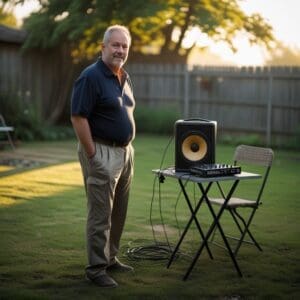
A high school dance DJ is a professional who plans music, manages sound and lighting equipment, and keeps students dancing while following school rules on lyrics and content. Booking one takes more than picking a name off a list. You need to confirm your budget, check your school's approval requirements, and request quotes from three to five DJs at least eight to twelve weeks out. Homecoming and school dance bookings move fast during peak season (September through November and again in April through May), so waiting until the last month often means choosing from whoever is left rather than who is actually best. A qualified DJ does far more than press play on a playlist; they manage crowd energy, follow administration guidelines on lighting and lyrics, and keep a room of 200 to 800 teenagers moving for three or four straight hours.
This matters because a school dance is not a wedding reception or a birthday party. It has its own rules around chaperones, sound levels, curfews, and content restrictions that most general event DJs are not used to navigating. Knowing what to ask, what to pay, and what to put in writing protects your student council’s budget and your school’s reputation.
Key Takeaways
- Most high school dance DJ packages cost between $500 and $1,800 for a three to four hour event, depending on lighting, MC services, and add-ons.
- Book eight to twelve weeks ahead of homecoming or prom; popular DJs in metro areas are often fully booked six months out during fall and spring dance season.
- Always request a “clean” or radio-edit version of the playlist in writing, since most schools require FCC-style content standards similar to daytime radio.
- Ask for proof of liability insurance (typically $1 million to $2 million in coverage) and a signed contract before handing over a deposit.
- Confirm setup and teardown times separately from performance time; most school gyms and cafeterias require load-in one to two hours before doors open.
What Does a High School Dance DJ Actually Do?
A high school dance DJ manages music, sound equipment, lighting, and crowd flow for the entire event, often coordinating directly with faculty advisors and chaperones. Beyond playing songs, the DJ reads the room and adjusts tempo and genre to keep energy high without letting things get out of hand. Many also serve as the event’s informal MC, announcing court nominations for homecoming, running group activities, or cueing the room for photos and announcements.
According to the American DJ Association’s annual industry survey, school dances and homecoming events make up roughly 14 percent of all professional mobile DJ bookings nationwide, a category that has grown steadily as more districts move away from student-run playlists toward licensed vendors with insurance and equipment guarantees. Schools increasingly prefer a professional service because it shifts liability, technical failure risk, and content control away from staff and onto a contracted vendor.
A DJ working a school dance typically brings a full sound system rated for the room size, LED or intelligent lighting, wireless microphones for announcements, and backup equipment in case of technical failure. Some also offer photo booths, fog effects (where the venue allows it), or uplighting packages as add-ons.
How Much Does a High School Dance DJ Cost?
Expect to pay between $500 and $1,800 for a standard three to four hour high school dance, with the national average landing around $900 according to GigSalad’s 2023 Event Pricing Report. The exact figure depends on event length, lighting complexity, geographic location, and whether you add extras like a photo booth or uplighting.
Here is a breakdown of what typically drives the price:
- Basic package ($500 to $800): Sound system, wireless microphone, standard dance lighting, three hours of music, one DJ.
- Mid-tier package ($800 to $1,300): Everything in the basic tier plus intelligent moving lights, fog or haze effects (if permitted), MC services for court announcements, and up to four hours of coverage.
- Premium package ($1,300 to $1,800+): Full lighting rig, photo booth or 360 video booth add-on, dance floor lighting effects, cold spark machines (venue-dependent), and a second technician on site.
Urban markets such as Miami, Los Angeles, and New York typically run 15 to 25 percent higher than the national average, while smaller towns and rural districts often fall on the lower end of the range. Because homecoming and prom packages frequently overlap in structure, it helps to see how homecoming and school dance packages compare price-wise before committing to a specific tier.
What Is Typically Included in a School Dance DJ Package?
Most contracts bundle sound, lighting, and music curation into a flat rate rather than charging piece by piece. A standard four-hour package generally includes:
- One professional DJ with a backup laptop and redundant audio files (protects against a single point of failure).
- A sound system sized for the venue, usually rated for rooms holding 200 to 1,000 guests.
- Basic dance floor lighting, such as LED par lights or a moving head fixture.
- One wireless handheld or lapel microphone for announcements and court reveals.
- One hour of setup time and 30 minutes of teardown, billed separately from performance hours.
How Far in Advance Should You Book a Homecoming DJ?
Book a homecoming dj eight to twelve weeks before the event date, and closer to sixteen weeks if your school is in a large metro area or your dance falls on a Friday or Saturday in October. October remains the single busiest month for homecoming dances nationwide, and popular DJ companies in cities like Miami, Atlanta, and Dallas often report full calendars for October Saturdays as early as June.
Waiting until the final three or four weeks before homecoming significantly narrows your options. At that point, you are typically choosing from DJs who had a cancellation, newer companies still building a client list, or higher-priced last-minute add-on slots. If your student council has a set homecoming date on the academic calendar (most schools finalize this by early spring), there is no real reason to wait until September to start requesting quotes.
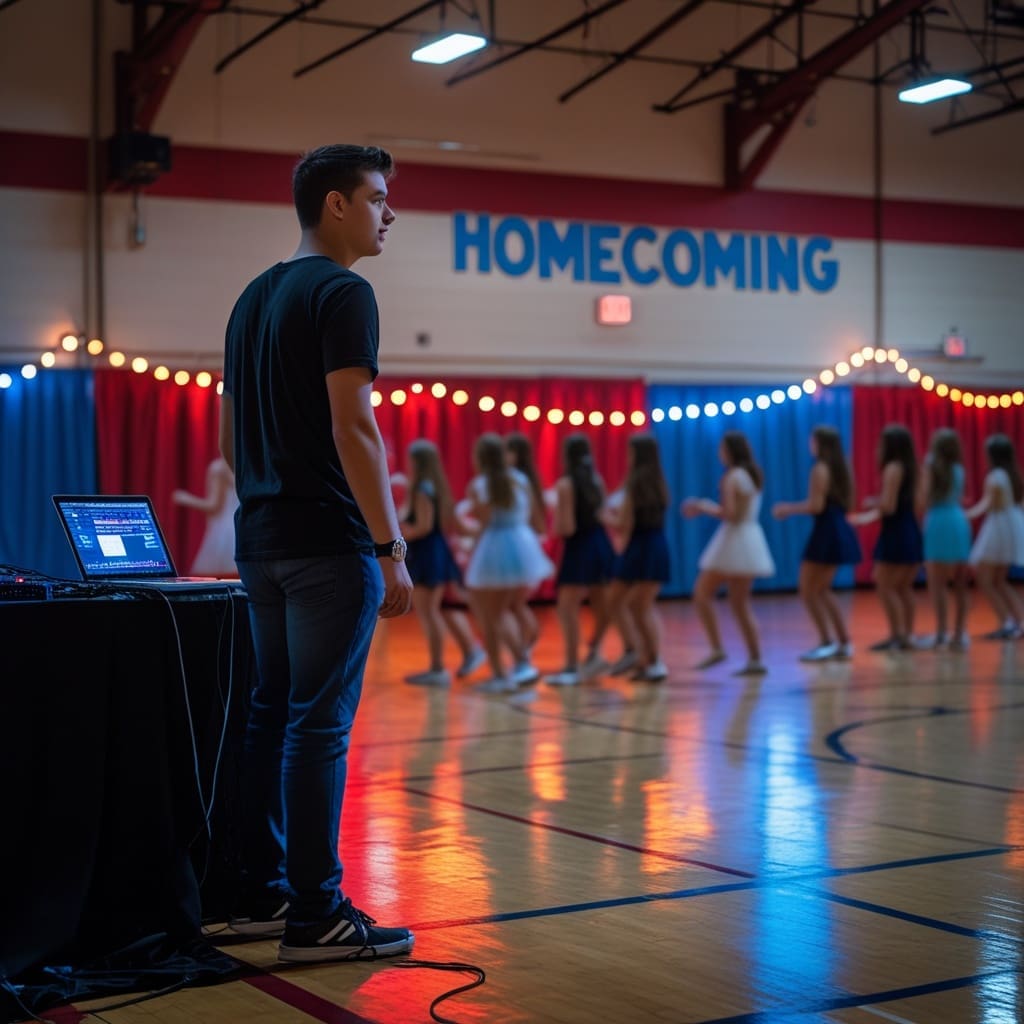
How Do You Find a School Dance DJ Near You?
Searching “school dance dj near me” gives a starting list, but vetting takes more work than picking the top result. Start with these five steps:
- Ask your school’s activities director for a preferred vendor list. Many districts keep a short list of DJs who already carry the required insurance and have worked on campus before, cutting your research time significantly.
- Request quotes from three to five companies. This gives you enough comparison points on price and package structure without dragging out the decision for weeks.
- Check for at least 15 to 20 verified reviews on Google or a platform like GigSalad or The Bash, specifically mentioning school dances or homecoming, not just weddings.
- Confirm availability for your exact date and venue load-in window before requesting a formal contract, since some venues restrict setup to a narrow one-hour block.
- Ask about their experience with school-specific content rules, including profanity filters and volume caps often set between 95 and 100 decibels by fire marshals or venue policy.
What Should You Ask a DJ Before Booking?
Asking the right questions upfront prevents most of the disputes that come up on the actual event night. According to Wedding Wire’s Vendor Trust Survey, more than 60 percent of event booking complaints trace back to unclear expectations set before the contract was signed, a pattern that applies just as much to school dances as weddings.
Before signing anything, get written answers to these questions: What is included in the base price? What happens if the DJ is sick or the equipment fails? Is a clean playlist guaranteed in writing? What is the cancellation and refund policy?
Specific questions worth asking every candidate include:
- Do you carry liability insurance, and can you provide a certificate naming the school as additionally insured?
- What backup equipment do you bring in case a speaker or laptop fails mid-event?
- Have you worked a school dance before, and can you name the school or district?
- How do you handle song requests that conflict with school content policies?
- What is your policy if the event runs long due to a delayed start?
Why Does Insurance Matter for School Events?
Most public and private schools require vendors to carry a minimum of $1 million in general liability insurance before allowing them on campus, and some districts require $2 million for events expecting more than 500 attendees. Without this documentation, many schools will not allow the vendor through the front door, regardless of how good their portfolio looks. Ask for a Certificate of Insurance (COI) naming your school or district as an additional insured party at least two weeks before the event, since some insurers take five to seven business days to process the request.
Homecoming DJ vs. Prom DJ: What Is the Difference?
Homecoming and prom DJs perform similar core services, but the events differ in tone, length, and formality, which affects package selection. Homecoming dances typically run two to three hours and lean more casual, often held in a gymnasium with a football theme tied to the game earlier that day. Prom, by contrast, usually runs three to five hours, happens at a rented banquet hall or hotel ballroom, and calls for more elaborate lighting and staging since it is treated as the more formal event of the school year.
Because pricing structures and add-ons differ between the two events, it is worth reviewing dedicated prom dj packages separately rather than assuming homecoming pricing applies across the board. If you are researching a prom booking specifically, that comparison deserves its own attention rather than folding it into homecoming planning.
Comparison at a Glance
- Typical length: Homecoming, 2 to 3 hours. Prom, 3 to 5 hours.
- Typical venue: Homecoming, school gym or cafeteria. Prom, banquet hall or hotel ballroom.
- Average cost: Homecoming, $500 to $1,300. Prom, $900 to $2,200.
- Lighting complexity: Homecoming, basic to moderate. Prom, moderate to elaborate, often including uplighting and a formal grand entrance.
- Formality level: Homecoming, casual to semi-formal. Prom, formal.
What Should Be in Your DJ Contract?
A written contract protects both the school and the DJ, and it should never be skipped even for a vendor recommended by another school. At minimum, confirm the contract includes the exact date and start and end time, total price and deposit amount (typically 20 to 50 percent due at signing), cancellation policy, backup equipment plan, and a clause confirming clean or radio-edit music only.
Deposits generally range from $100 to $500 depending on the total package price, with the remaining balance due seven to fourteen days before the event date. Paying the full amount upfront is generally not advisable; a split payment structure gives you leverage if the vendor fails to deliver on agreed terms. Once your school has approved a vendor and packages have been compared, most planners find it faster to check open dates for your school’s homecoming dance directly rather than exchanging multiple rounds of email.
What Content and Sound Rules Do Schools Typically Require?
Most school districts require a “clean edit” standard for all music, meaning no uncensored profanity, explicit references, or content violating the school’s code of conduct, similar to the standard the FCC applies to broadcast radio during daytime hours. Ask your DJ directly whether their music library includes clean versions of current chart-topping songs, since not every service maintains an updated clean library and some resort to awkward mid-song cuts that disrupt the flow of the dance.
Sound levels are another common restriction. Many school venues cap volume at 95 to 100 decibels measured at the DJ booth, both to protect student hearing and to comply with fire code requirements around being able to hear announcements or alarms. A reputable DJ should already own a decibel meter and know how to stay within these limits without noticeably reducing the energy in the room.
Frequently Asked Questions
How much should a student council budget for a homecoming DJ?
Budget between $700 and $1,300 for a typical homecoming dance with 300 to 600 attendees. This range usually covers a three-hour package with basic lighting and MC services. Larger schools with attendance above 800 students should budget closer to $1,500 to account for a bigger sound system.
Can a high school dance DJ take song requests from students?
Yes, but most DJs filter requests through a pre-approved clean playlist set by school staff. A professional DJ will typically accept requests during the event but reserve the right to skip anything that violates the school’s content policy, even if the clean version is technically available.
Do school dance DJs provide their own sound equipment, or does the school need to supply it?
Professional DJs bring their own full sound system, speakers, and microphones as part of the standard package. Schools typically only need to provide two or three power outlets and, in some cases, a 6-foot table for the DJ booth. Always confirm equipment ownership in the contract to avoid confusion on event day.
What happens if the DJ cancels last minute?
A solid contract should include a backup DJ clause or a full refund guarantee for cancellations within 14 days of the event. Ask specifically how the company handles emergencies, such as illness or equipment failure, and whether they maintain relationships with backup DJs in their network for exactly this scenario.
Is it cheaper to hire a DJ or use a student-run playlist for homecoming?
A student-run playlist costs little to nothing upfront, but it lacks insurance, professional equipment, and content control that most schools now require. Many districts have moved away from student-run music specifically because of liability concerns and inconsistent sound quality, making a licensed DJ the more practical choice despite the added cost of $500 to $1,800.
Conclusion
Booking a high school dance DJ comes down to timing, documentation, and asking direct questions before money changes hands. Start the search eight to twelve weeks ahead of your event, request quotes from at least three vendors, and confirm insurance, backup equipment, and a clean-content guarantee in writing. A well-chosen DJ turns a school gymnasium into the kind of night students bring up for years afterward, and getting the paperwork right early is what makes that possible.