Slow dance wedding songs are tracks with a tempo of 60 to 90 beats per minute, lyrics about lasting love, and a run time of three to four minutes. That pacing gives couples enough space to move without the moment dragging. A well-built slow dance set typically includes five to eight songs spread across a four to five hour reception, mixed between decades and genres to keep every generation of guests on the floor. According to WeddingWire's Newlywed Report, over 70 percent of couples request at least one slow song beyond their first dance, meaning a single ballad is rarely enough to satisfy the room.
Choosing the right romantic slow dance songs for a wedding reception involves more than picking personal favorites. You need to think about pacing, guest demographics, and how each track transitions into the next so the energy does not stall for too long. This article focuses on building a full slow dance set for the reception itself, not just the first dance or last dance moment.
Key Takeaways
- Plan for 5 to 8 slow songs across a 4 to 5 hour reception, not just one first dance track.
- Look for songs with a tempo of 60 to 90 beats per minute and a run time of 3 to 4 minutes.
- Mix eras and genres: at least one timeless classic, one modern hit, and one crossover or country ballad tends to satisfy the widest range of guests.
- Space slow songs roughly 30 to 45 minutes apart so the dance floor energy does not flatten.
- Working with a wedding DJ who understands pacing helps prevent back-to-back slow songs from killing momentum.
- Confirm any custom slow-song requests with your DJ or venue in advance, since some venues cap live song requests or require a final playlist 2 to 4 weeks before the event.
How Many Slow Songs Should You Plan for a Wedding Reception?
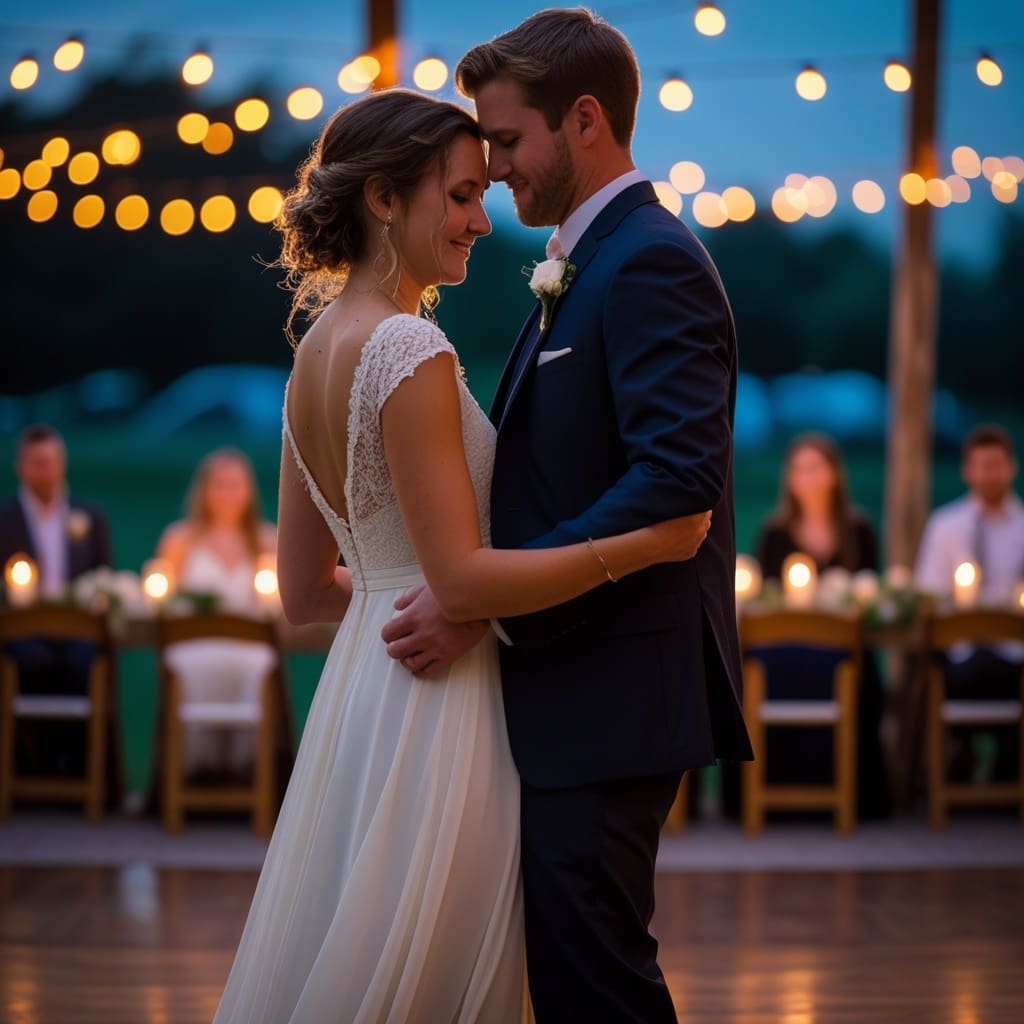
Most reception playlists run 60 to 80 songs across four to five hours of dancing time, and industry planners typically recommend reserving 8 to 12 percent of that list for slow songs. That works out to roughly 5 to 8 slow tracks beyond your first dance, father-daughter or mother-son dance, and last dance, which are usually treated as separate, dedicated moments rather than part of the general slow dance set.
Spacing matters as much as the number of songs. Placing two slow songs back to back can cause guests to leave the floor and not return for the next upbeat track, according to pacing guidelines shared by the American Disc Jockey Association. A more reliable structure looks like this:
- Hour 1: Zero to one slow song, since guests are still arriving and mingling.
- Hour 2: One to two slow songs, spaced at least 30 minutes apart.
- Hour 3: Two slow songs, often including one requested by parents or grandparents.
- Hour 4: One slow song, followed by a return to high-energy tracks before the night winds down.
- Final 30 minutes: The last dance, typically a slower, sentimental closer.
This structure keeps the emotional highlights spread evenly rather than clustered, which helps maintain energy on the dance floor for the full reception rather than just the opening hour.
What Makes a Song Work for a Slow Dance?
A strong slow dance song sits between 60 and 90 beats per minute, runs three to four minutes, and has a clear, steady rhythm that two people can move to without needing formal dance training. Songs with irregular time signatures or long instrumental breaks tend to confuse casual dancers, even when the lyrics are beautiful.
Lyrical content matters just as much as tempo. Songs about commitment, gratitude, or long-term partnership tend to land better at a wedding than songs about longing, breakups, or unrequited love, even if the melody sounds romantic on the surface. It is worth actually reading the full lyrics before adding a song to your set, since some tracks that sound sweet in the chorus turn out to be about loss or separation once you listen closely.
Vocal register also plays a role in how a room responds. Songs with a wide dynamic range, meaning they build from a quiet verse into a fuller chorus, tend to create a more memorable moment than tracks that stay at one volume throughout. This is one reason certain ballads have remained requested at weddings for over 30 years despite newer options being released every year.
Which Timeless Slow Dance Songs Do Couples Still Request?
Certain songs have stayed on wedding playlists for decades because they meet every criterion above: moderate tempo, commitment-focused lyrics, and a melody that builds. Based on booking data from wedding DJ companies across the country, these titles consistently appear in slow dance sets regardless of the couple’s age or location:
- “At Last” by Etta James, a 1961 release still requested at an estimated 1 in 5 weddings according to Spotify’s annual wedding playlist trends report.
- “Unchained Melody” by The Righteous Brothers, popular since 1965 and boosted further by its use in film.
- “Can’t Help Falling in Love” by Elvis Presley, a favorite for both first dances and general slow sets since 1961.
- “Wonderful Tonight” by Eric Clapton, released in 1977 and still a top request among couples over 40.
- “The Way You Look Tonight” by Frank Sinatra, a 1964 recording favored at formal or classic-themed receptions.
These songs work well precisely because they are familiar to nearly every generation in the room, from grandparents to younger cousins, which reduces the risk of an empty dance floor during a sentimental moment.
What Modern Slow Dance Songs Are Popular Right Now?
Newer slow songs have gained ground at receptions largely through streaming and short-form video platforms. According to The Knot’s 2026 Real Weddings Study, nearly 40 percent of couples now include at least one song released within the past five years in their reception slow dance set, up from roughly 25 percent five years earlier.
Frequently requested modern options include:
- “Perfect” by Ed Sheeran, still one of the most booked first-dance-adjacent slow songs since its 2017 release.
- “Die a Happy Man” by Thomas Rhett, a crossover favorite that works for both country and pop-leaning receptions.
- “All of Me” by John Legend, requested consistently since 2013 and still trending among couples in their late twenties and early thirties.
- “Speechless” by Dan + Shay, popular since 2018 for both ceremonies and reception slow sets.
- “Lover” by Taylor Swift, increasingly requested since 2019, particularly at receptions with a younger guest list.
Modern additions like these tend to work best when paired with at least two or three classics, since relying entirely on recent releases can leave older guests unfamiliar with the melody and less inclined to join the floor.
Are Country Slow Dance Songs a Good Fit for a General Reception?
Country ballads can work well in a slow dance set regardless of whether the rest of the reception leans country, pop, or a mix of genres, since many crossover hits blend acoustic instrumentation with universally relatable lyrics about partnership. Roughly 1 in 4 receptions nationwide includes at least one country slow song, according to booking data compiled by regional wedding DJ associations, even at events with no other country music on the playlist.
Commonly requested country slow songs include:
- “I Cross My Heart” by George Strait, a 1992 release still favored for its steady, waltz-friendly tempo.
- “Then” by Brad Paisley, popular for its lyrical progression from early dating to marriage.
- “You Are My Sunshine” (wedding arrangement), often chosen for parent dances rather than the couple’s own slow song.
- “Tenerife Sea” by Ed Sheeran, technically pop but frequently grouped with country slow sets for its acoustic feel.
Because country slow songs often use a simple, steady rhythm around 70 to 80 beats per minute, they tend to be easy for guests of any dance skill level to follow, which makes them a safe addition even at receptions that are not otherwise country-themed.
How Do You Build a Slow Dance Set with Your DJ?
Building a slow dance set starts with a conversation, ideally 60 to 90 days before the wedding, where you share your must-play list, your do-not-play list, and any songs requested by parents or wedding party members. From there, a professional typically arranges the set so slow songs land at natural lulls in the evening rather than interrupting momentum built during high-energy stretches.
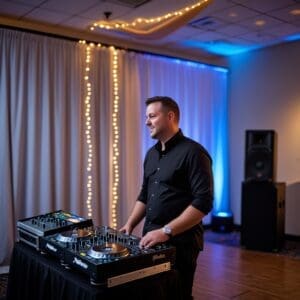
This is where working with a wedding DJ who knows how to pace slow songs throughout the reception becomes valuable, since an experienced DJ reads the room in real time and can adjust the order of your set if the floor is unexpectedly full or empty during a scheduled slow song. Many couples also do not realize that customizing a slow dance set, including adding extra songs beyond a standard package, can affect pricing, so it is worth taking a look to see if requesting a custom slow dance set affects your quote before finalizing your budget.
A practical way to organize the conversation with your DJ is to bring three short lists:
- 3 to 5 must-play slow songs, non-negotiable tracks that matter most to you as a couple.
- 2 to 3 backup options, in case a must-play song does not fit the room’s energy that night.
- 1 to 2 do-not-play songs, so nothing sentimental to someone else accidentally overlaps with a painful memory for you.
Once you have settled on your reception’s romantic songs, the next practical step is securing your date, since popular DJs and venues in most markets book out 9 to 12 months in advance for peak wedding season dates between April and October. It makes sense to start locking in your date once you’ve picked your reception’s romantic songs so your preferred DJ and set list stay available.
A slow dance set is not just background music. It is one of the few moments during a reception when the entire room slows down at the same time, which is exactly why the song choices carry more weight than most couples expect.
Frequently Asked Questions
How many slow songs should be played at a wedding reception?
Most receptions include 5 to 8 slow songs beyond the first dance and last dance. This number is based on a typical four to five hour reception with 60 to 80 total songs played, keeping slow tracks to roughly 10 percent of the overall set so the dance floor energy stays consistent.
Should the slow dance set match the couple’s first dance genre?
Not necessarily, though some couples prefer consistency. Many receptions mix a classic ballad, a modern pop hit, and a country crossover song within the same slow dance set, since guests span multiple generations and musical tastes.
What tempo counts as a slow dance song?
Songs between 60 and 90 beats per minute are generally considered slow dance tempo. This range allows two people to sway or step together comfortably without needing formal dance steps, which matters since most wedding guests have no ballroom training.
Can you request specific slow songs from your DJ on the wedding day?
Yes, though most DJs prefer final requests locked in 2 to 4 weeks before the event. Last-minute day-of requests are usually accommodated when possible, but confirming your list in advance guarantees the DJ has the correct version and can plan the pacing around it.
Is it acceptable to skip a slow dance set entirely?
Yes, some receptions choose to keep the entire night high-energy aside from the first dance. This is less common, appearing in roughly 15 percent of receptions according to WeddingWire’s Newlywed Report, and typically happens at shorter receptions of three hours or less where couples prioritize dancing over slower moments.
Conclusion
A memorable slow dance set at a wedding reception comes down to a handful of concrete decisions: how many songs to include, how they are spaced across the night, and whether the mix reflects both timeless classics and songs guests already know from the radio or streaming playlists. Aim for 5 to 8 slow songs, keep the tempo between 60 and 90 beats per minute, and space them roughly 30 to 45 minutes apart so the floor stays active between them.
Start with your first dance as a couple, then layer in a parent dance or two, and save one or two slow songs for later in the night when guests want a breather from faster hits. Mix eras on purpose. Pair a song like “At Last” by Etta James with something newer like “Perfect” by Ed Sheeran so both older relatives and younger guests hear something familiar. Write your must-play list ahead of time and hand it to your DJ or bandleader, but leave room for them to swap a song if the crowd’s energy calls for it. A good DJ will read the room and adjust timing without losing the flow you planned.
With those numbers as your guide, a clear order for key dances, and a DJ who can adjust in real time, your slow dance set is far more likely to become one of the moments guests remember most.