Classic rock dance songs are high-energy tracks from the 1960s through 1980s with a steady beat between 110 and 130 beats per minute, recognizable hooks, and a sing-along chorus, like “Don’t Stop Believin'” by Journey, “Livin’ on a Prayer” by Bon Jovi, and “Mustang Sally” by Wilson Pickett. These songs work because guests of nearly every age already know the words, which removes the hesitation that keeps people in their seats. According to The Knot’s 2026 Real Weddings Study, classic rock still ranks among the top three most-requested genres at American receptions, trailing only current pop and R&B. A well-built classic rock set can fill a dance floor faster than almost any other genre because it draws parents, grandparents, and younger guests into the same moment at once.
Key Takeaways
- Tempo matters most. Songs between 110 and 130 beats per minute get the most consistent dance floor response at weddings and private parties.
- Cross-generational appeal drives requests. WeddingWire’s Newlywed Report notes that couples born between 1985 and 2000 request 1970s and 1980s rock tracks nearly as often as current hits.
- A strong set list runs 25 to 35 songs for a typical three-hour reception dance block, mixed with two or three genres for pacing.
- Deep cuts can flop. Stick to Billboard-charted or radio-staple tracks rather than album tracks the average guest will not recognize.
- Timing beats volume. Placing classic rock anthems at the 45-minute and 90-minute marks of the reception keeps energy from dropping.
What Makes a Classic Rock Song Work on the Dance Floor?
A classic rock dance song succeeds when it combines a driving rhythm section, a chorus most adults can sing without looking up the lyrics, and a running time under five minutes. Tracks that stretch past six minutes, such as extended album versions, tend to lose the crowd halfway through, according to data compiled by Luminate (formerly Nielsen Music) on wedding and event playlist skip rates. Guests respond to familiarity first and rhythm second, which is why radio hits consistently outperform critically acclaimed but less-played songs from the same artist.
Three qualities separate a floor-filler from a floor-clearer:
- Recognizability within the first five seconds. Opening riffs like the guitar line in “Sweet Home Alabama” or the drum fill in “Girls Just Want to Have Fun” (a new wave crossover often grouped with classic rock sets) cue guests to move before the vocal even starts.
- A tempo range of 110 to 130 BPM. This range matches natural walking and clapping rhythm, which is why line-dance-friendly tracks like “Twist and Shout” hold up decade after decade.
- Lyrical content suited to mixed company. Wedding and corporate event crowds skew toward guests aged 8 to 80, so songs with clean or easily edited lyrics get more consistent play from professional DJs.
Which Classic Rock Songs Top the List for Weddings and Private Events?
The songs below appear repeatedly across DJ association polls, including the American Disc Jockey Association’s annual reception song survey, and represent the most requested classic rock dance songs for American weddings and private parties in 2026.
- Don’t Stop Believin'” by Journey (1981) Reported as the single most requested classic rock song at U.S. weddings for over a decade running.
- Livin’ on a Prayer” by Bon Jovi (1986). Its call-and-response chorus makes it a guaranteed sing-along.
- Mustang Sally” by Wilson Pickett (1966). A staple for wedding bands because of its built-in slow-build arrangement.
- Twist and Shout” by The Beatles (1963) Works for grandparents and toddlers equally well.
- Sweet Caroline” by Neil Diamond (1969). The “so good, so good, so good” hook alone justifies its spot on nearly every reception playlist.
- “I Wanna Dance with Somebody”, Whitney Houston (1987). Often filed with classic rock party sets for its era and energy, even though it sits closer to pop.
- “Brown Eyed Girl”, Van Morrison (1967). A reliable mid-set track that never drops energy.
- “Girls Just Want to Have Fun”, Cyndi Lauper (1983). Popular for bridal party dance moments.
- “You Shook Me All Night Long”, AC/DC (1980). A go-to for private parties with a younger crowd mix.
- “Play That Funky Music”, Wild Cherry (1976). Bridges classic rock and funk for a broader appeal.
- “September”, Earth, Wind & Fire (1978). Frequently ranked the single best floor-filler across all genres by DJ trade publication Mobile Beat.
- “Simple Man”, Lynyrd Skynyrd (1973). Used more for slow-building moments than pure dance energy.
- “I Love Rock ‘n’ Roll”, Joan Jett & the Blackhearts (1981). A short, punchy track that works well right after dinner service ends.
- “Old Time Rock and Roll”, Bob Seger (1978). Reliable for the 40-and-over portion of the guest list.
- “Signed, Sealed, Delivered I’m Yours”, Stevie Wonder (1970). Frequently used as a first-dance alternative that transitions into open dancing.
This list overlaps heavily with what many DJs call the top 100 classic rock party songs, a rotating industry benchmark list built from actual reception requests rather than critical rankings. The remaining 85 songs on most versions of that list fill out sub-genres such as Motown-adjacent rock, Southern rock, and arena rock anthems from the 1970s and 1980s.
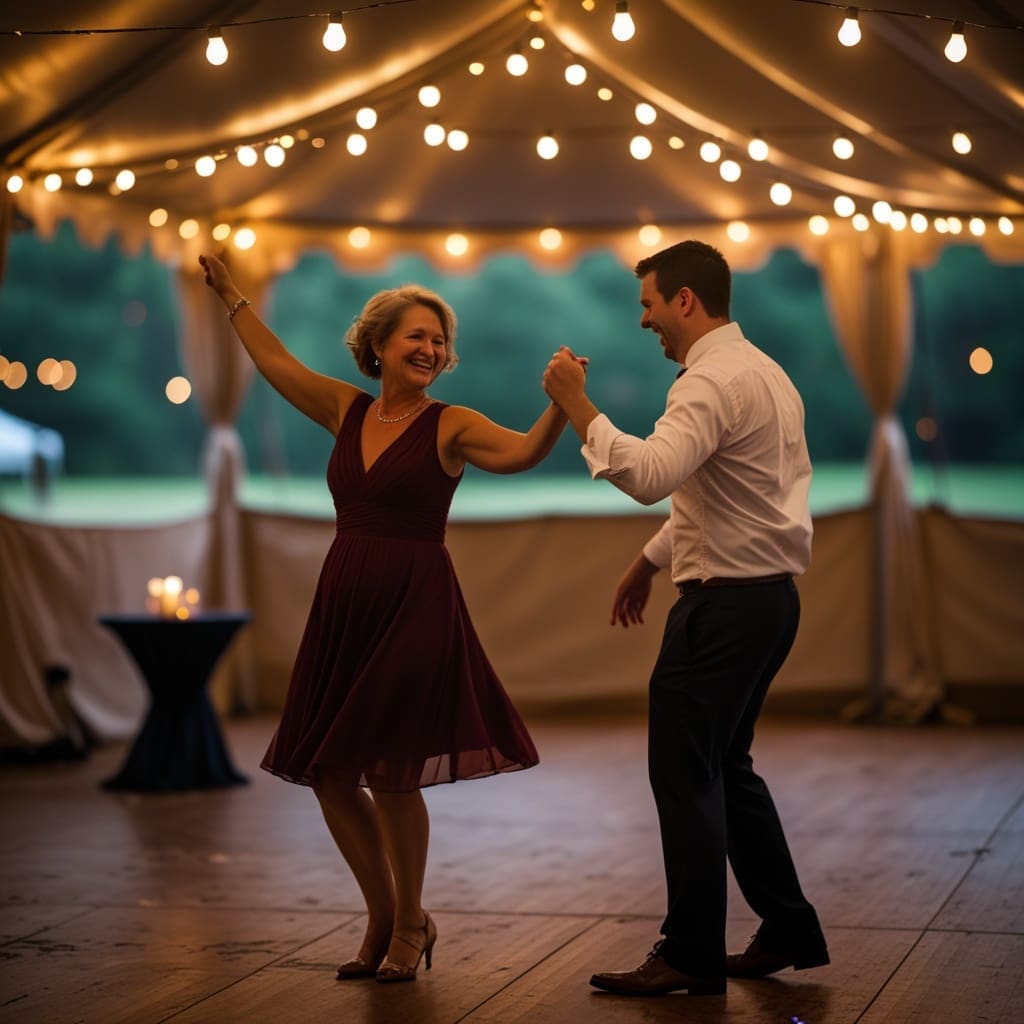
How Do You Build a Classic Rock Party Playlist?
Building an effective classic rock dance set for a wedding or private event takes five concrete steps, each with a specific number attached.
- Set your song count at 25 to 35 tracks. A standard three-hour reception dance block runs roughly 90 to 120 minutes of actual dancing time once toasts, cake cutting, and breaks are factored in, and most songs run 3 to 4 minutes.
- Cap classic rock at 40 percent of the total set. Mixing in current pop, hip-hop, and Motown keeps the floor active for guests across a wider age range, per WeddingWire’s Newlywed Report on music preferences.
- Place your top 3 anthems at strategic intervals. Slot one high-energy classic rock song at the 15-minute mark to establish momentum, one at the 45-minute mark to prevent a mid-event lull, and one near the final 20 minutes to close strong.
- Limit tempo drops to no more than 2 slow songs in a row. More than two consecutive ballads in the 60 to 80 BPM range will clear a dance floor within 90 seconds, based on observations from professional DJ trade groups like the American Disc Jockey Association.
- Collect guest requests 30 days before the event. Couples who send a short request form to guests ahead of time report a noticeably fuller dance floor, since at least a few songs will be personal favorites rather than generic hits.
Rock Party Songs vs. Classic Rock Dance Songs: What Is the Difference?
The term rock party songs covers a broader category that includes modern rock, pop-rock, and even rock-adjacent hip-hop crossovers, while classic rock dance songs specifically refers to tracks from roughly 1965 through 1989 with a dance-friendly tempo. Both categories overlap heavily at weddings, but the distinction affects how a DJ or band builds the night.
- Rock party songs might include tracks like “Mr. Brightside” by The Killers (2003) or “Seven Nation Army” by The White Stripes (2003), which read as “rock” energy but do not qualify as classic rock by era.
- Classic rock dance songs are strictly pulled from the classic rock radio format era, generally defined by industry radio programmers as 1964 to 1991.
- Fun upbeat party songs is the broadest of the three terms and often blends genres entirely, mixing disco, Motown, and classic rock into one energetic set rather than sticking to a single genre lane.
Most private event planners use these three terms interchangeably when talking to a DJ, so it helps to bring a short reference list rather than assume the vendor shares your exact genre definitions.
What Are the Best Fun Upbeat Classic Rock Songs by Decade?
Which 1960s Rock Songs Still Work on a Modern Dance Floor?
Tracks from the 1960s that still perform well include “Twist and Shout” by The Beatles, “Mustang Sally” by Wilson Pickett, “Brown Eyed Girl” by Van Morrison, and “Respect” by Aretha Franklin. These songs benefit from simple chord structures and repetitive, easy-to-shout choruses, which is exactly why they have survived six decades of continuous radio play.
Which 1970s Rock Songs Fill the Floor Fastest?
The 1970s produced the deepest well of classic rock dance material, including “Play That Funky Music” by Wild Cherry, “September” by Earth, Wind & Fire, “Dancing Queen” by ABBA, and “Sweet Home Alabama” by Lynyrd Skynyrd. Billboard’s Hot 100 archive shows that several of these tracks spent multiple weeks in the top 10 upon release, a strong early signal of the broad appeal that still holds decades later.
Which 1980s Rock Songs Bring the Most Energy?
The 1980s leaned into synth-driven, high-tempo arrangements built for movement, with standouts like “Livin’ on a Prayer” by Bon Jovi, “Don’t Stop Believin'” by Journey, “You Shook Me All Night Long” by AC/DC, and “I Wanna Dance with Somebody” by Whitney Houston. This decade tends to dominate wedding request lists among guests currently between the ages of 45 and 65, according to The Knot’s demographic breakdown of music requests.
How Should a DJ or Band Handle Classic Rock at a Wedding?
A skilled DJ or band leader treats classic rock as a bridge genre, using it to connect generations rather than isolating one age group on the dance floor. The most effective approach places classic rock songs immediately after dinner service, when the room is still warming up and needs familiar, low-risk material rather than newer or more polarizing tracks. From there, the DJ can layer in current pop and hip-hop once the floor is already active, since guests are more willing to try unfamiliar songs once they are already standing and moving.
Live bands face a slightly different challenge, since covering a classic rock song well requires matching the original arrangement closely enough that guests recognize it within the first few bars. A band that reinterprets “Don’t Stop Believin'” with a slower tempo or a jazzy arrangement risks losing the exact energy that made the song a request in the first place. For that reason, most professional wedding bands rehearse classic rock covers to match the original recording’s tempo within two or three beats per minute.
The songs that survive fifty years of wedding dance floors are not the most artistically ambitious tracks of their era. They are the ones built around a chorus a stranger could sing after hearing it twice.
Ready to Build Your Set List?
Start by picking your top 5 must-play classic rock songs from the list above, then send a short request form to your guest list at least 30 days before the event to fill out the remaining slots. If you are hiring a DJ or band, share your genre percentages and BPM preferences directly rather than assuming the vendor will guess your taste. A clear, numbers-based brief, including song count, tempo range, and specific must-plays, gives any professional performer exactly what they need to keep your dance floor full from the first song to the last.
Frequently Asked Questions
What is the single most requested classic rock song at weddings?
“Don’t Stop Believin'” by Journey consistently ranks as the top request. DJ associations and wedding planning platforms have listed it in the top spot for more than ten consecutive years, largely because of its recognizable piano intro and anthemic chorus that works for nearly every age group in the room.
How many classic rock songs should be in a wedding playlist?
Between 8 and 14 classic rock songs typically fit into a standard three-hour reception. This usually represents about 30 to 40 percent of a full dance set, leaving room for current pop, R&B, and any specific cultural or family requests.
Are classic rock songs appropriate for a corporate holiday party?
Yes, classic rock songs work well for corporate events because of their broad, clean, and non-polarizing appeal. Tracks like “September” by Earth, Wind & Fire or “Twist and Shout” by The Beatles avoid explicit lyrics and political associations, making them low-risk choices for a mixed professional crowd.
What BPM range should I look for when picking classic rock dance songs?
Aim for songs between 110 and 130 beats per minute for peak dance floor energy. Songs slower than 100 BPM tend to work better for cocktail hour or dinner background music rather than an active dance set.
Can classic rock and modern pop songs be mixed in the same set without hurting the flow?
Yes, alternating between classic rock and modern pop every 3 to 5 songs keeps energy high across age groups. A skilled DJ uses classic rock to draw in older guests early in the night, then blends in current hits once the floor is already full, which keeps momentum from dropping when the genre shifts.
Conclusion
Classic rock dance songs remain one of the most reliable tools for filling a wedding or private event dance floor because they cross generational lines better than almost any other genre. Sticking to recognizable, radio-charted tracks in the 110 to 130 BPM range, capping classic rock at roughly 40 percent of the total set, and placing anthems at strategic points throughout the night will consistently outperform a randomly shuffled playlist. Whether you are working with a professional DJ, a live band, or building the list yourself, the songs that have worked for fifty years are still the safest and strongest choices available today.