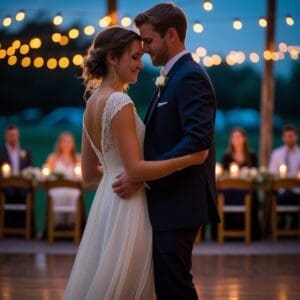
Your first dance sets the emotional tone for your entire reception. It’s the moment when every guest stops talking, pulls out their phone, and watches you and your partner share the spotlight. No pressure, right?
The truth is, picking a first dance song feels harder than it should. You’re sorting through thousands of options, trying to balance personal meaning with danceability, lyrics with tempo, and your taste with what actually works on a dance floor. Some couples know their song instantly. Most don’t.
This guide walks you through every angle of choosing a first dance song. You’ll find genre breakdowns, tempo guidance, lyric considerations, and practical tips for making your song work on the actual dance floor. Whether you want a timeless classic or something nobody expects, you’ll leave here with a clear direction.
Key Takeaways
- Tempo matters more than genre — Songs between 70 and 120 BPM work best for a natural, comfortable slow dance without formal training.
- Lyrics carry weight — Guests listen to the words during your first dance more than any other moment. Choose lyrics that genuinely reflect your relationship.
- Song length should be 2.5 to 3.5 minutes — Anything longer risks losing guest attention. Most DJs can edit songs to the right length.
- You don’t need dance lessons for most songs — A simple slow sway works beautifully with the right tempo and song structure.
- Genre is personal, not prescriptive — Country, R&B, indie, classic rock, and even hip hop all have excellent first dance options.
- Your DJ or band needs advance notice — Share your song choice at least 4 weeks before the wedding so they can prepare edits, intros, and transitions.
What Makes a Great First Dance Song?
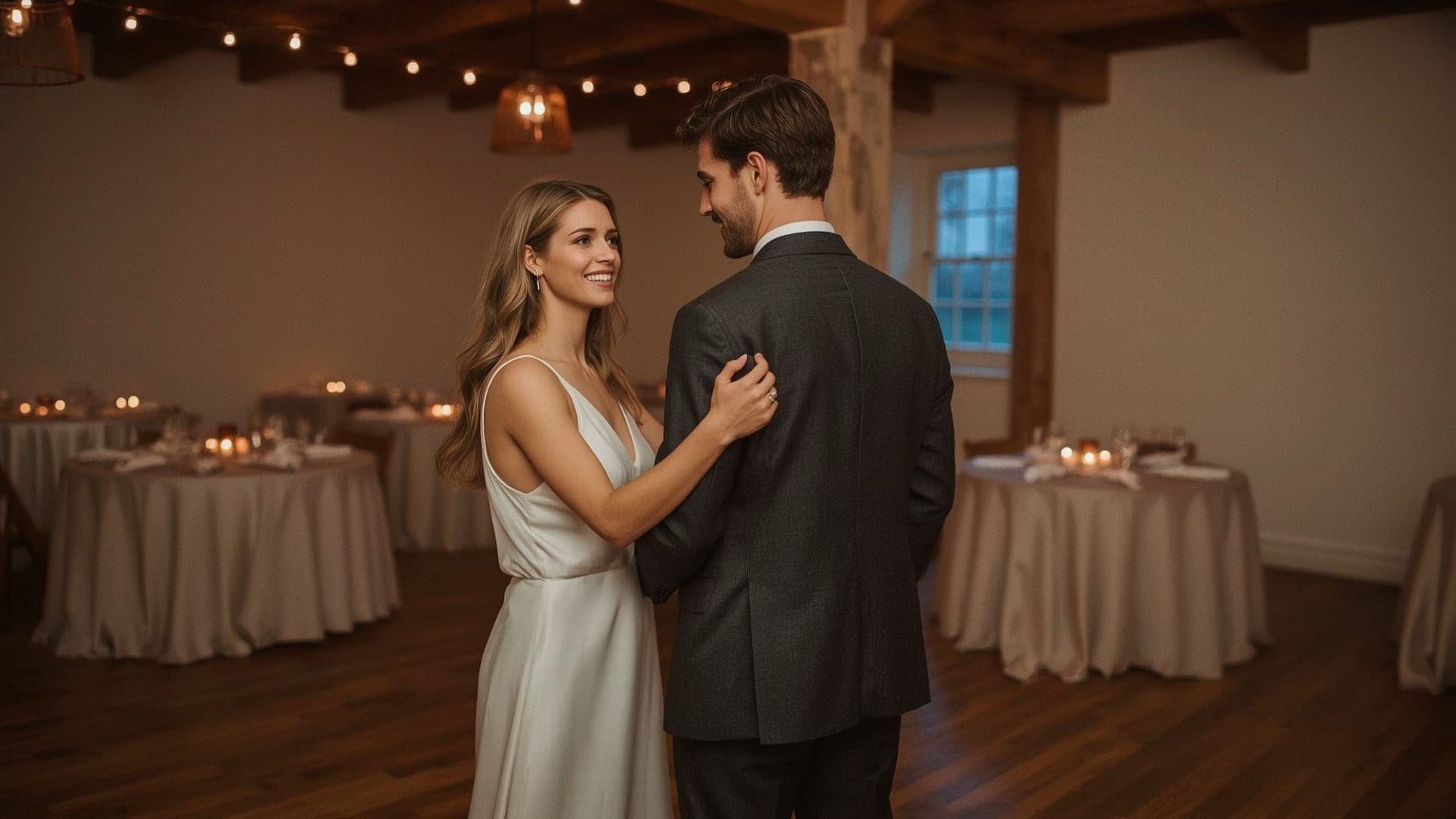
Quick Answer: A great first dance song has a comfortable tempo between 70 and 120 BPM, meaningful lyrics, a clear emotional arc, and a length of 2.5 to 3.5 minutes. It should feel personal to you as a couple while being easy to sway or dance to without professional training.
Not every love song works as a first dance song. A track might be deeply meaningful to you but have a tempo that makes dancing awkward. Or it might sound beautiful but have lyrics that don’t hold up under scrutiny.
The best first dance songs share a few core qualities. They have a steady rhythm you can move to naturally. The lyrics tell a story or express a feeling that matches your relationship. The song builds emotionally without dramatic shifts that leave you standing still.
Tempo and Rhythm
Tempo is measured in beats per minute (BPM). For a traditional slow dance, you want something between 70 and 100 BPM. For a more upbeat first dance, like a swing or foxtrot, 100 to 130 BPM works well. Anything above 130 BPM usually requires choreography.
A simple sway works with most slow tempos. You don’t need to waltz or do anything fancy. The rhythm just needs to be steady enough that you can find the beat and move together.
Lyrics That Actually Fit
Your guests will listen to the lyrics during your first dance more closely than at any other point in the reception. That means the words matter. A lot of popular love songs have verses about heartbreak, longing, or loss before they get to the hopeful chorus.
“Every Breath You Take” by The Police sounds romantic until you realize it’s about obsessive surveillance. “I Will Always Love You” by Whitney Houston is a breakup song. Always read the full lyrics before committing.
Song Structure and Length
The ideal first dance lasts 2.5 to 3.5 minutes. Most pop songs run 3 to 4 minutes, which means a slight edit usually works perfectly. Your DJ can fade out after the second chorus or trim an instrumental bridge.
Songs with a clear intro, two verses, and a strong chorus give you a natural structure. You start, settle in, and finish on a high note. Avoid songs with long instrumental openings where you’re just standing there waiting for lyrics to begin.
Which Classic First Dance Songs Still Work?
Quick Answer: Classics like “At Last” by Etta James, “Can’t Help Falling in Love” by Elvis Presley, and “The Way You Look Tonight” by Frank Sinatra remain popular because of their timeless melodies, clear lyrics, and perfect slow dance tempos between 80 and 110 BPM.
Classic songs earn their status for a reason. They have melodies everyone recognizes, lyrics that are universally romantic, and tempos built for dancing. They also photograph well in the sense that your video will feel timeless rather than dated to a specific era.
Classic First Dance Songs by Era
| Song | Artist | Year | BPM | Style | Best For |
|---|---|---|---|---|---|
| At Last | Etta James | 1960 | 65 | Jazz/Blues | Elegant, traditional weddings |
| Can’t Help Falling in Love | Elvis Presley | 1961 | 100 | Pop Ballad | Simple sway, all wedding styles |
| The Way You Look Tonight | Frank Sinatra | 1964 | 120 | Jazz Standard | Foxtrot, ballroom venues |
| Wonderful Tonight | Eric Clapton | 1977 | 95 | Soft Rock | Relaxed, intimate receptions |
| Your Song | Elton John | 1970 | 126 | Pop Ballad | Romantic with gentle energy |
| Unforgettable | Nat King Cole | 1951 | 78 | Jazz | Vintage themed weddings |
The risk with classics is overuse. “At Last” and “Can’t Help Falling in Love” are played at a significant percentage of weddings. If originality matters to you, consider a lesser known classic or a modern cover of one of these songs.
What Are the Best Modern First Dance Songs?
Quick Answer: Modern favorites include “Perfect” by Ed Sheeran, “All of Me” by John Legend, “Lover” by Taylor Swift, and “Better Together” by Jack Johnson. These songs pair contemporary production with romantic lyrics and tempos that work for a natural slow dance.
Modern songs give you the advantage of feeling current. Your wedding video will sound like your era. Many newer artists also write with more specific, personal lyrics that feel less generic than some older standards.
Modern First Dance Songs Across Genres
| Song | Artist | Genre | BPM | Mood | Dance Style |
|---|---|---|---|---|---|
| Perfect | Ed Sheeran | Pop | 95 | Romantic, warm | Slow sway |
| All of Me | John Legend | R&B/Pop | 63 | Intimate, emotional | Close hold sway |
| Lover | Taylor Swift | Pop | 68 | Dreamy, playful | Waltz (3/4 time) |
| Better Together | Jack Johnson | Acoustic | 110 | Relaxed, happy | Casual sway |
| You Are the Best Thing | Ray LaMontagne | Soul/Folk | 116 | Joyful, upbeat | Light footwork |
| Turning Page | Sleeping at Last | Indie | 73 | Tender, cinematic | Slow sway |
| I Get to Love You | Ruelle | Indie Pop | 70 | Emotional, sincere | Slow sway |
Ed Sheeran’s “Perfect” has become the most requested first dance song among wedding DJs in recent years. It’s popular for good reason, but if you want something less expected, dive deeper into indie and folk catalogs.
How Do You Choose a First Dance Song by Genre?
Quick Answer: Start with the genre you and your partner listen to most. Country, R&B, indie, classic rock, and pop all offer strong first dance options. Your genre should match your personality as a couple, not what you think a wedding “should” sound like.
Genre is the fastest way to narrow your search. Instead of scrolling through every love song ever recorded, start with what you actually listen to. Your first dance should feel like you, not like a greeting card.
Country First Dance Songs
Country music is built for weddings. The storytelling tradition means lyrics tend to be specific, emotional, and narrative. Songs like “Die a Happy Man” by Thomas Rhett, “Speechless” by Dan + Shay, and “From the Ground Up” by Dan + Shay give you warm, mid tempo options.
For a more traditional country feel, “I Cross My Heart” by George Strait and “Amazed” by Lonestar remain crowd favorites. Country songs typically run between 80 and 120 BPM, making them ideal for a comfortable sway.
R&B and Soul First Dance Songs
R&B delivers some of the smoothest first dance options. The genre’s emphasis on vocal runs, emotional delivery, and groove makes it naturally romantic. “Adorn” by Miguel, “Best Part” by Daniel Caesar ft. H.E.R., and “Spend the Night” by 112 all work beautifully.
Classic R&B also offers gems. “Endless Love” by Luther Vandross and Mariah Carey, “Let’s Stay Together” by Al Green, and “Always and Forever” by Heatwave have been wedding staples for decades.
Indie and Alternative First Dance Songs
If you want something your guests haven’t heard at every wedding, indie is your territory. “Such Great Heights” by The Postal Service, “First Day of My Life” by Bright Eyes, and “XO” by Beyoncé (yes, technically pop, but it has indie sensibility) offer unique character.
Indie songs sometimes have unconventional structures. Listen through the entire track to make sure there isn’t an abrupt tempo change or a long instrumental section that might feel awkward on the dance floor.
Rock and Classic Rock First Dance Songs
Rock couples have strong options. “Grow Old with Me” by Tom Odell, “Something” by The Beatles, and “Thank You” by Led Zeppelin are all proven first dance picks. The key is finding rock songs with enough restraint for a slow dance moment.
Acoustic or stripped down versions of rock songs often work better than the original recordings. Many artists release acoustic versions that bring the tempo down and soften the production.
Can You Use an Upbeat Song for Your First Dance?
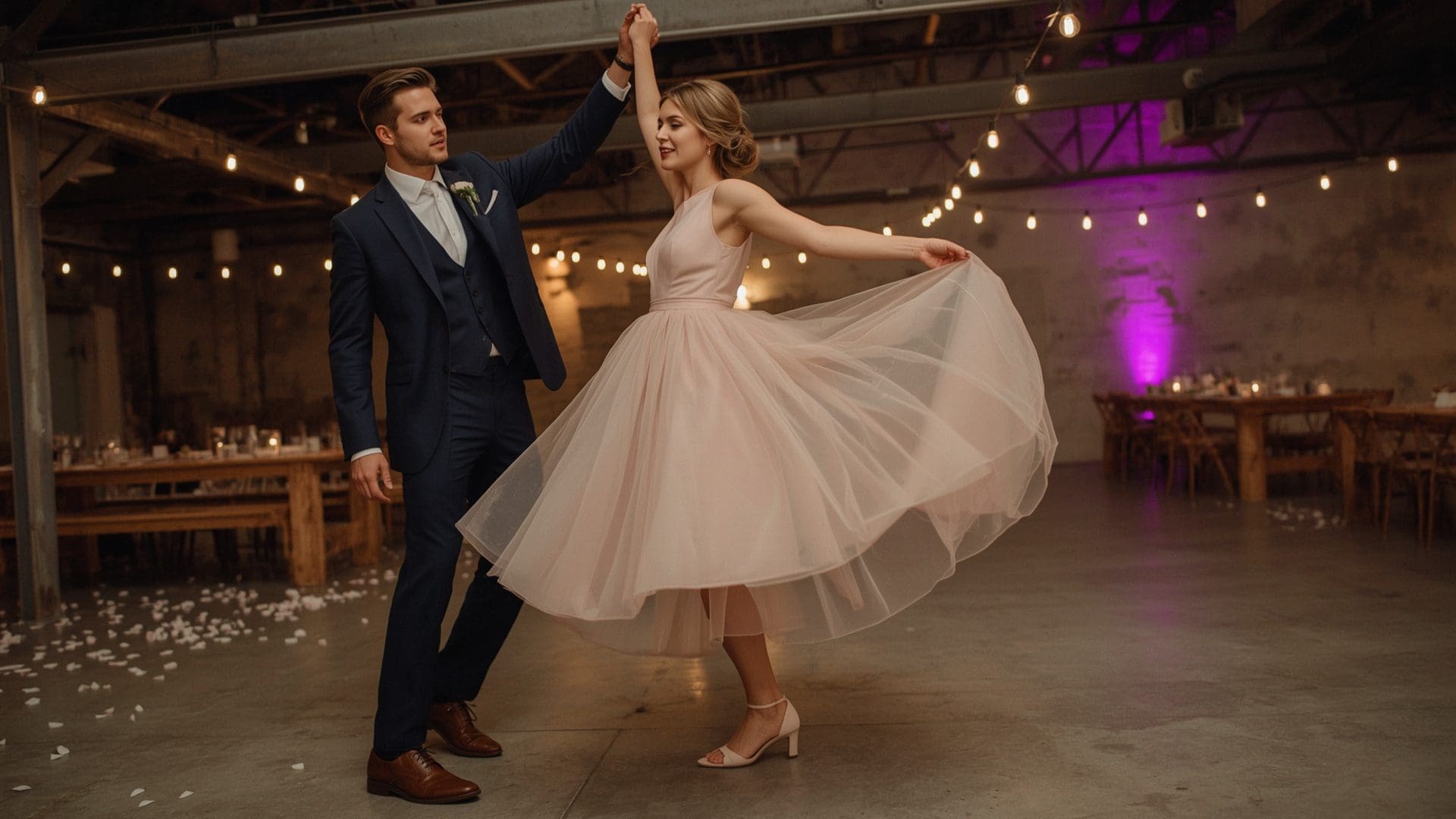
Quick Answer: Absolutely. Upbeat first dances are increasingly popular and energize the entire room. Songs between 110 and 140 BPM like “You Make My Dreams” by Hall & Oates or “Signed, Sealed, Delivered” by Stevie Wonder work well, though most couples benefit from basic choreography for faster songs.
A slow sway is the traditional approach, but it’s not the only option. Upbeat first dances get guests clapping, laughing, and excited. They set a party tone right from the start.
The trade off is that faster songs are harder to wing. Without some practice or basic choreography, you might look lost at higher tempos. Even 30 minutes of learning a few moves can make an upbeat first dance feel intentional rather than chaotic.
Popular Upbeat First Dance Songs
- “You Make My Dreams” by Hall & Oates — 130 BPM, pure joy, easy to add simple swing moves
- “Signed, Sealed, Delivered” by Stevie Wonder — 126 BPM, Motown energy, universally loved
- “I Gotta Feeling” by Black Eyed Peas — 128 BPM, party starter, works as a transition into open dancing
- “Shut Up and Dance” by Walk the Moon — 128 BPM, fun lyrics, natural dance energy
- “Don’t Stop Me Now” by Queen — 156 BPM, high energy, best with a choreographed first dance
What If You and Your Partner Can’t Agree on a Song?
Quick Answer: Start by making separate lists of 5 to 10 songs each, then look for overlap in mood, genre, or tempo. If you still disagree, compromise by using one partner’s pick for the first dance and the other’s for the last dance, or choose a mashup that blends both styles.
This is one of the most common wedding planning disagreements. One partner wants country, the other wants R&B. One wants something classic, the other wants something current.
Try this approach: instead of fighting over specific songs, agree on the feeling first. Do you want your first dance to feel romantic, fun, nostalgic, or intimate? Once you agree on the emotion, the song options narrow dramatically.
Compromise Strategies That Work
- Find a cover version — A song you love performed in a genre your partner prefers (like a jazz cover of a pop song)
- Split the dances — Use one song for the first dance and the other for your exit song or last dance
- Choose “your” song — A track tied to a specific memory in your relationship often settles the debate because it belongs to both of you
- Let a live wedding band interpret it — A live performance can bridge genre gaps naturally
How Long Should Your First Dance Be?
Quick Answer: Your first dance should last 2.5 to 3.5 minutes. This keeps guests engaged and gives you enough time to enjoy the moment without the dance feeling drawn out. Most DJs can edit any song to fit this window.
Attention spans during a first dance are shorter than you think. Guests are standing, holding drinks, and watching. After about 3 minutes, attention starts to drift. A tight, well edited song respects everyone’s time while keeping the moment special.
Song Editing Options
| Editing Method | How It Works | Cost | Turnaround | Best For |
|---|---|---|---|---|
| DJ fade out | DJ fades song after second chorus | Usually included in DJ package | Same day | Simple shortening |
| Professional audio edit | Audio engineer splices sections seamlessly | $50 to $150 | 1 to 2 weeks | Complex edits, mashups |
| DIY with software | Use Audacity or GarageBand to cut sections | Free | A few hours | Tech savvy couples |
| Live band arrangement | Band rearranges song to shorter version | Included in band fee | Discussed during planning | Couples using live music |
Tell your DJ or band your song choice at least 4 weeks before the wedding. This gives them time to prepare the edit, test the sound, and plan transitions into the next event (often the parent dances or open dance floor).
Do You Need Dance Lessons for Your First Dance?
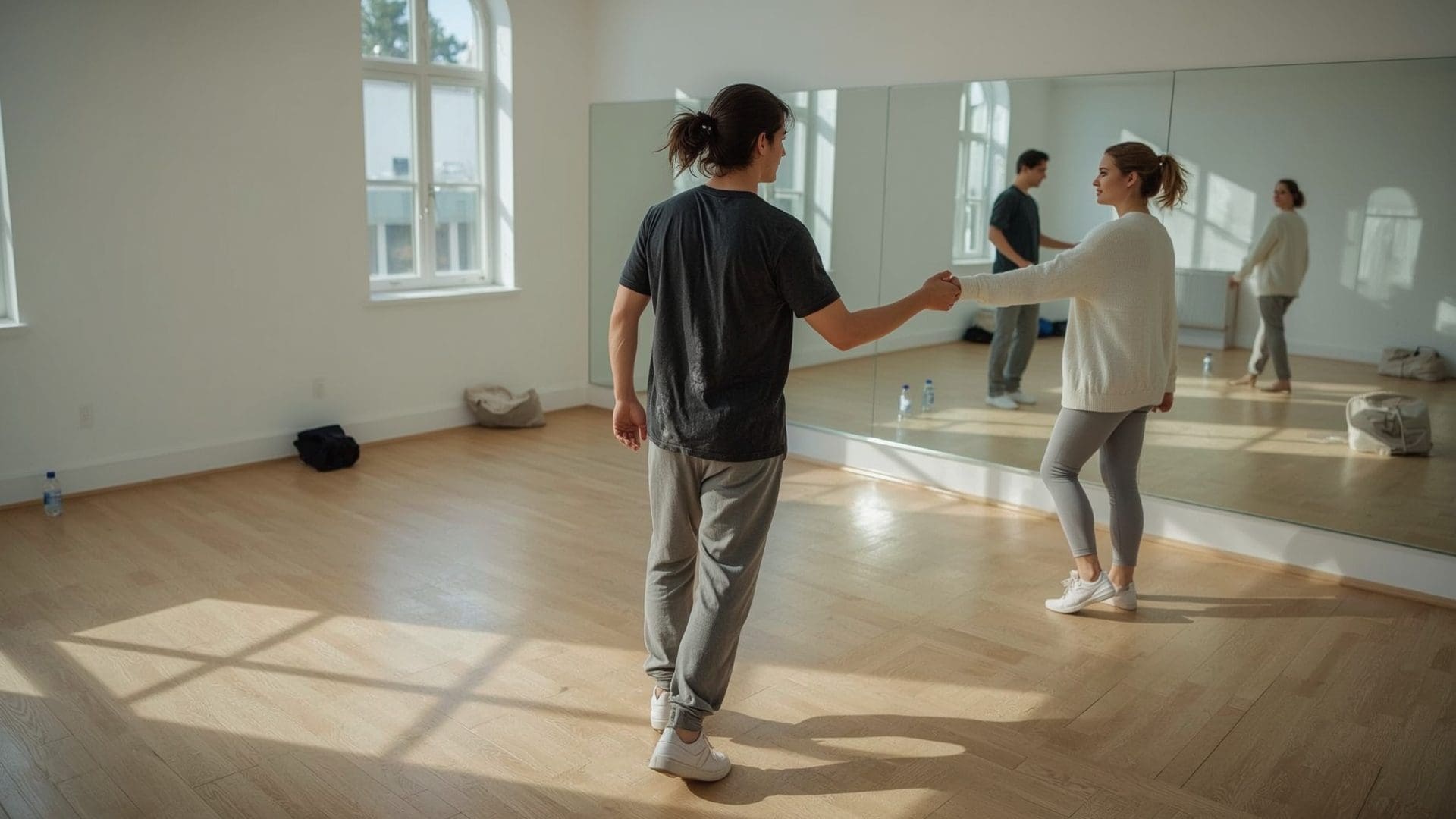
Quick Answer: Most couples don’t need formal dance lessons for a slow dance. A simple sway, slight turn, and one or two basic moves are enough. Lessons become valuable when you choose an upbeat song, want a choreographed first dance, or feel genuinely uncomfortable dancing in front of people.
The slow sway is underrated. You hold each other, shift weight from foot to foot, and occasionally turn. It looks natural, it feels intimate, and it works with almost any song under 110 BPM.
When Dance Lessons Are Worth It
- Your song is above 120 BPM — Faster songs need planned moves to avoid looking random
- You want a “wow” moment — A dip, lift, or surprise tempo change requires practice
- One or both partners have dance anxiety — Lessons build confidence more than skill
- You chose a waltz tempo (3/4 time) — Waltz has a specific step pattern that benefits from instruction
Dance Lesson Formats
| Format | Sessions Needed | Cost Per Session | Total Cost | Lead Time |
|---|---|---|---|---|
| Private studio lessons | 3 to 6 | $75 to $150 | $225 to $900 | Start 2 to 3 months before |
| Online video lessons | Self paced | $15 to $50/month | $30 to $100 | Start 6 to 8 weeks before |
| Group wedding dance class | 4 to 8 | $20 to $40 | $80 to $320 | Start 2 months before |
| Single crash course session | 1 | $100 to $200 | $100 to $200 | 2 to 4 weeks before |
Even one lesson makes a noticeable difference. An instructor can teach you a basic box step, a simple turn, and a confident ending in under an hour. That’s enough to look polished without feeling rehearsed.
What Are the Best First Dance Songs for Non Traditional Couples?
Quick Answer: Non traditional couples often gravitate toward gender neutral lyrics and songs that reflect their unique relationship. “Make You Feel My Love” by Adele, “Latch (Acoustic)” by Sam Smith, and “I Choose You” by Sara Bareilles are popular choices with inclusive lyrics and romantic tone.
Many classic first dance songs use gendered language (“she,” “her,” “girl”) that doesn’t fit every couple. The good news is that modern songwriting has shifted toward universal pronouns and inclusive phrasing.
Gender Neutral First Dance Songs
- “Make You Feel My Love” by Adele — uses “you” throughout, deeply emotional
- “Latch (Acoustic)” by Sam Smith — stunning vocal, no gendered references
- “I Choose You” by Sara Bareilles — celebratory, joyful, inclusive
- “Tenerife Sea” by Ed Sheeran — poetic imagery, gender neutral language
- “Ho Hey” by The Lumineers — uses “you” and “I,” upbeat folk energy
- “Lucky” by Jason Mraz ft. Colbie Caillat — duet format works for any couple
You can also look for instrumental versions or covers that change pronouns. Many independent artists on platforms like Spotify and YouTube create wedding specific renditions of popular songs.
How Do You Handle the First Dance If You Hate Dancing?
Quick Answer: Choose a short song (under 2.5 minutes), invite guests to join after 30 to 45 seconds, or skip the solo first dance entirely by opening the floor with a group slow dance. The moment is about connection, not performance.
Not everyone loves being watched. If dancing in front of 150 people sounds like a nightmare, you have options beyond the traditional solo spotlight dance.
Alternatives to a Traditional First Dance
- The quick invite — Dance alone for 30 to 45 seconds, then signal the DJ to invite all couples to join
- The group first dance — Skip the solo moment entirely and ask all couples to hit the floor together
- The surprise moment — Start with a slow song, then cut to an upbeat song with a flash mob style dance you practiced with your bridal party
- The dimmed lights approach — Ask your DJ to lower the lights significantly so you feel less exposed
- Skip it — It’s your wedding. No rule says you must have a first dance at all
If you do dance, remember: nobody is judging your technique. They’re watching two people they love share a moment. A genuine smile and a simple sway will always look better than stressed perfection.
What Songs Should You Avoid for Your First Dance?
Quick Answer: Avoid songs with hidden breakup lyrics, excessively long instrumentals, extremely fast tempos above 150 BPM without choreography, songs associated with sad events or movies, and any song where the deeper meaning contradicts a wedding celebration.
Some songs that sound romantic are actually about heartbreak, infidelity, or loss. Others are so closely tied to movies or cultural moments that they carry baggage you might not want.
Commonly Misunderstood “Love” Songs
- “Every Breath You Take” by The Police — About obsession and stalking, not devotion
- “I Will Always Love You” by Whitney Houston — Written about leaving someone, not staying
- “Iris” by Goo Goo Dolls — About not wanting someone to see your flaws, tied to a tragic film
- “Chasing Cars” by Snow Patrol — Associated with medical drama death scenes
- “Fix You” by Coldplay — Written about grief and loss
- “Love the Way You Lie” by Eminem ft. Rihanna — About a toxic, abusive relationship
Always Google “[song name] meaning” or “[song name] lyrics” before committing. Read the verses, not just the chorus. The chorus might say “I love you forever,” but the verses might tell a different story.
How Do You Coordinate Your First Dance Song with Your DJ or Band?
Quick Answer: Share your exact song choice, preferred version, and any edits needed at least 4 weeks before the wedding. Discuss the intro, how long you want to dance, and what happens immediately after. A good DJ plans the transition from first dance into parent dances or open dancing.
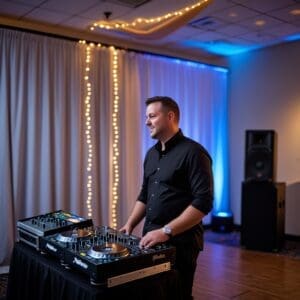
Your DJ or band doesn’t just press play. They manage the announcement, the lighting cue, the volume levels, and the transition to whatever follows. Giving them clear details avoids awkward surprises.
What to Tell Your DJ or Band
- Exact song title, artist, and version — “Perfect” by Ed Sheeran has multiple versions (solo, duet with Beyoncé, duet with Andrea Bocelli)
- Start and end points — Where in the song should they start? When should they fade?
- Transition plan — Do father daughter dance songs follow immediately, or is there a break?
- Volume preference — Do you want the music loud enough to cover conversation, or intimate enough to whisper to each other?
- Guest invitation timing — If you want guests to join halfway through, agree on the exact cue
If you’re working with a live wedding band, confirm they can perform your song in the right key and tempo. Some songs are difficult to replicate live, and a band may suggest an arrangement that sounds slightly different from the recording.
What Are Some Unexpected First Dance Song Choices That Work?
Quick Answer: Unexpected choices like “Yellow” by Coldplay, “Home” by Edward Sharpe and the Magnetic Zeros, “Never Tear Us Apart” by INXS, or “Sea of Love” by Cat Power surprise guests while staying romantic. Unconventional picks create more memorable moments.
You don’t have to pick from the “Top 50 Wedding Songs” list. Some of the most memorable first dances come from songs nobody expected. The surprise itself becomes part of the story.
Unconventional Songs That Work on a Dance Floor
- “Yellow” by Coldplay — 86 BPM, poetic, surprisingly great for a slow dance
- “Home” by Edward Sharpe — 78 BPM, acoustic warmth, deeply personal lyrics
- “Never Tear Us Apart” by INXS — 97 BPM, dramatic, cinematic energy
- “Sea of Love” by Cat Power — 80 BPM, stripped down, hauntingly romantic
- “Digital Love” by Daft Punk — 124 BPM, playful, unexpected, great for fun couples
- “The Luckiest” by Ben Folds — 76 BPM, piano driven, deeply emotional lyrics
- “No One’s Gonna Love You” by Band of Horses — 80 BPM, indie gem, beautiful melody
The trick with unconventional choices is committing fully. Own your pick. If you dance to “Digital Love” by Daft Punk with confidence and joy, your guests will love it. Hesitation is what makes any song choice feel awkward.
How Do You Build Your Wedding Song Playlist Around Your First Dance?
Quick Answer: Your first dance sets the musical tone for the night. Build your wedding song playlist outward from it, matching the energy arc: emotional first dance, warm parent dances, then gradually increasing energy toward open dancing and party songs.
Think of your first dance as the emotional anchor. Everything flows from it. The parent dances should complement the mood. The transition to open dancing should build energy, not jolt everyone from a ballad to a bass drop.
Energy Arc for Reception Music
- First dance (emotional peak) — Your song, your moment
- Parent dances (warm continuation) — father daughter dance songs and mother son dance songs that match the emotional register
- Open dance floor transition — An upbeat song everyone knows, signaling it’s time to party
- Mid reception peak energy — Dance hits, singalongs, crowd pleasers
- Last dance (emotional close) — One final slow dance to bookend the evening
Discuss this arc with your DJ. A skilled DJ reads the room and adjusts, but having a planned structure gives them a roadmap. Your slow dance songs for weddings should be scattered throughout the night, not clustered together.
Frequently Asked Questions
Can you have two first dance songs?
Yes. Many couples start with a slow song and transition into an upbeat song midway through. Your DJ can create a seamless mashup or a dramatic cut. Keep the total length under 4 minutes so the moment stays tight.
Is it okay to use a song from a movie as your first dance?
It’s a great option if the movie holds meaning for you as a couple. “A Thousand Years” from Twilight, “Can You Feel the Love Tonight” from The Lion King, and “Come What May” from Moulin Rouge are all popular soundtrack picks. Just make sure you love the song independent of the film.
What if our song has explicit lyrics?
Most songs have a clean or radio edit version. Ask your DJ to source the edited version. If a clean version doesn’t exist, your DJ can often manually bleep or lower volume during specific words. Consider whether the explicit content will bother older family members in attendance.
Should we practice our first dance at home?
Even 10 minutes of practice helps. Play your song in your living room and just dance to it. You’ll discover awkward sections, figure out where to stand, and feel more comfortable by the time your wedding day arrives. Practice in shoes similar to what you’ll wear.
How do we tell our DJ we want a song they might not know?
Send them the exact track file or a Spotify link at least 4 weeks before the wedding. Professional DJs have extensive libraries, but obscure indie tracks or international songs may not be in their collection. Providing the file ensures they have the right version.
What’s the most played first dance song right now?
“Perfect” by Ed Sheeran has held the top spot among wedding DJs for several years running. “All of Me” by John Legend and “A Thousand Years” by Christina Perri round out the top three. If you want something popular but slightly less expected, “Lover” by Taylor Swift has been rising fast.