The bridal party entrance sets the energy for your entire reception. It’s the moment guests stop chatting and start paying attention. Done right, it can get people out of their seats before the first course even arrives.
Whether your wedding vibe is elegant, playful, or somewhere in between, there’s an entrance style that fits. This guide covers everything from song selection and choreographed routines to themed concepts and practical tips for coordinating a group of people who may have very different comfort levels with the spotlight.
Key Takeaways
- Match the entrance style to your overall wedding vibe — a choreographed hip-hop routine works at a laid-back barn wedding but may feel off at a black-tie ballroom event.
- Music is the engine of the entrance — the right song drives energy, pacing, and crowd reaction.
- Choreography doesn’t have to be complicated — even a simple group pose or coordinated spin makes the entrance feel intentional and polished.
- Rehearse at least once before the wedding day — even five minutes of run-through prevents on-the-day confusion and awkward pauses.
- Give each couple or individual a moment — staggered entrances with short gaps between pairs keep the energy building without rushing anyone through.
- Coordinate with your DJ or band in advance — they need to know your song choices, cue points, and the exact order of the bridal party.
What Makes a Bridal Party Entrance Memorable?
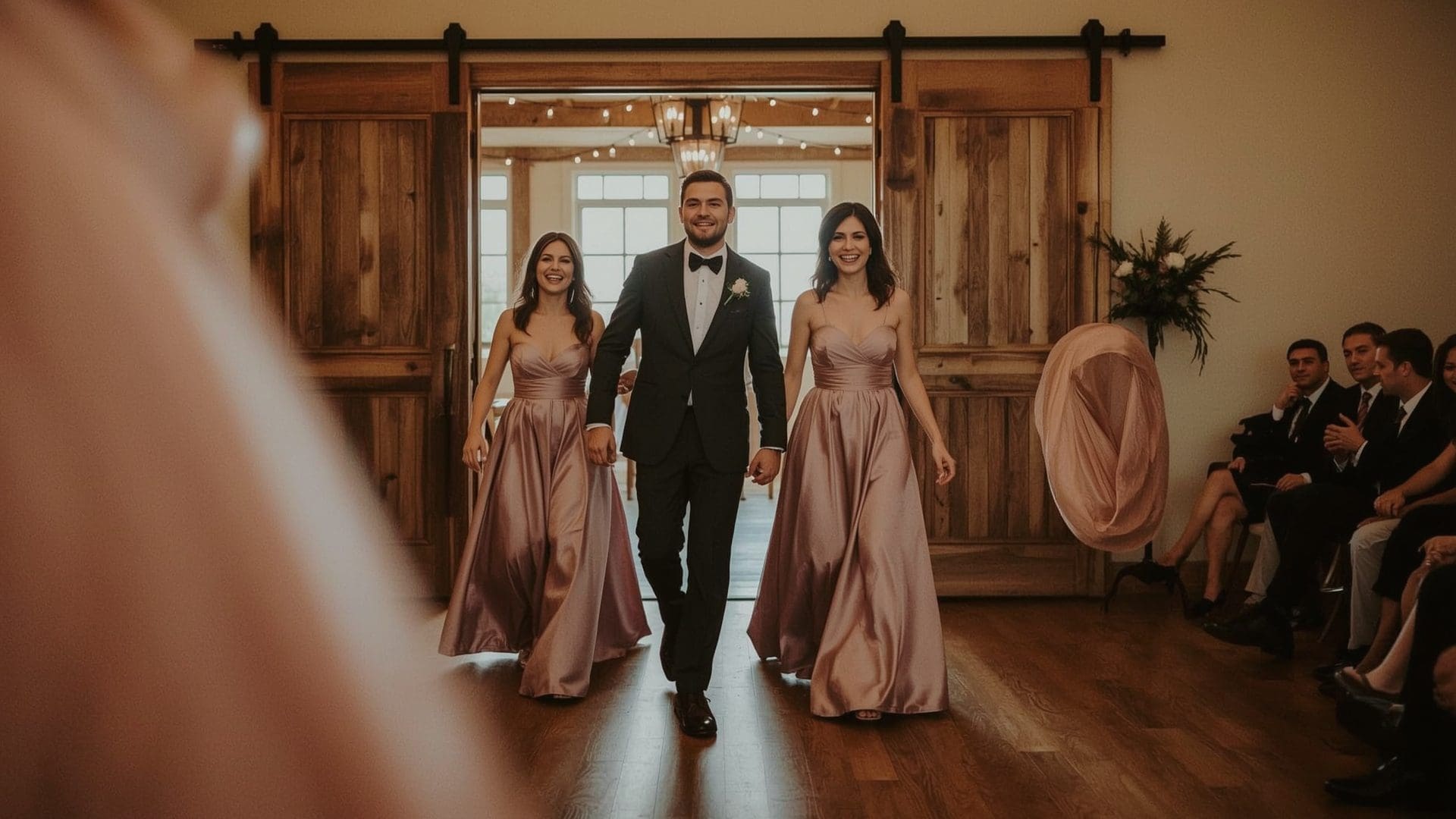
Quick Answer: A memorable bridal party entrance combines the right song, a clear entry format, and at least one unexpected moment — like a pose, a spin, or a playful interaction with guests. Preparation and personality make it stand out.
Most entrances that guests remember years later share three things: intentionality, personality, and energy transfer. Intentionality means the group clearly planned what they were doing. Personality means it reflects the actual people walking in. Energy transfer means the crowd feels something — excitement, joy, or laughter.
Generic entrances happen when couples pick a popular song but give the bridal party no direction. The result is a group of people walking awkwardly through a door while something upbeat plays. That’s fine, but it’s forgettable.
The fix is simple: add one specific element. It could be a signature move at the end of each pair’s walk. It could be a group freeze when the drop hits. It could be each person introducing themselves with a funny sign. One clear moment of intention turns a standard walk into something people talk about.
How Do You Choose the Right Song for Each Bridal Party Pair?
Quick Answer: Match the song to the couple’s personality or assign them a short clip from a longer entrance playlist. A 15-to-30-second section per pair is ideal — enough time to walk in and reach their spot without the song dragging.
Using One Song for the Full Bridal Party
One continuous song works well when the bridal party is small (four to six people total) and the entrance is meant to build momentum toward the couple. The DJ or emcee cues each pair as the song progresses. This creates a seamless, flowing feel.
Good choices for single-song full-party entrances tend to have a consistent, upbeat tempo with a strong build toward a chorus or drop. That final chorus becomes the couple’s cue to enter.
Using Individual Songs for Each Pair
Individual songs work best for larger bridal parties or when each pair has a distinct personality. This approach takes longer and requires tighter coordination with your DJ. Each clip should be pre-selected, trimmed to the right moment, and queued in order.
Individual song entrances also tend to get bigger crowd reactions because each pair gets their own “moment.” Guests cheer, laugh, and engage with each person differently.
Bridal Party Entrance Song Pairing Guide
| Pair Personality | Song Style | Example Track | Energy Level | Best Entrance Type |
|---|---|---|---|---|
| The fun, outgoing pair | Hip-hop or pop anthem | “Can’t Stop the Feeling” — Justin Timberlake | High | Dance or shimmy walk |
| The romantic pair | Soft R&B or acoustic pop | “All of Me” — John Legend | Medium | Slow, graceful walk with a pause |
| The funny pair | Comedy soundtrack or throwback | “Eye of the Tiger” — Survivor | High | Mock-dramatic walk with poses |
| The low-key pair | Indie pop or soul | “Lovely Day” — Bill Withers | Medium | Simple confident walk |
| The sporty pair | Arena rock or pump-up anthem | “Thunderstruck” — AC/DC | Very High | Fist pump, chest bump, or sprint |
What Are the Best Choreographed Bridal Party Entrance Ideas?
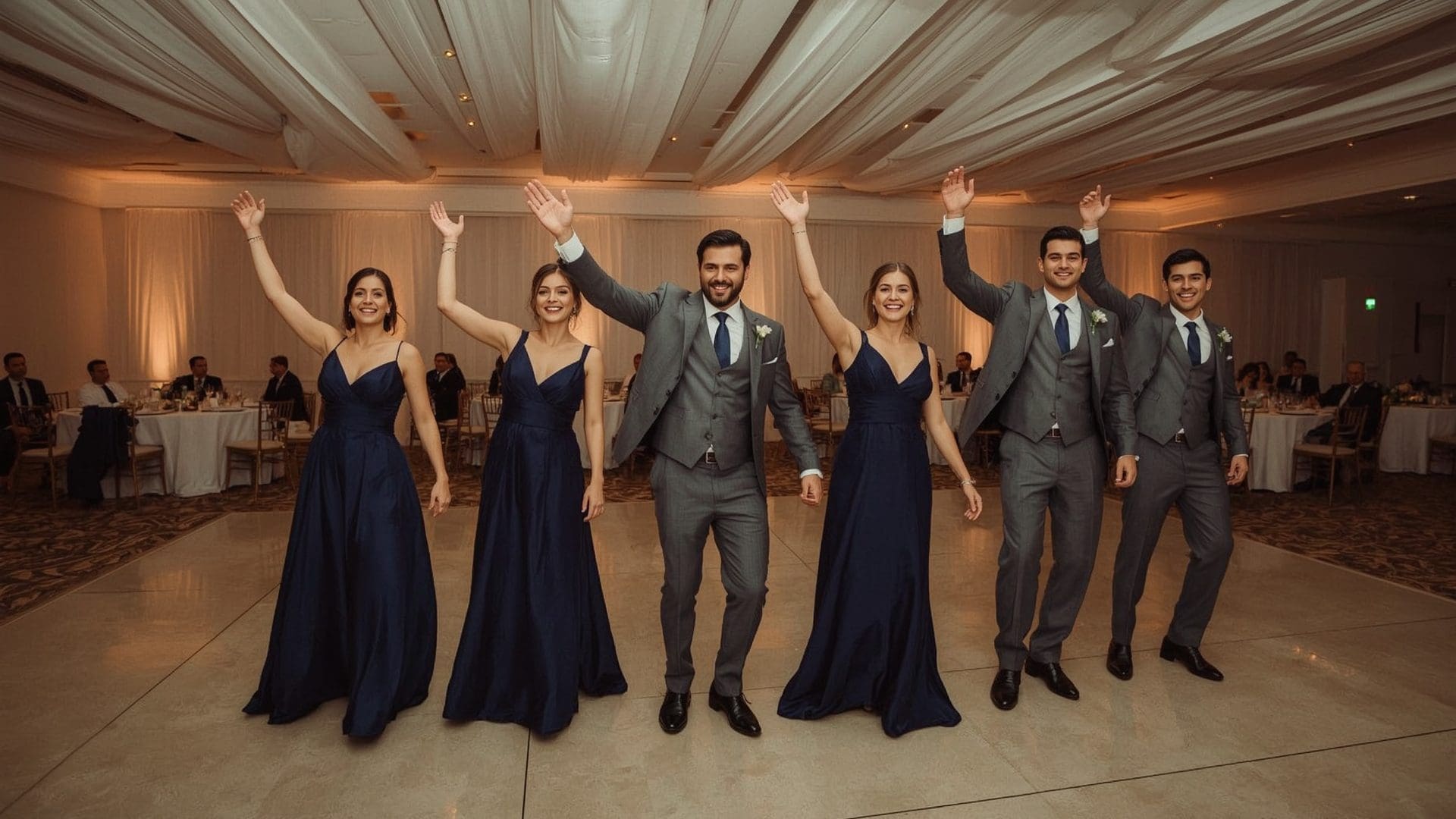
Quick Answer: The best choreographed entrances keep moves simple enough for non-dancers to learn in one rehearsal. Think group formations, a shared signature move, or a synchronized spin — not a full routine that requires weeks of practice.
The Group Dance Entrance
This is the most talked-about entrance style. The entire bridal party enters together and performs a short, rehearsed routine before breaking into their positions. Think of the videos that go viral online — usually 60 to 90 seconds of a well-known song, simple choreography, and genuine smiling.
The key is picking moves that most people can do regardless of dance experience. A hip swivel, a two-step, a hand raise, and a spin are accessible to nearly everyone. Assign one person (usually someone who dances) to lead the choreography and teach everyone else.
The Staggered Pair Entry with a Signature Move
Each couple or pair enters one at a time. As they reach the center of the floor or the end of the aisle, they hit a pose, do a short move, or share a moment (a dip, a twirl, a fist bump). Then they walk to their spot and the next pair enters.
This format is easier to coordinate than a full group dance because each pair only has to prepare their own moment. It also allows introverted members of the bridal party to do something small and comfortable.
The Flash Mob Style Entrance
The bridal party enters normally, pretends to take their positions, and then a song change triggers a surprise group routine. This works best with a smaller group (six to ten people) who are all comfortable with performance. The element of surprise is what makes it memorable.
Flash mob style entrances require the most preparation. You’ll need a dedicated rehearsal of at least one hour, a tight cue with your DJ, and everyone keeping the secret from guests beforehand.
The Runway Walk
Each pair walks the full length of the venue like they’re on a fashion runway. Slow, confident, with dramatic pausing and posing. This works beautifully for elegant venues with long center aisles. Play a high-energy pop anthem or a cinematic track to match the drama.
Pair the runway walk with a professional emcee who announces each person’s name and their relationship to the couple. It feels ceremonial and personal at the same time.
What Themed Entrance Concepts Work Well for Weddings?
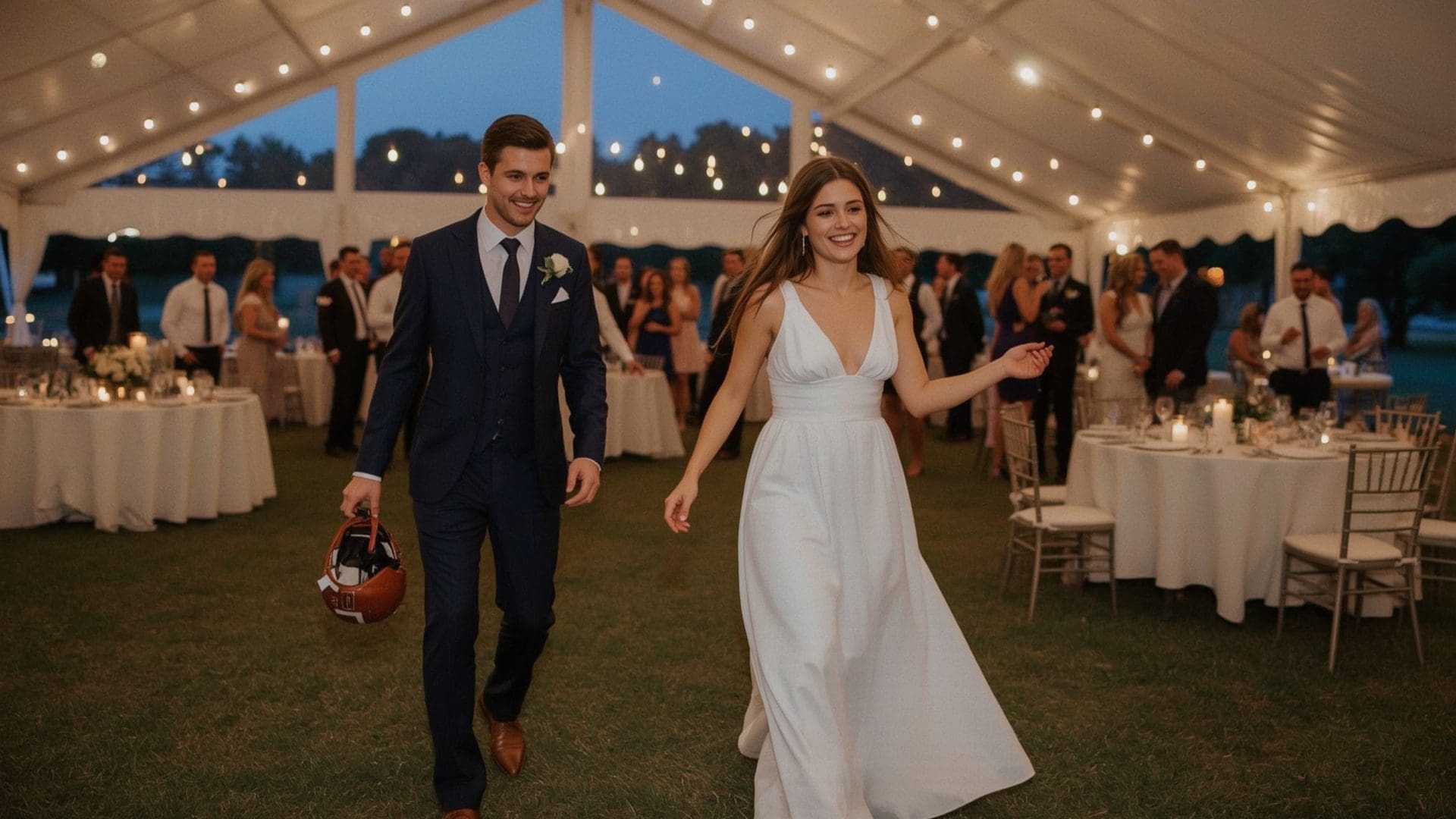
Quick Answer: Themed entrances align the bridal party introduction with your wedding’s overall aesthetic — from movie soundtracks to decades themes to sports walk-outs. The theme should be immediately recognizable to guests within the first five seconds of the song.
Movie and TV Themes
Pick a movie or show that means something to you as a couple, then build the entrance around it. The bridal party enters to the theme song or a famous scene’s soundtrack. Some pairs can carry props that reference the show.
Examples that work well: “Game of Thrones” main theme for a dramatic entrance, “Jurassic Park” for a humor-forward couple, or “The Office” opening theme for fans of the show. The crowd reaction is loudest when guests instantly recognize the reference.
Decades Themes
Each pair represents a different decade — 1970s, 1980s, 1990s, and so on. They enter to a song from their assigned decade and optionally wear a small accessory that nods to the era (sunglasses, a headband, a leather jacket). This works especially well for couples who love music history.
Sports Walk-Out Style
Borrow from professional athlete walk-outs. Each pair gets a personalized entrance with their “stats” read by the emcee (how long they’ve known the couple, a funny fact, their signature skill). Play pump-up music in the background. Add a fog machine or dramatic lighting change for effect.
Themed Entrance Concept Comparison
| Theme | Best Venue Type | Required Prep Time | Props Needed | Crowd Recognition Speed |
|---|---|---|---|---|
| Movie/TV Soundtrack | Any | Low (song selection only) | Optional | 5 seconds |
| Decades Theme | Barn, ballroom, outdoor | Medium (accessories + song prep) | Era accessories | 10 to 15 seconds |
| Sports Walk-Out | Casual, outdoor, barn | Medium (emcee scripting) | Optional (jerseys, foam fingers) | Immediate (emcee explains) |
| Flash Mob Surprise | Large reception hall | High (choreography + rehearsal) | None required | 20 to 30 seconds |
| Runway Walk | Ballroom, elegant venue | Low | None | Immediate |
How Should You Structure the Order of the Bridal Party Entrance?
Quick Answer: Start with groomsmen and bridesmaids paired together, followed by the maid of honor and best man, then the flower girl and ring bearer, and finally the couple. This builds momentum and saves the biggest reaction for last.
Standard Entrance Order
- Bridal party pairs (bridesmaids with groomsmen), starting with those furthest from the head table
- Maid of honor and best man (given the most individual time before the final pair)
- Flower girl and ring bearer (optional — often done separately or just before the couple)
- The couple themselves
Alternative Entrance Formats
Some couples opt for a “squad” entrance where all bridesmaids enter together followed by all groomsmen entering as a group. This creates two distinct energy peaks before the couple arrives.
Another option is a solo entrance for the couple only, skipping the full bridal party introduction at the reception. This keeps the focus entirely on the couple and shortens the introduction segment significantly.
Timing Guidelines for Each Pair
| Bridal Party Size | Time Per Pair | Total Entrance Duration | Gap Between Pairs | Recommended Song Length |
|---|---|---|---|---|
| 2 to 4 people (1-2 pairs) | 20 to 25 seconds | 1 to 2 minutes | 3 to 5 seconds | 1 song (full) |
| 6 to 8 people (3-4 pairs) | 20 to 30 seconds | 2 to 3 minutes | 5 seconds | 1 to 2 songs |
| 10 to 14 people (5-7 pairs) | 15 to 20 seconds | 3 to 4 minutes | 3 to 4 seconds | 2 to 3 songs or clips |
| 16 or more (8+ pairs) | 12 to 15 seconds | 4 to 5 minutes | 3 seconds | 3+ clips or medley |
What Are Fun and Unique Bridal Party Entrance Ideas That Aren’t Dances?
Quick Answer: Non-dance entrance ideas include holding funny signs, re-enacting a famous photo, entering with props that match each pair’s personality, or performing a short skit. These options work well for bridal parties where not everyone is comfortable dancing.
Sign Entrances
Each person or pair carries a sign with something written on it — a funny fact about themselves, their “role” in the friendship, or a message for the couple. Signs can be custom-printed or handwritten on chalkboard-style boards. They give guests something to read and react to, even if the walk itself is simple.
Props That Match Personalities
Work with each pair to choose a prop that represents them. A pair of foodies might carry a plate of their favorite snack. A pair who met at a concert might hold up phone flashlights like they’re at a show. Props turn the entrance into a storytelling moment without requiring any choreography.
The Fake-Out Entrance
The emcee starts to introduce the bridal party normally, then the music cuts out and switches to a completely different (usually funnier) song. The bridal party switches from a dignified walk to an over-the-top silly one. The contrast between the setup and the punchline gets a huge laugh.
The Tunnel Entrance
Guests are asked to stand and form two lines, creating a human tunnel. The bridal party walks through it with high-fives and cheers all the way. This works especially well for outdoor tented receptions or venues where the layout allows for a long walking path.
How Do You Coordinate a Bridal Party Entrance Without a Rehearsal Dinner Run-Through?
Quick Answer: If a full rehearsal isn’t possible, send each pair a short video of their song cue and a written description of what they should do. A five-minute walkthrough on the day of the wedding — before guests arrive — is usually enough for simple entrance formats.
The Day-of Coordination Checklist
- Confirm the entrance order in writing and share it with the DJ, emcee, and bridal party at least one week before the wedding
- Mark where each pair should stand while waiting to enter
- Establish a clear cue (a shoulder tap, a nod from the DJ, or a word from the coordinator) so each pair knows exactly when to go
- Walk through the physical path once, even without music, so no one gets confused about the route
- Designate one person (usually the maid of honor or best man) to manage the line-up backstage
Working With Your DJ on Entrance Cues
Your DJ needs more than a song title. Give them the exact timestamp where the song should start playing, the tempo you want, and whether you want a fade-in or a hard start. If using multiple clips, provide a written list in order.
A good DJ will also watch the doorway and adjust the music pacing if a pair is moving faster or slower than expected. Talk through this with them during your planning meeting so they know how much flexibility they have.
What Are the Most Common Bridal Party Entrance Mistakes to Avoid?
Quick Answer: The biggest mistakes are walking too fast, choosing a song that doesn’t match the group’s energy, skipping any kind of rehearsal, and not briefing the DJ on exact cue points. All four are easy to fix with 20 minutes of planning before the wedding day.
Walking Too Fast
This is the most universal entrance mistake. When people are nervous, they rush. A rushed entrance gives photographers no time to capture the moment and guests no time to react. Practice walking at half your natural pace. It will feel uncomfortably slow to you and look perfect on video.
Choosing a Song That’s Too Long or Too Short
A song that runs for five minutes with no energy variation will lose the crowd by minute two. A 30-second clip that cuts off before a pair reaches their spot creates an awkward silence. Trim songs intentionally and test them by physically walking the distance while the music plays.
Not Accounting for Venue Layout
Some venues have short entry paths. Others have long winding routes from the entrance door to the reception floor. The distance affects timing, song selection, and choreography. Always test the walk-in path before finalizing your plan.
Ignoring Comfort Levels in the Bridal Party
Not everyone in your bridal party will be comfortable with a big dance number. Forcing someone to do choreography they hate will show on their face — and on video. The best entrance ideas create space for different comfort levels. Let the performers perform and let the quieter members do something that feels natural to them.
How Do Lighting and Production Elements Enhance a Bridal Party Entrance?
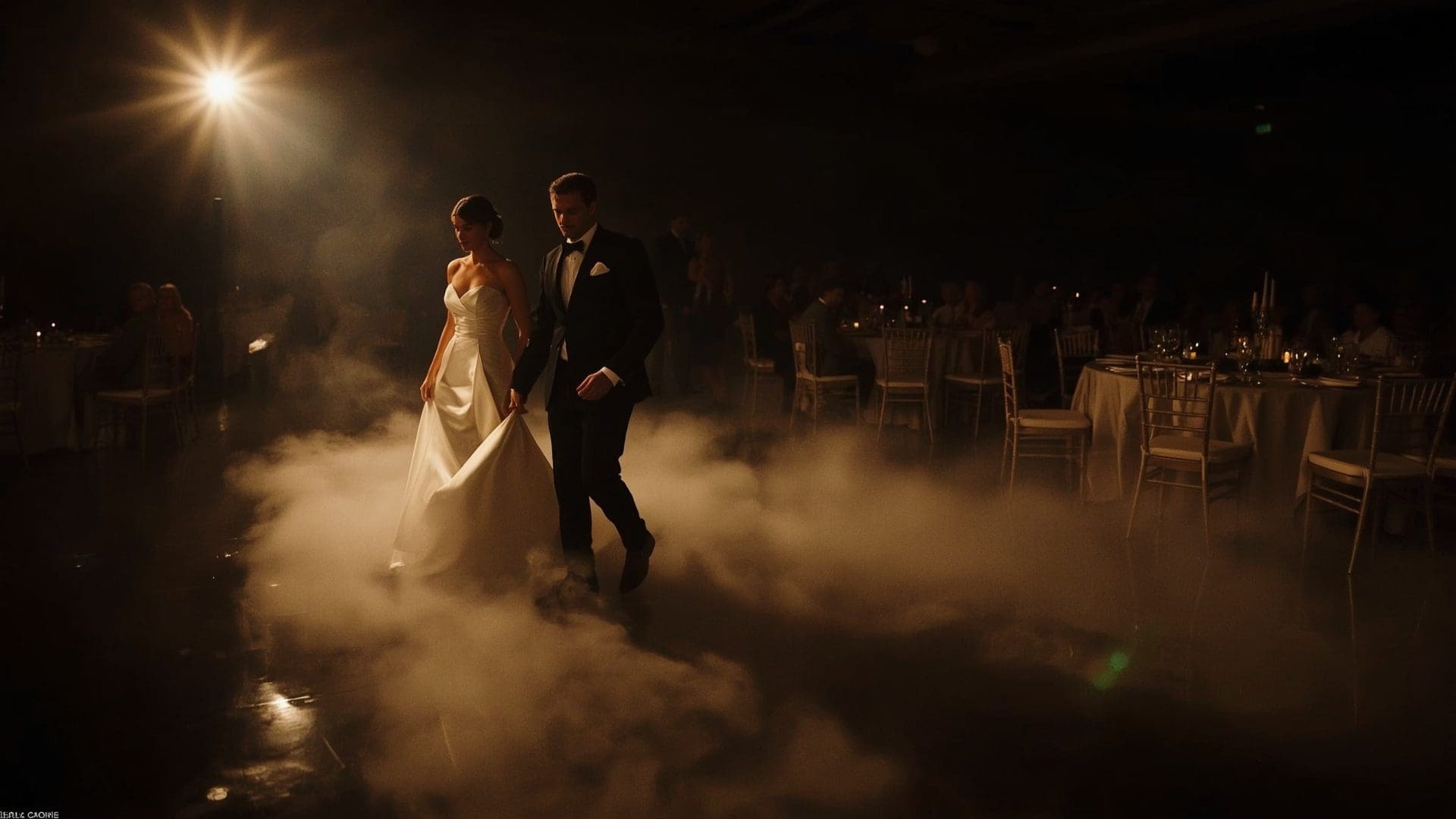
Quick Answer: Spotlights, pin spots, fog machines, and color washes all elevate the visual impact of an entrance. Even a simple spotlight following each pair as they walk in makes the moment feel intentional and cinematic without adding cost to the overall entrance plan.
Lighting Options by Budget
| Lighting Element | Estimated Cost Range | Visual Effect | Best Entrance Style | Setup Requirement |
|---|---|---|---|---|
| Moving spotlight | Included with most DJ packages | Follows each pair through entry path | Runway walk, staggered pairs | Pre-programmed by DJ |
| Fog machine burst | $50 to $150 rental | Dramatic ground-level cloud effect | Grand entrance, sports walk-out | Positioned at entry door |
| Color wash uplighting | $150 to $500 for venue | Fills room with a single color during entry | Any style | Set in advance by lighting tech |
| Strobe or pulse effect | $75 to $200 add-on | Club-style energy burst at song drop | Dance entrance, flash mob | Requires photosensitivity warning |
| Gobo projection | $100 to $300 | Projects names or monogram on floor | Elegant or personalized entrance | Custom template ordered in advance |
What Songs Work Best for Different Bridal Party Entrance Styles?
Quick Answer: High-energy pop and hip-hop work for dance entrances. R&B ballads suit romantic or slow walk styles. Classic rock and movie scores work for themed entrances. Match the song’s tempo in beats per minute to your intended walking or dancing pace.
Song Categories and Tempo Reference
- Dance entrance (120 to 140 BPM): “Uptown Funk” (Bruno Mars), “Happy” (Pharrell Williams), “24K Magic” (Bruno Mars)
- Runway walk (90 to 110 BPM): “Bad Guy” (Billie Eilish), “Levitating” (Dua Lipa), “Blinding Lights” (The Weeknd)
- Romantic slow walk (60 to 80 BPM): “A Thousand Years” (Christina Perri), “Thinking Out Loud” (Ed Sheeran)
- Comedy or themed entrance: Movie themes, TV show openers, or decade throwbacks chosen for recognition value
- Sports walk-out style (130 to 160 BPM): “Welcome to the Jungle” (Guns N’ Roses), “Lose Yourself” (Eminem)
Matching BPM to Walking Pace
The average comfortable walking pace is around 100 steps per minute. A song at 100 BPM will feel natural for a steady, confident walk. Songs above 120 BPM encourage faster movement — good for dance entrances. Songs below 80 BPM create a slower, more dramatic pace that works for elegant venues.
Ask your DJ to help identify the BPM of any song you’re considering. Most professional DJ software displays this information automatically.
Frequently Asked Questions
Can you have different songs for each bridal party pair?
Yes, and it’s one of the most popular approaches at receptions today. Each pair gets a 20-to-30-second clip of a song that represents their personality or relationship with the couple. Your DJ queues each clip in order and fades between them. Share a written list with exact song titles and artists at least two weeks before the wedding.
How long should the entire bridal party entrance take?
Most bridal party entrances run between two and four minutes total, depending on the size of the group. A bridal party with four pairs should aim for roughly two minutes. Larger groups with eight or more pairs can stretch to four or five minutes without losing crowd energy, as long as each pair has a distinct moment.
Do bridesmaids and groomsmen have to enter together?
No. Pairing is a common format but not a requirement. Some bridal parties enter individually, in same-gender groups, or in a combined group all at once. The right format depends on your venue layout, song choice, and how much individual attention you want each person to receive.
What if someone in the bridal party is uncomfortable dancing?
Give them an alternative role that still feels intentional. They could carry a funny sign, interact with the crowd on their way in, or do a single simple pose at the end of their walk. The goal is participation, not performance. A confident walk with good posture and a genuine smile is always better than uncomfortable dancing.
How early should you share the entrance plan with your DJ?
Share all entrance details at least two weeks before the wedding. This includes song titles, artists, timestamps or cue points, the order of the bridal party, and any lighting cues tied to the entrance. Earlier is always better — it gives your DJ time to pull the music, test the transitions, and flag any potential issues before the day arrives.
Should flower girls and ring bearers be part of the reception entrance?
It depends on the children’s ages and their energy levels after the ceremony. Young children (under five) often do better skipping the reception entrance entirely and rejoining the party when they’re comfortable. Older children (ages six to ten) can handle a short entrance walk if they have a clear job to do, like carrying a sign or walking with a bridesmaid they’re comfortable with.