A wedding DJ typically costs between $1,000 and $3,500, with most couples across the United States paying an average of $1,400 to $1,800 for a standard four to five hour reception. The exact figure depends on your region, the DJ’s experience level, and how many add-ons you include, such as uplighting or a photo booth. According to The Knot’s 2026 Real Weddings Study, entertainment remains one of the top three budget categories couples underestimate when planning a reception. Understanding the full pricing picture before you request quotes puts you in a much stronger position to negotiate and compare offers fairly.
Key Takeaways
- National average wedding DJ pricing runs from $1,000 to $3,500, with the Raleigh, North Carolina market typically landing between $1,200 and $2,500. Prices shift based on demand, so cities with more weddings per weekend tend to sit at the higher end of that range.
- Budget DJs start around $600 to $900, mid-range professionals charge $1,200 to $2,000, and premium DJs with full production run $2,500 to $3,500 or more. The jump in price usually buys you backup equipment, a written contract, liability insurance, and a DJ with several hundred weddings under their belt instead of a handful.
- Add-ons such as uplighting ($150 to $400), a photo booth ($400 to $900), and cold sparklers ($200 to $500) can add hundreds or thousands to your final invoice. Monogram lighting, a live MC for the ceremony, and extra speakers for outdoor spaces all carry their own separate fees too.
- Saturday weddings during peak season (May through October) cost noticeably more than off-season or weekday events. Booking a Friday or Sunday date, or getting married in January or February, can shave several hundred dollars off the same DJ’s rate.
- Comparing quotes requires checking hours of coverage, equipment quality, and whether ceremony sound is included, not just the bottom-line price. Ask each DJ for an itemized breakdown so you know exactly what setup time, travel fees, and overtime charges look like before you sign anything.
Average Wedding DJ Cost Nationwide and in the Triangle Region
Pricing for wedding entertainment shifts significantly depending on where you live and marry. In major metro markets such as New York City, Los Angeles, and Chicago, WeddingWire’s 2026 Newlywed Report places average DJ costs between $2,200 and $4,500, largely driven by higher venue density and demand. In the Raleigh, North Carolina area, including Cary, Durham, and Chapel Hill, couples generally pay less for comparable service, with most professional DJs charging between $1,200 and $2,500 for a standard reception package.
Breaking pricing into tiers makes it easier to know what you are actually paying for at each level:
- Budget tier ($600 to $900): Newer DJs, consumer-grade speakers, minimal or no planning consultation, limited MC experience.
- Mid-range tier ($1,200 to $2,000): Professional sound equipment, one or two planning meetings, MC services included, online music request tools.
- Premium tier ($2,500 to $3,500+): High-end sound and lighting rigs, backup equipment on site, extensive local reputation, full event coordination with your venue and photographer.
These ranges reflect the Triangle market specifically. If you are marrying in a rural venue outside the metro core, travel fees may add $50 to $150 to any of these tiers. To see what’s included in a Raleigh wedding DJ’s services at different price points, it helps to compare a base package side by side with an upgraded one before requesting a formal proposal.
What Drives Wedding DJ Pricing Up or Down
Several concrete variables explain why one quote lands at $900 and another at $3,000 for the same date. Reviewing each one helps you understand where flexibility exists and where it does not.
Experience and Reputation
A DJ with a decade of wedding experience and dozens of five-star reviews charges a premium because couples are paying for predictability. That reliability matters when a microphone fails mid-toast or a timeline shifts by twenty minutes without warning.
Hours of Coverage
Most base packages cover four to five hours of performance time. Additional hours typically add $100 to $200 each, so a reception that runs from 6 p.m. to midnight instead of 10 p.m. could add $200 to $400 to your total. Always confirm the overtime rate in writing before your event date.
Equipment Investment
Professional-grade speakers, subwoofers, wireless microphone systems, and backup gear cost thousands of dollars for a DJ to own and maintain. That investment shows up in the price you pay, particularly for outdoor venues or large ballrooms where acoustics are unforgiving.
Day of the Week and Season
Saturday evenings between May and October are the highest-demand slots in nearly every U.S. market, according to the Wedding Report’s 2026 industry survey. Booking a Friday evening or an off-season Sunday can lower your DJ cost by 10 to 20 percent for the same quality of service.
Travel Distance
Most DJs include travel within a 25 to 30 mile radius of their home base in the quoted price. Venues beyond that radius, especially rural properties, often carry a travel fee of $50 to $150 depending on distance.
What a Standard Wedding DJ Package Typically Includes
A base wedding DJ package is rarely just music. It is a bundle of services that, when itemized separately, would cost far more than the flat rate suggests. A typical mid-range package includes:
- One DJ performing for four to five hours during the reception
- A professional sound system sized appropriately for the venue and guest count
- A wireless microphone for toasts, speeches, and announcements
- One or two pre-event planning consultations to build your timeline and song list
- An online planning portal for music requests and do-not-play lists
- Setup and breakdown time, which is billed separately from performance hours
- Master of ceremonies duties for introductions, the first dance, and the cake cutting
Ceremony sound coverage is where packages diverge most. Some DJs bundle it into the base rate; others treat it as a distinct add-on entirely. Always ask this question directly when reviewing a proposal, since it is one of the most common sources of billing surprises after the contract is signed.
Add-Ons That Change Your Final Invoice
Add-ons are where a modest quote can quietly grow into a much larger number. None of these are unnecessary, but each one should be a deliberate choice rather than a surprise on your final bill.
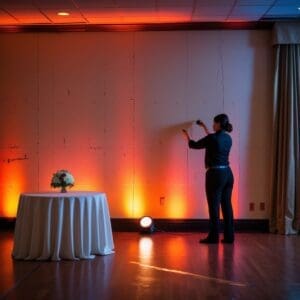
- Uplighting: Colored LED fixtures placed around the reception room’s perimeter, typically $150 to $400 depending on room size and fixture count.
- Ceremony sound system: A separate speaker and microphone setup for your vows, usually $150 to $300 if not bundled into the base package.
- Cocktail hour coverage: Background music in a separate room during your photos, often an additional $100 to $200.
- Photo booth: A popular guest favorite, generally priced between $400 and $900 depending on props, an attendant, and printed copies.
- Monogram gobo light: A projected light displaying your initials on the dance floor, typically $75 to $150.
- Cold sparklers: Indoor-safe spark effects for a grand entrance or first dance, generally $200 to $500 depending on the number of units and venue restrictions.
Bundling several add-ons with one vendor often costs less than booking each separately. Before finalizing any package, you can see the current package tiers referenced throughout this cost breakdown to compare exactly which add-ons come standard versus which cost extra.
Wedding DJ Cost Compared to a Live Band
A live band typically costs three to five times more than a DJ for the same event length, according to Bridal Guide’s 2026 vendor cost survey. A four-piece band commonly charges $3,500 to $6,000 for a reception, while a full eight to ten piece band can exceed $10,000. That price gap exists because you are paying for multiple musicians, individual cartage fees, and sound engineering rather than a single performer managing one integrated system.
DJs also offer broader musical range in a single night. A band typically performs two to three sets covering a curated genre list, while a DJ can move seamlessly from a 1990s dance track to a current chart hit without rehearsal. For couples prioritizing budget flexibility alongside variety, a DJ generally delivers more value per dollar spent, though a band brings a live-performance energy that some couples consider worth the higher cost.
How to Compare Quotes and Choose the Right DJ
Requesting three to five quotes is standard practice, but the proposals rarely arrive in a format that makes comparison simple. Some vendors itemize every line item, while others present one bundled number. To evaluate quotes fairly, work through these steps in order:
- Confirm total performance hours and whether setup or breakdown time counts against that total.
- Ask whether ceremony sound and cocktail hour coverage are included or billed as add-ons.
- Verify the equipment brand and whether backup gear travels with the DJ to every event.
- Ask directly whether the DJ named in the contract is the one performing, since some companies subcontract without disclosing it upfront.
- Check whether a planning consultation and online request portal are part of the package or cost extra.
A $900 quote missing ceremony sound, backup equipment, and a planning meeting can easily cost more once those pieces are added back in than a $1,800 quote that already includes them. Price alone never tells the full story. A DJ who reads the room, keeps your timeline on schedule, and handles a technical issue calmly is worth considerably more than one who simply plays a downloaded playlist. Once you have narrowed your options and settled on a comfortable budget range, you can check availability once you’ve settled on a budget range for your reception before another couple claims your date.
Frequently Asked Questions
How much should I budget for a wedding DJ in North Carolina?
Plan for $1,200 to $2,500 for a standard four to five hour reception in the Raleigh area. Budget options start around $600 to $900, while premium DJs with full lighting packages and extensive experience can reach $3,500 or more.
Is it worth paying more for an experienced wedding DJ?
Yes, in most cases the added cost reflects fewer risks on your wedding day. Experienced DJs handle timeline changes, equipment failures, and unpredictable crowds far more smoothly than newer performers, which reduces stress for you and your planner.
Does the wedding DJ price include lighting and a photo booth?
Usually not, unless the package specifically states it does. Uplighting, monogram projections, and photo booths are almost always separate add-ons ranging from $75 to $900 depending on the item.
Why do wedding DJ prices vary so much between vendors?
Pricing differences usually come down to experience, equipment quality, and included hours. A $900 quote and a $2,500 quote may cover the same date but include very different levels of preparation, backup equipment, and MC involvement.
Should I book a DJ or a live band for my reception?
Most couples on a moderate budget choose a DJ because it typically costs three to five times less than a live band. A DJ also offers broader musical variety across an entire evening without requiring rehearsed set breaks.
Conclusion
Wedding DJ pricing in 2026 spans a wide range, from around $600 for a basic package to $3,500 or more for a full-service package with lighting, MC work, and ceremony sound. The numbers become far less intimidating once you understand what drives them: hours booked, equipment included, experience level, and your local market. A DJ in a rural area might charge $800 for a package that costs $2,000 in a major city, and that gap has nothing to do with skill and everything to do with overhead and demand.
Before you sign anything, get at least three quotes and compare them line by line. Ask each DJ what’s actually included in their base price: setup and teardown time, a backup sound system, liability insurance, a written contract, and a planning meeting before the wedding. Some vendors bundle in uplighting or a photo booth to look like a better deal, but if you don’t need those extras, you’re paying for filler instead of the parts of the service that matter, like a solid sound system and someone who can read a room full of relatives and keep the dance floor moving.
Watch out for a few common pricing traps. A quote that seems 30% below every other bid usually means fewer hours, older equipment, or a DJ who’s new enough that they’re still building a portfolio. On the flip side, a high price doesn’t automatically mean better service. Ask for references from weddings within the last year, not just a highlight reel, and ask specifically how the DJ handled an awkward moment, like a delayed grand entrance or a request they had to turn down.
Focus on comparing total hours, included services, and add-on costs rather than chasing the lowest headline price alone. Build in a buffer of $200 to $300 for overtime, since receptions almost always run long once toasts, cake cutting, and extra dance requests get added in. A well-matched DJ who fits your budget and your vision for the reception will do more for your wedding day than any single upgrade or lighting package ever could.
The right wedding DJ costs exactly what your reception is worth to you, not a dollar more than necessary and not a dollar less than the service deserves.