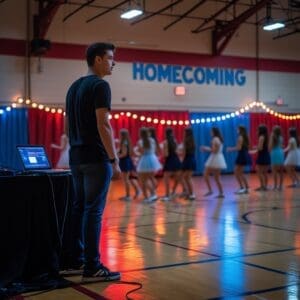
An AI photo booth is an event photo station that uses artificial intelligence to transform, stylize, or generate guest photos in real time, rather than simply capturing a straightforward snapshot. Instead of a plain printed picture, guests walk away with images reimagined as vintage film portraits, animated cartoon characters, glamour shots, or even fantastical scenes generated from a text prompt. The technology has moved quickly from a novelty at tech conferences into a mainstream fixture at weddings, corporate galas, and brand activations across the United States. Industry data on event technology adoption shows that generative AI features are now among the fastest-growing add-ons requested by couples and event planners heading into 2026.
This shift matters because it changes what guests expect from event photography altogether. A traditional photo booth produces one type of output. An AI photo booth can produce dozens of styles from a single pose, giving guests shareable content that looks custom-made rather than generic.
Key Takeaways
- An AI photo booth uses machine learning models to stylize or generate photos in real time, typically producing finished images in 15 to 45 seconds per guest.
- Rental costs in the United States generally range from $600 to $2,500 for a three- to four-hour event, depending on the style package and attendant service.
- AI photo booths differ from 360-degree video booths and standard DSLR booths because the output is algorithmically transformed, not just captured and printed.
- Wedding bookings for AI photo booths have grown noticeably heading into 2026, with couples favoring themed styles like “old money,” anime, or Renaissance portrait looks.
- Data privacy is a real consideration: reputable vendors delete uploaded images from their servers within 24 to 90 days and disclose this in a written contract.
How Does an AI Photo Booth Work?
An AI photo booth captures a guest’s image through a camera or tablet, sends that image to a generative AI model, and returns a transformed or entirely new image within seconds. The process relies on diffusion models or similar image-generation systems, the same family of technology behind consumer tools like Midjourney and DALL-E, but tuned specifically for portrait transformation.
The typical workflow at a live event breaks down into five steps:
- Capture (5 to 10 seconds): A guest stands in front of a camera or tablet, and the booth takes one to three reference photos.
- Style selection (10 to 20 seconds): The guest, or an attendant, chooses a style theme from a touchscreen menu, such as “1970s film,” “cartoon avatar,” or “black-and-white editorial.”
- AI processing (15 to 45 seconds): The reference photo is sent to a cloud-based AI model, which analyzes facial structure, pose, and lighting, then generates a new image matching the selected style.
- Review and edit (10 to 15 seconds): The guest can typically regenerate the image once or twice if the first result is unsatisfactory, since AI outputs vary each time.
- Delivery (instant to 2 minutes): The final image prints on-site, and a digital copy is texted or emailed to the guest, often through a QR code gallery link.
Most commercial AI photo booth software runs on a hybrid setup: local hardware handles the camera and touchscreen interface, while the actual image generation happens on remote servers with enough graphics processing power to run the AI model. This is why a stable, high-speed internet connection at the venue is one of the most important technical requirements for a smooth event.
What Makes AI Photo Booths Different From Traditional or 360 Photo Booths?
The core difference is that an AI photo booth generates or heavily transforms an image using machine learning, while a traditional booth or a 360-degree video booth only captures what actually happened in front of the lens. A 360 booth, for example, records a slow-motion orbiting video of a guest exactly as they appear, with no algorithmic alteration beyond basic color correction. An AI booth can turn that same guest into a Victorian-era painting subject or a claymation figure.
Here is a direct comparison of the three most common event photo formats booked in 2026:
- Traditional DSLR photo booth: Captures a real, unaltered photo instantly; output is a printed strip or single print; cost typically $400 to $900 for a four-hour rental.
- 360-degree video booth: Captures a slow-motion orbital video of the guest exactly as they look; output is a shareable video clip; cost typically $700 to $1,500 for a four-hour rental.
- AI photo booth: Generates a stylized or entirely reimagined image using AI models; output is a custom digital or printed artwork; cost typically $600 to $2,500 for a four-hour rental, depending on style complexity and print quality.
Couples and event planners often book an AI booth alongside a traditional booth rather than instead of one, since guests enjoy having both a real memory and a stylized keepsake from the same event.
How Much Does an AI Photo Booth Cost for an Event?
A standard AI photo booth rental for a four-hour event in the United States generally costs between $600 and $2,500, with most bookings in mid-sized markets landing near $900 to $1,400. Pricing depends heavily on three factors: the sophistication of the AI style library, whether an on-site attendant is included, and whether unlimited prints are part of the package.
A realistic cost breakdown for a mid-range AI photo booth package looks like this:
- Base rental (3 to 4 hours): $600 to $1,000, includes booth setup, basic AI style templates, and digital gallery access.
- On-site attendant: $100 to $250 add-on, recommended for events over 75 guests to manage lines and troubleshoot the touchscreen interface.
- Unlimited prints upgrade: $150 to $300 add-on, since some base packages cap prints at one per guest.
- Custom branding or premium style packs: $200 to $500 add-on, common for corporate events that want AI-generated images matching a brand’s visual identity.
- Extra hour of service: $100 to $200 per additional hour beyond the base package.
Corporate clients booking AI photo booths for trade shows or brand launches sometimes pay significantly more, up to $3,500 to $5,000, when the package includes custom-trained AI models that generate images featuring company logos, product placements, or branded backdrops.
Are AI Photo Booths Good for Weddings?
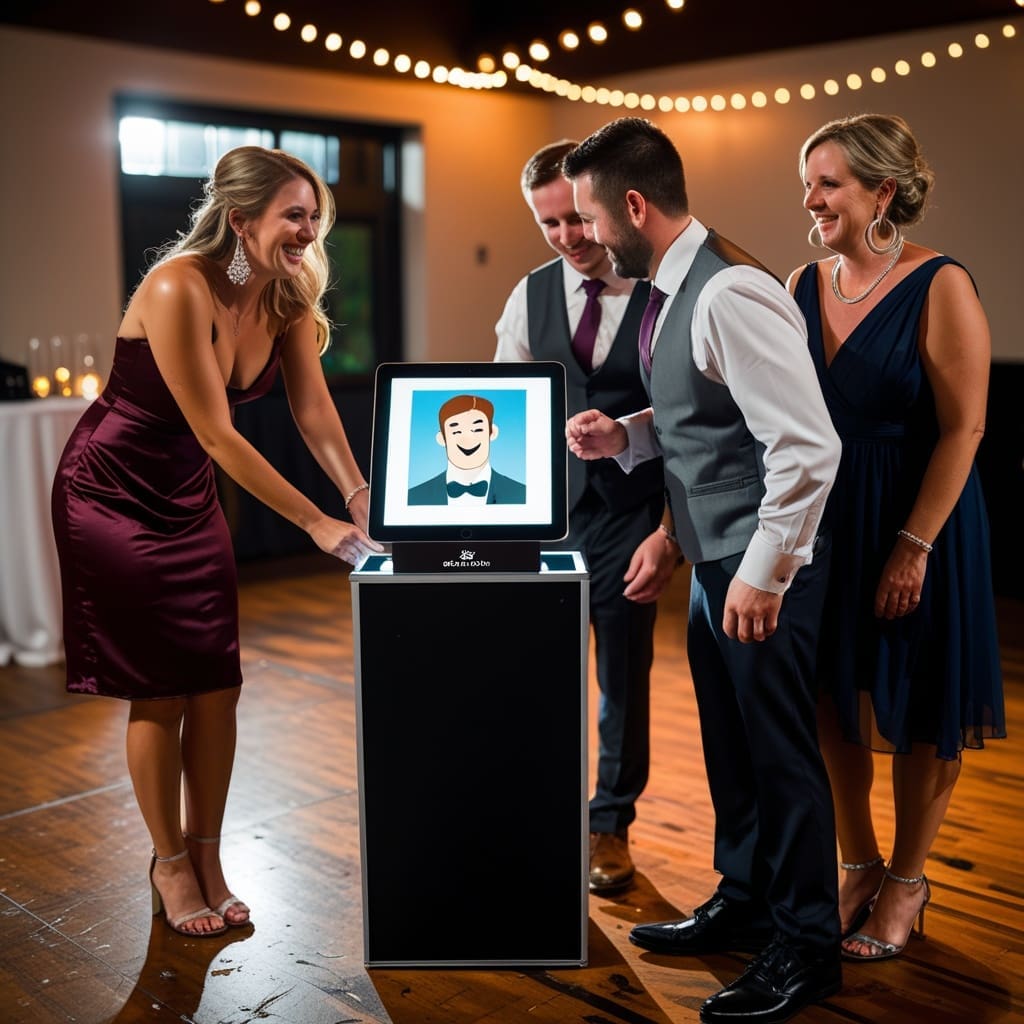
Yes, AI photo booths have become one of the fastest-growing wedding entertainment additions for 2026, particularly among couples planning receptions of 100 guests or more. Wedding planning platforms have reported a sharp rise in vendor listings for “AI photo experience” services over the past 18 months, reflecting real demand rather than a passing trend.
Couples typically choose AI photo booths for weddings for three practical reasons:
- Guest engagement during downtime. AI booths keep guests entertained during the gap between the ceremony and reception, or while the wedding party takes formal photos, often for 60 to 90 minutes.
- Unique keepsakes beyond the standard photo strip. An AI-generated “old Hollywood glamour” portrait or a fantasy-themed couple’s image feels more memorable to display at home than a plain printed strip.
- Shareable content for social media. Stylized AI images perform well on Instagram and TikTok, and many couples specifically request styles that will look distinctive in a wedding recap video.
The most requested AI photo booth styles for weddings in 2026 include vintage film grain portraits, watercolor or oil-painting renderings, anime-style avatars, and “editorial magazine cover” transformations. Some vendors also offer a couple’s-only AI package that generates a stylized engagement-style portrait using photos taken earlier that same day, delivered as a printed keepsake before guests leave the reception.
Couples planning a 2026 wedding should confirm with their venue whether outside vendors need proof of liability insurance, since most reputable AI photo booth companies carry a minimum of $1 million in general liability coverage and can provide a certificate on request.
What Are the Biggest Photo Booth Trends Heading Into 2026?
Generative AI styling is the dominant photo booth trend for 2026, but it is part of a broader shift toward personalized, high-output event technology. Event planners report that clients increasingly expect photo experiences that produce content for both physical keepsakes and social media simultaneously, rather than choosing one or the other.
Four trends stand out this year:
- Hyper-personalized style libraries. Vendors now offer 20 to 50 distinct AI style options per event, up from the 5 to 10 styles typical just two years ago, letting each guest pick a look that matches their personal taste.
- Instant multi-platform delivery. Nearly every AI booth vendor now includes automatic texting or QR-code delivery of digital files within 60 seconds, recognizing that guests want to post images before they leave the venue.
- Branded AI experiences for corporate events. Companies are training custom AI models on their logos and product imagery, so every generated photo naturally incorporates brand elements without looking like a forced overlay.
- Hybrid booth pairings. Many planners now book an AI booth alongside a 360 booth or a traditional booth at the same event, giving guests a choice between an authentic photo and a stylized one.
This layering of technology reflects a wider pattern in event planning generally: guests are no longer satisfied with a single static keepsake. They expect variety, speed, and content built for the platforms where they actually share memories.
Are AI-Generated Event Photos Accurate to How Guests Actually Look?
AI-generated event photos intentionally alter a guest’s real appearance based on the chosen style, so the result is a creative reinterpretation rather than a literal likeness. Some styles, like “black-and-white film” or “soft glam retouch,” stay close to the guest’s actual features. Others, like full character transformations or fantasy backdrops, change the person’s appearance substantially.
This distinction matters for event planning. If a client wants photos that document the actual event realistically, a traditional or 360 booth remains the better tool. If the goal is entertainment value and shareable novelty content, an AI booth delivers something a standard camera cannot. Most vendors clearly label which style categories are “true-to-life enhancement” versus “full transformation” so guests can choose accordingly before stepping in front of the camera.
What Should You Ask a Vendor Before Booking an AI Photo Booth?
Booking the wrong AI photo booth vendor can mean long processing delays, blurry outputs, or unclear data handling practices, so a short vetting conversation before signing a contract is worth the time. The following six questions cover the areas that most often cause problems at live events:
- What is the average processing time per guest? Anything over 60 seconds per image tends to create bottlenecks in a line of more than 20 guests.
- How many style options are included in the base package? Confirm whether premium styles cost extra, since some vendors advertise a low base price but gate the most popular styles behind upcharges.
- What happens to uploaded photos after the event? Ask for a written data retention policy; reputable companies delete files from their servers within 24 to 90 days.
- Does the booth require internet access, and what is the backup plan? Since AI processing typically happens on remote servers, ask whether the vendor carries a mobile hotspot for venues with weak Wi-Fi.
- Is a live attendant included? Attendants help troubleshoot software glitches and manage guest flow, which matters most for events over 75 people.
- Can you see a live demo before booking? A short video call demo reveals actual output quality far better than a vendor’s marketing photos.
Ready to Book an AI Photo Booth for Your Next Event?
Whether you are planning a wedding reception, a corporate holiday party, or a brand activation, choosing the right AI photo booth vendor comes down to matching style options, processing speed, and data handling policies to your specific guest count and venue setup. Reach out to a local event technology provider early, ideally 60 to 90 days before your event date, since popular AI photo booth vendors in most metro areas book out quickly during peak wedding season from May through October.
Conclusion
An AI photo booth gives event guests something a standard camera cannot: a stylized, algorithmically generated keepsake produced in under a minute. The technology has moved well past novelty status, with real cost structures, real vendor competition, and real demand from couples and corporate planners heading into 2026. Anyone evaluating this option should weigh processing speed, style variety, and data privacy terms just as carefully as price, since those factors determine whether the experience runs smoothly on the actual event day.
Frequently Asked Questions
How long does it take to get a photo from an AI photo booth?
Most AI photo booths deliver a finished image in 15 to 45 seconds after the initial photo is captured. Total time per guest, including style selection and printing, usually runs 60 to 90 seconds, which is why vendors recommend an attendant for events with more than 75 guests.
Can guests choose their own AI photo style, or is it random?
Guests almost always choose their style from a menu on the touchscreen, rather than receiving a random result. Most vendors offer between 20 and 50 style options per event, ranging from vintage film looks to full character transformations.
Is an AI photo booth worth it for a wedding compared to a regular photo booth?
It depends on whether the couple wants a realistic keepsake, a stylized one, or both, and many couples now book both types together. A traditional booth costs roughly $400 to $900, while an AI booth runs $600 to $2,500, so budget and desired novelty both factor into the decision.
What happens to my photo after I use an AI photo booth?
Reputable vendors delete uploaded photos from their servers within 24 to 90 days, and this should be stated in writing in the rental contract. Guests typically receive their own digital copy instantly by text or QR code, separate from whatever the vendor retains on its servers.
Do AI photo booths need a special internet connection at the venue?
Yes, most AI photo booths need a stable, high-speed internet connection because image generation happens on remote cloud servers, not on the local device. Vendors typically bring a backup mobile hotspot for venues with unreliable Wi-Fi, and this is worth confirming before booking a venue with known connectivity issues.