Hidden fees wedding DJs charge typically include travel surcharges, overtime rates, equipment upgrades, early setup fees, and charges for lighting or MC services that were not clearly listed in the original quote. These add-ons can push a base package priced at $800 to $1,500 up by $300 to $1,000 or more by the time the final invoice arrives. Most couples discover these charges only after signing a contract, which is why reading the fine print before booking matters more than almost any other part of wedding vendor shopping.
The average wedding DJ in the United States charges between $1,000 and $2,000 for a standard six-hour reception, according to pricing data compiled by wedding industry marketplaces in 2026. Yet many couples report final bills exceeding their original quote by 20 percent to 40 percent. That gap almost always comes down to fees that were technically disclosed somewhere in a contract but were not explained clearly during the sales conversation.
Key Takeaways
- Base DJ packages often exclude travel, overtime, lighting, and ceremony sound, which can add $300 to $1,000 to the final bill.
- Overtime rates typically run $100 to $300 per additional hour, billed in full-hour increments even if you go over by ten minutes.
- Travel fees commonly kick in after 20 to 30 miles from the DJ’s home base and can add $1 to $2 per mile beyond that radius.
- Ceremony sound, cocktail hour music, and MC duties are sometimes billed as separate add-ons rather than included in the reception price.
- A written contract that itemizes every service, hour, and piece of equipment is the single best protection against surprise charges.
Why Wedding DJ Quotes Rarely Match the Final Invoice
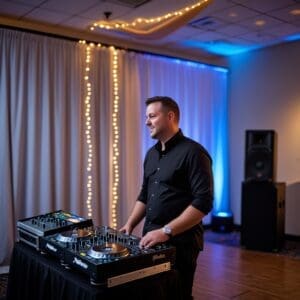
Most wedding DJs advertise a starting price to attract inquiries, similar to how airlines advertise a base fare before adding baggage fees and seat selection charges. That starting price usually covers a narrow set of services: a set number of hours, one speaker system, and basic music selection. Anything beyond that scope, extra hours, a second sound system for the ceremony, uplighting, or a fog machine, gets billed separately.
The problem is not that these charges exist. Equipment, labor, and travel genuinely cost money, and a DJ who drives ninety minutes to your venue deserves compensation for that time. The problem is disclosure. A 2025 survey by The Knot found that nearly one in three couples reported unexpected costs from at least one wedding vendor, with entertainment vendors ranking among the top three categories for surprise fees, alongside catering and photography add-ons.
The Most Common Hidden Fees Wedding DJs Charge
1. Travel and Mileage Fees
Flat rates usually cover venues within 20 to 30 miles of the DJ’s base. Beyond that, expect $1 to $2 per extra mile or a flat $100 to $300 surcharge. A rural venue 60 miles out can quietly add $150 to $250 that never appeared in the original quote.
2. Overtime Charges
Receptions rarely end on schedule. Overtime runs $100 to $300 per hour, billed in full-hour blocks, so going 15 minutes over can still cost the full rate. A five-minute delay can turn into a $150 surprise on your final bill.
3. Ceremony Sound Add-On
Reception packages often skip ceremony music and mic service, pricing it separately at $150 to $400. Couples assume “wedding DJ” covers the walk down the aisle, but this charge usually only shows up in the contract’s fine print.
4. Lighting and Uplighting Fees
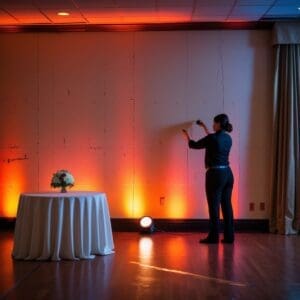
Basic packages typically include just a sound system and a light over the booth. Uplighting around the room runs $300 to $800 depending on fixture count and venue size. Monogram projections and dance floor effects add another $150 to $500.
5. Early Setup and Load-In Fees
Some venues require vendors on-site hours early for setup and sound checks. A four-hour setup window instead of the standard two can mean a $50 to $200 early access fee, since the DJ’s paid time starts sooner.
6. MC and Coordination Services
Announcing the wedding party and running the reception timeline takes more skill than just playing songs. Full MC duties often cost $100 to $300 extra, especially for an active host rather than someone who just queues music.
7. Equipment Upgrades
Standard packages often include speakers rated for around 150 guests. A 250-person guest list or an outdoor setup that scatters sound may need upgrades costing $200 to $500 more. Many couples don’t learn their guest count exceeds the included gear until weeks before the wedding.
8. Backup Equipment and Insurance Fees
Backup equipment on-site can add $50 to $150, a fair cost that should still be disclosed upfront. Liability insurance, often required at $1 million in coverage, sometimes gets passed on as a $50 to $100 fee if the DJ doesn’t already carry it.
9. Cancellation and Rescheduling Penalties
Cancellation clauses often keep 50 to 100 percent of your deposit if you cancel within 60 to 90 days of the event. Rescheduling can also trigger a $100 to $300 administrative fee even if the DJ is still available for the new date.

Typical Cost Breakdown: Base Price vs. Real Total
Consider a hypothetical six-hour reception booked with a mid-range DJ service in a mid-sized US metro area. The advertised base price looks appealing at first glance, but the itemized reality tells a different story once add-ons enter the picture.
- Base package (6 hours, sound system, basic lighting): $1,200
- Ceremony sound add-on: $250
- Uplighting (12 fixtures): $400
- Travel fee (45 miles from base): $150
- MC services for full event: $200
- One hour of overtime: $200
- Total actual cost: $2,400
That is exactly double the advertised base price. None of these individual charges is unreasonable on its own, but stacked together and disclosed late in the booking process, they turn a $1,200 quote into a $2,400 invoice. This is precisely the scenario that catches couples off guard, especially those working from a fixed wedding budget calculated months before signing any contract.
How to Spot Hidden Fees Before You Sign a Contract
Protecting your budget starts with asking the right questions during the initial consultation, not after you have already paid a deposit. Use the following approach when interviewing DJ candidates.
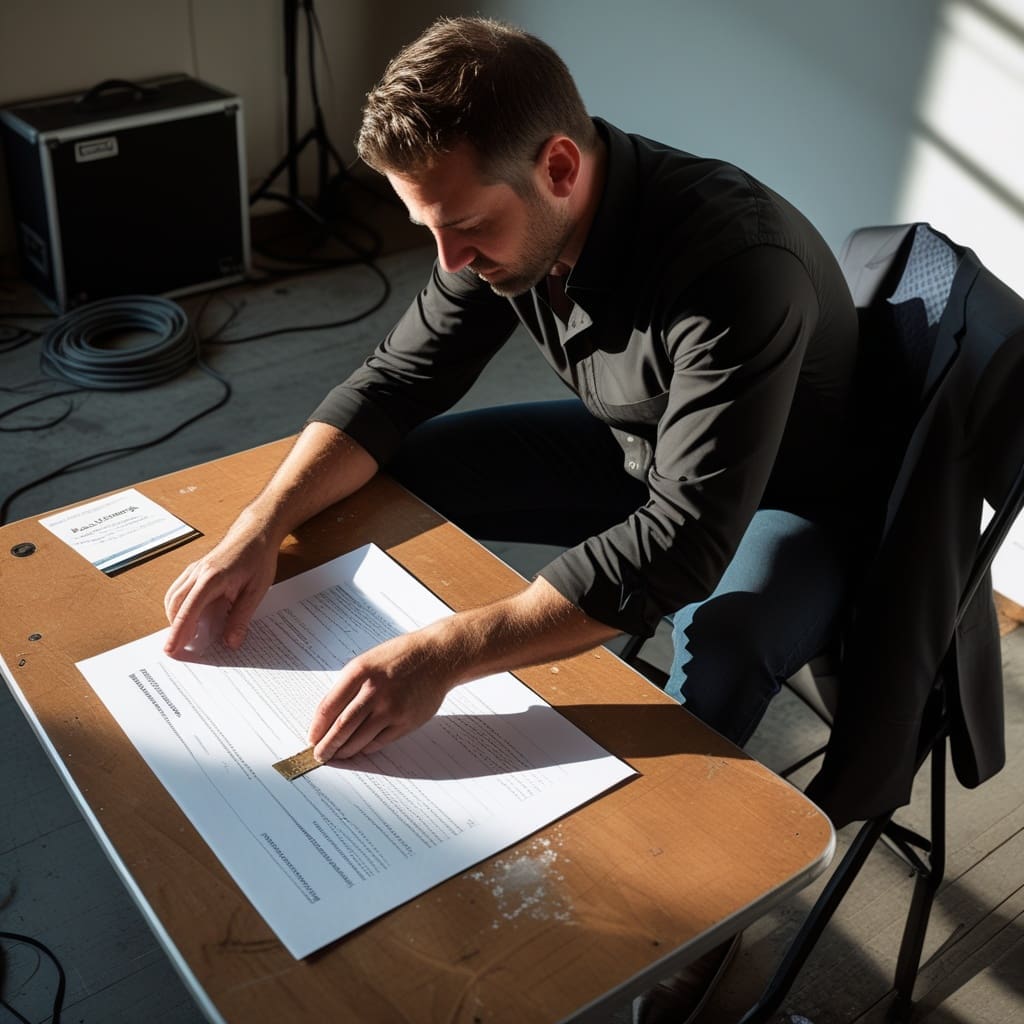
- Request a fully itemized quote in writing. Ask for every possible add-on listed by name and price, not a single lump sum. A vendor unwilling to provide this within 24 to 48 hours of your request is a warning sign worth taking seriously.
- Confirm the exact hour count and overtime rate. Ask specifically whether overtime bills in 15-minute or full-hour increments, since that detail alone can change your worst-case cost by $150 or more.
- Ask about travel radius in writing. Get the exact mileage threshold and per-mile rate beyond that point, since verbal assurances rarely hold up if a dispute arises later.
- Clarify what “lighting” means. Some contracts describe a single spotlight as “lighting included,” while couples often assume this means full uplighting around the room.
- Ask about backup plans and insurance. Confirm whether backup equipment and liability coverage are already built into the price or billed separately, especially if your venue requires proof of insurance.
- Read the cancellation and rescheduling clause line by line. Note the exact percentage of deposit retained and the exact number of days before the event that triggers full forfeiture.
Questions to Ask Before Booking
Bring a short, specific list of questions to every DJ consultation rather than relying on the vendor to volunteer information. Vendors who avoid straightforward answers or redirect you back to a general brochure deserve extra scrutiny.
- Does the quoted price include setup, breakdown, and travel time, or only the hours guests are present?
- What is the exact overtime rate, and how is partial-hour overtime billed?
- Is ceremony music included, or is that priced as a separate service?
- How many lighting fixtures, if any, come standard with the package?
- What happens if the DJ becomes ill or unavailable, and is a backup DJ guaranteed in writing?
- Is a written, itemized contract provided before any deposit is paid?
A DJ who answers every pricing question clearly and provides documentation without hesitation is far less likely to surprise you with fees later. Vague answers during the sales process are often a preview of vague billing after the event.
Red Flags That Signal Hidden Fees Are Coming
Certain patterns in how a vendor communicates during the booking process tend to predict billing surprises down the road. Watch for these warning signs when comparing DJ quotes.
- Verbal-only pricing. Any DJ who quotes prices by phone or text but refuses to put the full breakdown in writing before the deposit is a significant risk.
- Contracts with vague service descriptions. Language like “professional lighting package” without a specific fixture count or wattage description leaves too much room for later upcharges.
- Pressure to sign quickly. Legitimate vendors understand that a $1,500 to $2,500 purchase deserves at least 48 to 72 hours of review time before signing.
- No cancellation clause at all. A contract missing this section entirely, rather than including reasonable terms, often means disputes get resolved informally and unfavorably for the couple.
- Reviews mentioning “surprise charges.” Search recent reviews from the past 12 to 18 months specifically for the phrase “additional fee” or “extra charge,” since this pattern often repeats across multiple bookings from the same vendor.
How to Negotiate a Fair, Transparent DJ Contract
Negotiation works best when you approach it as a request for clarity rather than a demand for a discount. Ask the DJ to convert every verbal promise into a written line item before you sign anything. If overtime is a concern given your reception timeline, ask whether the DJ will lock in a flat overtime rate for up to two additional hours rather than an open-ended hourly charge that could balloon if the evening runs long.
Consider requesting a package that bundles ceremony sound, reception music, and basic uplighting into a single flat fee rather than three separate charges. Bundled packages often save couples $100 to $300 compared to booking each service individually, and they eliminate the risk of forgetting to add a needed service until the week of the wedding. Always ask for the final contract to state the total price as a single number at the bottom, with every included service itemized above it, so there is no ambiguity about what that total covers.
Finally, ask whether the deposit is refundable under any circumstance and get the answer in writing rather than relying on a verbal assurance from the sales representative. Deposits typically run 20 percent to 50 percent of the total contract price, commonly $200 to $750 depending on the overall package cost, and clarity here prevents a costly dispute close to your wedding date.
What a Transparent DJ Contract Should Include
A well-written contract protects both the couple and the vendor by removing guesswork. Look for these elements before signing.
- Exact start and end time, with the overtime rate stated per hour or per 15-minute block.
- A complete equipment list, including speaker count, microphone count, and lighting fixture count.
- Travel fee terms, stated as a flat number or a per-mile rate beyond a specific radius.
- Cancellation and rescheduling terms, including exact dollar amounts or percentages retained.
- Backup DJ and equipment failure policy, stated explicitly rather than implied.
- Total price listed as one final number, with all included services itemized above it.

Call to Action: Protect Your Wedding Budget Before You Book
Before you place a deposit with any wedding DJ, request a fully itemized written quote and compare it line by line against at least two other vendors. Ask each candidate the same six questions listed above, and reject any contract that leaves overtime rates, travel fees, or lighting costs undefined. A few extra days spent reviewing paperwork now can save you several hundred dollars, and considerable stress, in the weeks leading up to your wedding.
Conclusion
Hidden fees wedding DJs charge are rarely illegal or even unusual within the industry, but they are avoidable with the right preparation. Travel charges, overtime rates, lighting upgrades, and ceremony sound add-ons account for the bulk of the gap between an advertised base price and the final invoice. Couples who request itemized quotes, ask direct questions during consultations, and read cancellation clauses carefully typically avoid the worst surprises. Treat your DJ contract with the same scrutiny you would apply to a catering or venue agreement, since entertainment costs can shift your total wedding budget by hundreds of dollars if left unchecked.
Frequently Asked Questions
How much do wedding DJs typically charge in total once fees are included?
Most couples end up paying between $1,200 and $2,500 for a six-hour reception once travel, lighting, and overtime fees are added. The advertised base price often ranges from $800 to $1,500, but add-ons commonly increase the final invoice by 20 percent to 60 percent depending on guest count, venue distance, and lighting requests.
Is it normal for wedding DJs to charge extra for overtime?
Yes, overtime charges are standard practice and typically cost $100 to $300 per additional hour. The concern is not that overtime exists, but whether the rate and billing increment, full hour versus 15-minute blocks, are clearly stated in the contract before you sign.
Should ceremony music be included in a wedding DJ’s base price?
Not always, and many contracts list it as a separate $150 to $400 add-on. Ask specifically whether the quoted price covers both the ceremony and reception, since this is one of the most commonly misunderstood line items in wedding DJ contracts.
How much should a deposit be for a wedding DJ?
Deposits typically run 20 percent to 50 percent of the total contract price, or roughly $200 to $750 for a standard package. Confirm in writing whether the deposit is refundable and under what specific conditions before you pay it.
What is the best way to avoid hidden fees when booking a wedding DJ?
Request a fully itemized written quote listing every possible add-on before signing anything. Compare that itemized list against at least two other vendors, ask about travel radius, overtime rate, and lighting inclusions directly, and avoid any DJ unwilling to put full pricing details in writing within 48 hours of your request.