The most important questions to ask a wedding DJ about pricing cover what the base package includes, which fees get added on top, and what triggers extra charges on the wedding day itself. Wedding DJ services in the United States typically run between $800 and $2,500 for a standard reception, with many couples paying around $1,200 to $1,800 for four to five hours of coverage. Without asking the right questions upfront, you risk signing a contract that looks affordable at first glance but balloons in cost once travel fees, overtime charges, and equipment upgrades get added. A clear pricing conversation before you sign protects your budget and sets expectations for both sides.
Key Takeaways
- Average wedding DJ pricing in the United States ranges from $800 to $2,500, with most couples paying $1,200 to $1,800 for a typical five-hour reception.
- Always ask whether the quoted price includes setup, breakdown, travel, and a planning consultation, since many DJs bill these separately.
- Overtime rates commonly run $100 to $200 per additional hour, so confirm this figure in writing before the event.
- Deposit amounts typically fall between 20 and 50 percent of the total fee, with the balance due 30 days before the wedding.
- Liability insurance, backup equipment, and a written contract are non-negotiable protections you should confirm before paying anything.
What Is Actually Included in the Base Price?
Ask the DJ to itemize every service bundled into the quoted rate before you compare it to any other vendor. A base package that costs $1,400 might include four hours of music, a wireless microphone for toasts, and basic uplighting, or it might cover only the bare minimum of sound equipment with no MC services at all. Two quotes that look identical on paper can differ by hundreds of dollars once you learn what each one actually covers.
Request a written breakdown that separates the performance fee from add-ons like uplighting, a photo booth, monogram projection, or a second sound system for the ceremony. Many DJs in the $1,000 to $2,000 range include an initial planning meeting, a music questionnaire, and coordination with your venue, but some charge $75 to $150 extra for a dedicated planning session. Do not assume anything is included just because a competitor’s package includes it. Get the specifics in writing, ideally as a line-item list attached to the contract.
Sample Base Package Breakdown
- Performance fee (4 to 5 hours): $900 to $1,400
- Ceremony sound system add-on: $150 to $300
- Wireless microphone for speeches: usually included, sometimes $50 extra
- Basic dance floor lighting: $100 to $250
- MC and coordination services: $100 to $200, sometimes bundled at no extra charge
How Do Travel, Setup, and Overtime Fees Work?
Travel fees typically apply when the venue sits more than 25 to 30 miles from the DJ’s home base, and these charges usually range from $0.50 to $1.00 per mile beyond that radius. A DJ traveling 60 miles to your venue might add $50 to $80 to the invoice, while destination weddings that require an overnight stay can add $150 to $400 for lodging and meals. Ask specifically where the free travel radius ends and what the per-mile or flat-rate charge looks like beyond it.
Setup and breakdown time is another area where quotes diverge. Some DJs build one to two hours of setup and one hour of teardown into the flat fee, while others bill this separately at $50 to $100 per hour. Overtime is the fee most couples forget to ask about until the reception is already running long. Standard overtime rates fall between $100 and $200 per additional hour, billed in either full-hour or half-hour increments. Confirm whether overtime must be requested and paid in advance or whether it can be arranged on the spot, since some contracts require a minimum 24-hour notice for extended coverage.
A twenty-minute delay in the cake cutting or the last dance can turn into an unplanned $150 charge if your contract does not clearly define how overtime is billed.
What Equipment Is Provided, and What Costs Extra?
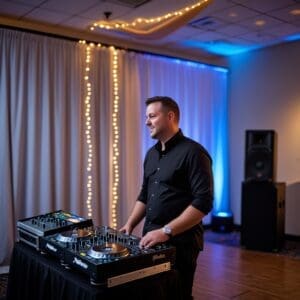
Ask whether the quoted price includes backup equipment, since a single point of failure (a blown speaker or a dead laptop) can silence an entire reception if there is no redundancy plan. Reputable DJs typically travel with a backup mixer, a second laptop loaded with the same music library, and spare cables, and this redundancy is usually built into the base fee rather than billed separately. If a DJ cannot answer clearly when asked about backup gear, treat that as a warning sign regardless of how attractive the price looks.
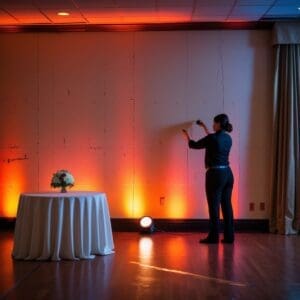
Speaker count and placement also affect cost. A reception for under 100 guests generally needs two main speakers, which most base packages include, but venues with separate ceremony, cocktail hour, and reception spaces often require additional speakers at $100 to $300 per zone. Uplighting packages (the colored wall lighting many couples use to match their color scheme) typically cost $200 to $500 for 10 to 20 fixtures, either as an add-on or bundled into premium packages priced above $1,800.
- Ceremony microphone and speaker setup: $150 to $350 if not included in the base package
- Cocktail hour sound system in a separate room: $100 to $250
- Uplighting (10 to 20 fixtures): $200 to $500
- Photo booth add-on: $400 to $800 for 3 hours
- Monogram or gobo projection: $75 to $200
What Is the Deposit and Cancellation Policy?
Ask exactly how much deposit is required to hold the date and when the remaining balance is due. Most wedding DJs require a deposit of 20 to 50 percent of the total fee at booking, with the balance due 14 to 30 days before the event. A $1,600 package might require a $400 non-refundable deposit followed by a final payment of $1,200 due one month prior to the wedding date.
Cancellation and rescheduling terms matter just as much as the deposit amount, particularly since weather delays, venue changes, and family emergencies do happen. Ask whether the deposit is refundable under any circumstances, whether the date can be transferred to a new wedding date without penalty, and how far in advance you must notify the DJ of a change. Some contracts allow a one-time free date change within 12 months, while others charge a $100 to $200 rebooking fee. Get every cancellation term in writing rather than relying on a verbal promise made during the initial consultation.
Payment Schedule Example
- Booking deposit due at signing: $400 (25 percent of a $1,600 package)
- Mid-point check-in payment (optional, some vendors split into three payments): $400 due 90 days before the wedding
- Final balance due 14 to 30 days before the wedding: $800
- Overtime or add-on charges settled the day of the event or within 7 days after: variable, typically $100 to $200 per hour
Does the Price Include Insurance and a Written Contract?
Confirm that the DJ carries liability insurance, since many venues in the United States now require vendors to hold at least $1 million in general liability coverage before they are allowed to set up equipment on-site. This coverage is standard among established wedding DJs and should not cost you anything extra, but it is worth asking directly rather than assuming. A DJ without insurance is not necessarily unqualified, but it does shift financial risk onto you and the venue if equipment causes damage or an injury occurs.
Every pricing conversation should end with a written contract that lists the total cost, payment schedule, overtime rate, cancellation terms, and a description of included equipment. Verbal agreements offer no protection if a dispute arises about what was promised. A DJ who hesitates to put pricing details in writing is one of the clearest red flags you will encounter during vendor research. Reasonable vendors expect and welcome this level of documentation, since it protects them from misunderstandings as much as it protects you.
What Extra Charges Might Appear on the Wedding Day?
Ask for a complete list of scenarios that trigger additional fees beyond the quoted price, since this is where many couples get caught off guard. Common extra charges include holiday surcharges of $100 to $300 for weddings booked on major holidays, weekend premiums that push Saturday rates 10 to 20 percent higher than weekday rates, and special song licensing requests for custom edits or mashups that can cost $25 to $75 each. Some DJs also charge $50 to $150 for early load-in if the venue requires setup more than three hours before the event starts.
Guest count changes can also affect price. A DJ quoted for 100 guests may add a $100 to $200 surcharge if the final headcount exceeds 150, since larger crowds often require additional speakers to maintain even sound coverage. Ask whether your contract locks in a maximum guest count and what the exact surcharge looks like if that number changes after signing. Getting these figures in writing during the initial pricing conversation prevents unpleasant surprises during the final walkthrough with your venue coordinator.
Comparing DJ Packages Side by Side
When comparing multiple quotes, request the same breakdown from each vendor so the numbers line up fairly. A $900 quote that excludes ceremony sound, uplighting, and a planning meeting may end up costing more than a $1,500 quote that bundles everything together. Below is a simplified comparison of what a budget, mid-range, and premium wedding DJ package might include based on typical 2026 pricing across mid-sized American cities.
- Budget package ($800 to $1,100): Four hours of reception music, one speaker system, wireless microphone, no uplighting, overtime billed at $150 per hour.
- Mid-range package ($1,200 to $1,800): Five hours of coverage, ceremony and reception sound, basic uplighting, planning consultation included, overtime billed at $125 per hour.
- Premium package ($2,000 to $2,500): Full-day coverage including ceremony, cocktail hour, and reception, monogram lighting, photo booth add-on discount, dedicated MC, backup DJ on standby, overtime billed at $100 per hour.
Use this structure as a starting point when you request quotes, and ask each DJ to confirm where their package falls on this spectrum. A vendor who cannot clearly place their pricing within a comparable framework may be less experienced at structuring contracts for weddings specifically, even if they perform well at other types of events.
Call to Action
Before you sign any contract, write down every question in this article and bring it to your next vendor consultation. Request a written quote that itemizes the performance fee, travel charges, overtime rate, and deposit schedule, then compare it against at least two other DJs before making a final decision. Ask each DJ to explain their cancellation and refund policy in writing too, since some contracts keep deposits nonrefundable even if you cancel a year out. Check whether the quote covers ceremony sound, cocktail hour music, and reception lighting separately, or if those get bundled as add-ons that inflate the final bill. Bring a notebook or use your phone to record answers side by side so you can compare apples to apples once you’re home and thinking clearly, away from the sales pitch. A thirty-minute conversation now can save you hundreds of dollars and considerable stress on your wedding day.

Conclusion
Pricing conversations with a wedding DJ should never feel like a mystery by the time you reach the signing table. Confirm what the base fee covers, what travel and overtime cost, what equipment is included, and what the deposit and cancellation terms require, all before handing over any money. Wedding DJ pricing across the United States ranges widely, from roughly $800 for a basic four-hour package to $2,500 for full-day premium coverage, and the questions you ask determine which end of that range you actually land on. Treat the pricing discussion as a negotiation grounded in specifics rather than a formality, and you will walk into your wedding day with a clear budget and no unpleasant financial surprises.
Frequently Asked Questions
How much does a wedding DJ typically cost in the United States?
Most wedding DJs charge between $800 and $2,500 for a standard reception. The exact figure depends on hours of coverage, equipment included, and your region, with major metro areas often running 15 to 25 percent higher than smaller markets.
Is a deposit for a wedding DJ refundable?
Deposits are usually non-refundable, typically ranging from 20 to 50 percent of the total fee. Some contracts allow the deposit to transfer to a new date if you reschedule with sufficient notice, but you should confirm this specific term before signing.
What is a normal overtime rate for a wedding DJ?
Overtime typically costs $100 to $200 per additional hour. Some vendors bill in 30-minute increments, so ask whether partial hours are rounded up to the full rate before your reception begins.
Should travel fees be included in the initial quote?
Travel fees should always appear as a separate line item once you confirm your venue location. Most DJs charge nothing within a 25 to 30 mile radius but add $0.50 to $1.00 per mile beyond that, so provide your exact venue address early to get an accurate total.
Do wedding DJs charge extra for special song requests?
Custom edits, mashups, or licensed remixes can add $25 to $75 per request. Standard song requests from your existing music library are typically included at no extra charge, so clarify which requests fall into the paid category before finalizing your must-play list.