Corporate DJ services typically include sound system setup, phase-by-phase music programming, microphone and emcee support, lighting, and on-site coordination with your venue’s schedule. A full-service package also covers pre-event planning calls, a custom music brief, and a run-of-show that syncs the playlist with speeches, awards, and dinner service. Pricing for these packages generally runs from $900 to $4,500 depending on event length and add-ons, according to GigSalad’s 2026 Entertainment Pricing Index. Choosing the right provider matters because the wrong fit can undercut a carefully planned agenda in a way that most attendees will remember long after the event ends.
Key Takeaways
Corporate DJ services involve a lot more moving parts than most planners expect until they’re deep in the vendor search. A DJ who works corporate events full time is managing audio engineering, timeline coordination with your event planner or AV team, and often serving as the de facto host who keeps a room of 200 strangers moving from cocktail hour to keynote to dance floor without a single awkward silence. Here’s a closer look at what that actually involves and what it costs.
- Full-service scope. Corporate DJ services cover sound, music programming, emcee duties, lighting, and event-day coordination, not just a playlist. That means wireless microphones for award presentations, a backup sound system in case a speaker fails, uplighting that matches your brand colors, and a run-of-show document synced with your catering and AV vendors so the DJ knows exactly when to cue the CEO’s entrance or fade music for a video presentation.
- Pricing breakdown. Standard corporate DJ pricing ranges from $900 to $1,800 for a four-hour event, with premium and multi-day packages reaching $2,500 to $4,500. Price differences usually come down to sound system size, whether lighting and a photo booth are bundled in, and how many hours of pre-event consultation the DJ offers. A 50-person office party and a 500-guest gala with a live band changeover need very different equipment, which is why quotes vary so much between vendors.
- Insurance and vendor requirements. A qualified corporate DJ should carry general liability insurance, typically $1 million in coverage, since most hotels and event centers require proof before load-in. Many venues also ask for a certificate of insurance naming the venue as additionally insured, plus proof the DJ’s equipment meets local fire and electrical codes. Skipping this step can mean your DJ gets turned away at the door the day of the event.
- Phased music programming. Music needs shift across at least five event phases, from guest arrival to open dancing, and each phase calls for a distinct volume and genre approach. Arrival calls for low-volume instrumental or lounge tracks that let people talk, dinner service needs background music that doesn’t compete with speeches, and the transition into open dancing has to read the room’s energy rather than follow a fixed script.
- Written music briefs. A written music brief with must-play songs, do-not-play songs, and cultural notes prevents miscommunication on event day. This document should also flag any company-specific inside jokes, executive entrance songs, or genres tied to the audience’s demographics, so the DJ isn’t guessing in the moment.
What Do Corporate DJ Services Actually Cover?
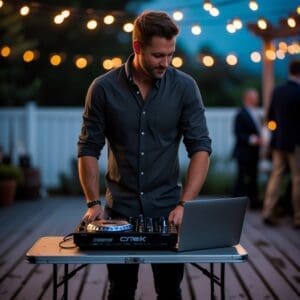
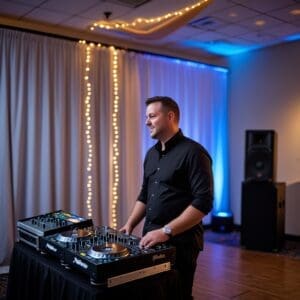
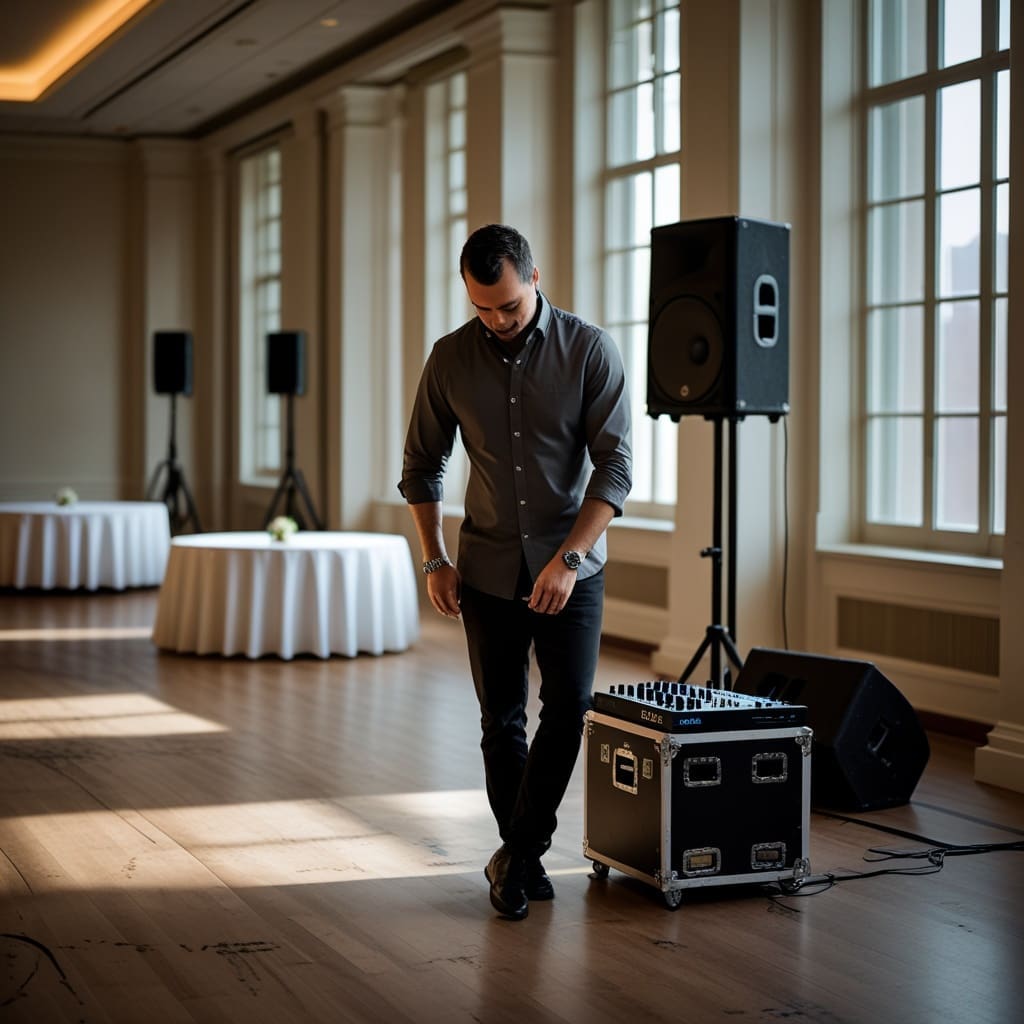
A corporate DJ manages far more than song selection. The role includes running the full sound system for the room, adjusting levels during speeches, mixing background music for cocktail hour, and building higher-energy sets for dinner or dancing once the formal program wraps up. Many corporate DJs also function as an unofficial emcee, making announcements, introducing executives, and keeping the event on schedule when a timeline starts to slip.
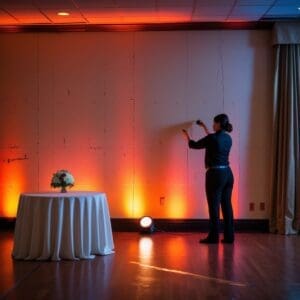
Lighting is often bundled into the package as well, whether that means simple uplighting along a stage wall or a dance floor wash for an evening reception. Some providers also offer wireless lavalier or handheld microphones for panel discussions and award presentations, which saves you from renting separate AV equipment. Before you sign a contract, ask exactly which of these services are included versus billed as add-ons, since packages vary widely between vendors. You can see how our team plans entertainment for company events of different sizes to get a sense of what a fully built-out package looks like in practice.
How Much Do Corporate DJ Services Cost in 2026?
Corporate DJ pricing depends on event length, equipment demands, and whether you need lighting, a photo booth, or extended emcee work. Based on current market data from GigSalad’s 2026 Entertainment Pricing Index, a standard four-hour corporate event with one DJ and a basic sound and lighting setup runs $900 to $1,800. Larger conferences, multi-room events, or full-day programs typically fall between $2,500 and $4,500.
- Standard four-hour event: $900 to $1,800, includes sound system, wireless microphone, and basic music programming.
- Added lighting package: $200 to $400 on top of the base rate, covering uplighting or a dance floor wash.
- Photo booth or 360 booth add-on: $300 to $600 depending on rental duration.
- Extended emcee or multi-segment program: $150 to $300 per additional hour of coverage.
- Full-day conference or multi-day corporate retreat: $2,500 to $4,500, often including a second sound zone or breakout room coverage.
Ask for an itemized quote so you know precisely what falls inside the base rate versus what counts as an extra charge. Travel fees are common if your venue sits well outside a DJ’s primary service area; for events around Raleigh, most local providers cover Cary, Durham, Chapel Hill, and nearby towns without an added fee, but confirm this before booking. To see current package structures side by side, compare what’s included at each corporate event package level before you request quotes from multiple vendors.
How to Choose the Right DJ for a Corporate Setting
Not every skilled wedding or club DJ translates well to a corporate audience. Look specifically for a portfolio that includes company holiday parties, product launches, or conference entertainment, since that experience shapes how someone reads a room full of coworkers and clients rather than a room full of close friends. The difference shows up most clearly during transitions, when a corporate-savvy DJ knows to bring the volume down instantly as an executive steps up to the microphone.
According to Cvent’s Corporate Event Trends survey, entertainment and audio quality rank among the top three factors planners cite when rating overall event satisfaction, just behind venue and food service. That ranking underscores why vetting matters. Before booking, confirm the following:
- General liability insurance, typically $1 million in coverage, since most hotels and convention centers require proof of insurance before allowing load-in.
- A backup sound system or backup DJ arrangement in case of equipment failure or illness.
- Comfort with microphone work and public announcements, not just music mixing.
- References from at least two prior corporate clients, not just general online reviews.
- A sample playlist or recorded mix from a past company event similar in size to yours.
Building the Event Timeline: Matching Music to Each Phase
Corporate events move through distinct phases, and each one calls for a different volume level and musical tone. Mapping this out before your first planning call with the DJ saves time and prevents mismatched expectations on event day. A typical build looks like this:
- Eight weeks before the event: Confirm the DJ’s availability, finalize the contract, and share your venue’s floor plan and power outlet locations.
- Six weeks before: Send a draft run-of-show with estimated start and end times for each phase, including speeches and award segments.
- Four weeks before: Submit your music brief, including must-play songs, do-not-play songs, and any cultural notes for your audience.
- Two weeks before: Confirm final guest count, review any last-minute schedule changes, and reconfirm load-in time with the venue.
- Day of the event: Walk the DJ through the room one final time and designate a single point of contact for real-time timeline adjustments.
During the actual event, volume and genre should shift noticeably between segments. Guest arrival calls for upbeat but familiar background music at a moderate level. Cocktail hour works best with jazz, lounge, or soft contemporary tracks that support conversation rather than compete with it. Speeches and formal remarks require the sound to drop nearly to silence, while dinner service calls for easy listening at low volume. Open dancing or networking time is where the DJ can raise both the energy and the volume, before winding things down with a familiar send-off song as the event closes.
Venue Logistics and Equipment Requirements DJs Need in Advance
A DJ cannot plan equipment correctly without knowing your venue’s specifics. Room dimensions, ceiling height, existing built-in sound systems, load-in access points, and power outlet locations all affect what gear arrives on event day. Share a floor plan or, better, arrange a short venue walk-through so the DJ can see the space firsthand rather than working from a verbal description.
Some venues, particularly those in older buildings or mixed-use properties, enforce strict decibel limits monitored by an on-site sound meter. A DJ who learns about that restriction the morning of the event has far less room to adjust than one who knew weeks in advance. Confirm who manages the venue’s own AV system as well, since some properties require outside vendors to integrate with house speakers rather than bring an independent system. Clarifying these details early prevents the kind of last-minute scramble that can derail an otherwise well-planned agenda.
Creating a Music Brief That Reflects Your Company Culture
A music brief is a short written document that outlines your preferences without locking the DJ into a rigid script. It typically includes five to ten must-play songs, a list of tracks or content to avoid, preferred genres, and any cultural considerations relevant to your specific audience. Think of it as a set of guardrails rather than a fixed setlist; a skilled DJ still needs room to read the crowd in real time.
If your workforce spans multiple generations, mention that directly in the brief. A DJ who can blend familiar classics with current chart hits keeps a wider range of employees engaged than one who leans entirely on a single era or genre. Consider whether you want interactive moments as well, such as a shoutout during a milestone announcement or a specific song cued for an award presentation. Those details are far easier to plan a month ahead than to improvise on the spot once the program is already underway.
Frequently Asked Questions
How much does a corporate DJ cost for a half-day event?
A half-day corporate event with one DJ typically costs between $1,200 and $2,200. The final figure depends on whether lighting, a second sound zone, or extended emcee coverage gets added to the base package.
What is the difference between a corporate DJ and a wedding DJ?
A corporate DJ focuses on brand tone, timeline coordination, and professional presentation rather than romantic or family-driven moments. Corporate rates also run somewhat higher than wedding rates because of earlier load-in requirements, professional attire expectations, and tighter coordination with a company’s program schedule.
Do corporate DJs also act as the emcee?
Many corporate DJs handle emcee duties, but not all of them are comfortable with extended microphone work. Confirm this specifically during your interview, since making announcements and introducing speakers is a distinct skill from mixing music.
How far in advance should you book a DJ for a company event?
Book a corporate DJ six to twelve weeks before your event date, especially during peak seasons like November through December. Popular providers in busy metro areas often fill their calendars two to three months out, so earlier booking gives you more options and better pricing.
Can a corporate DJ work with a strict brand-approved playlist?
Yes, most corporate DJs can build sets entirely around an approved playlist if your company has specific brand guidelines. Provide the list at least four weeks in advance so the DJ has time to plan transitions and pacing rather than reacting to it on event day.
Conclusion
Corporate DJ services succeed when planning happens well before the event date, not during it. A clear scope of work, a realistic budget between $900 and $4,500 depending on event size, a vetted DJ with corporate-specific experience, and a written music brief together form the foundation of a polished, on-brand event. Skipping any one of those steps tends to show up in small but noticeable ways, from an awkward silence during a speech to music that never quite matches the room’s energy.
Think about the difference between a 50-person holiday party at a restaurant and a 400-person product launch with a keynote, breakout sessions, and an evening reception. The first might only need a DJ and a basic sound system for a few hours. The second needs someone who can coordinate with a stage manager, wire lapel mics for speakers, cue walk-up music for award presentations, and shift smoothly from background music during networking to a dance set once the formal program wraps. Matching the DJ’s experience level to the actual complexity of your event matters just as much as the budget you set aside.
The right corporate DJ does not just play music; the DJ manages the entire audio experience so your program runs on schedule and your brand comes across the way you intended.
If your company has an event on the calendar, do not wait until the final month to lock in entertainment. You can start reserving entertainment for your company’s upcoming event now, while your preferred date and package options are still available.