Wedding DJ contract terms cover the specific clauses that protect both sides: deposit schedules, cancellation policies, liability insurance, backup equipment plans, overtime fees, and force majeure provisions. Most couples sign without reading past the price line, then discover months later that a rescheduled date, a venue change, or a request for extra hours triggers charges they never expected. A typical contract runs three to six pages and covers ten to fifteen distinct clauses, each shifting risk between you and the vendor in a specific way. Knowing what each clause actually does before you sign can save you hundreds of dollars and a lot of stress closer to the wedding date.
Understanding these clauses before you sign protects your deposit, your timeline, and your reception itself. The average wedding DJ in the United States charges between $1,000 and $2,500 for a standard five to six hour reception in 2026, with premium or high-demand vendors in major metro areas charging $3,000 to $5,000 or more. Because the contract determines what happens if something goes wrong on one of the most expensive days of your life, it deserves the same scrutiny you would give a lease or a car loan.
Key Takeaways
- A standard deposit ranges from 20 percent to 50 percent of the total fee, and it is almost always non-refundable once paid.
- Cancellation clauses typically use a sliding scale, with full payment often required if you cancel within 30 to 60 days of the event.
- Liability insurance of at least $1 million per occurrence is standard for reputable DJs and is frequently required by wedding venues.
- Overtime fees usually run $100 to $250 per additional hour and must be agreed to in writing before the event, not verbally on the dance floor.
- A backup equipment and personnel clause matters as much as the price, since equipment failure or DJ illness without a replacement plan can leave you without music entirely.
Why the Contract Matters More Than the Price Quote
A price quote tells you what you will pay. A contract tells you what happens when things do not go as planned, and weddings rarely go exactly as planned. Roughly one in five weddings involves some kind of schedule change, whether that is a shifted ceremony start time, a rain-delayed outdoor reception, or a last-minute vendor substitution, according to industry surveys from wedding planning associations. The contract is the document that decides who absorbs the cost of that change.
Verbal promises from a DJ, no matter how sincere, hold no legal weight once a dispute arises. If a DJ tells you during a consultation that he will “throw in an extra hour for free” or “definitely have a backup speaker,” that promise needs to appear in writing inside the contract or as a signed addendum. Otherwise, you have no recourse if the DJ forgets, changes companies, or simply denies having said it.

Deposit and Payment Schedule Terms
Most wedding DJ contracts ask for a deposit of 20 to 50 percent at signing, with the balance due 14 to 30 days before the event. That deposit is often called a “retainer” instead, since retainers are treated as earned once paid, while refund laws in some states can force a “deposit” to be returned if services never happen.
Before signing, check these details:
- What the total fee covers, including setup, breakdown, ceremony sound, and cocktail hour music.
- Deposit amount and due date.
- Final payment due date, sometimes 60 days out for peak summer Saturdays.
- Accepted payment methods, since credit cards may carry a 3 percent fee.
- Late payment penalties, ranging from flat fees to cancellation rights.
One detail couples often miss: whether final payment is due before the DJ locks in your headcount, timeline, and song list. Pay before those are set, and you lose room to negotiate changes.
Cancellation and Refund Clauses
Cancellation terms determine how much money you recover if you need to cancel the wedding or switch DJs, and most contracts use a sliding scale tied to how close you are to the event date. A typical structure looks like this:
- Cancellation more than 180 days before the event: deposit forfeited, no additional charge.
- Cancellation 90 to 179 days before the event: 50 percent of the total fee owed.
- Cancellation 30 to 89 days before the event: 75 percent of the total fee owed.
- Cancellation within 29 days of the event: 100 percent of the total fee owed.
These exact windows vary by vendor, so confirm the specific day counts in your contract rather than assuming industry standard numbers apply. Some DJs offer a one-time date transfer instead of a cash refund, allowing you to move the reserved date within 12 months without forfeiting the deposit, which is a reasonable compromise if your vendor does not offer partial refunds.
Ask specifically what happens if the DJ cancels on you. A fair contract obligates the vendor to either provide a comparable replacement DJ at no extra cost or refund 100 percent of all payments received, plus in some cases a penalty fee equal to a percentage of the total contract value. Weak contracts say nothing about vendor-side cancellation at all, which leaves you with only a breach of contract lawsuit as recourse, an expensive and slow remedy for a wedding that has already happened.
Liability Insurance and Venue Requirements
Most professional wedding venues require vendors, including DJs, to carry general liability insurance of at least $1 million per occurrence and $2 million in aggregate. This insurance protects against claims like equipment causing a trip hazard, electrical damage from sound equipment, or accidental damage to venue property such as a scratched hardwood floor from moved speaker stands. Confirm that your DJ’s contract references a certificate of insurance (COI) and that the vendor will name your venue as an additional insured party if the venue requires it, which many do in writing 30 days before the event.
If a DJ cannot produce proof of insurance, that is a meaningful warning sign, not a minor omission. Some venues will refuse entry to uninsured vendors on the wedding day itself, which means you could lose your DJ hours before the ceremony over a paperwork issue that was entirely avoidable months in advance.
A contract without an insurance clause protects the vendor’s bottom line, not your wedding day. Always ask for the certificate of insurance directly, not just a verbal assurance that “we’re covered.”
Equipment, Backup Plans, and Substitute DJ Clauses
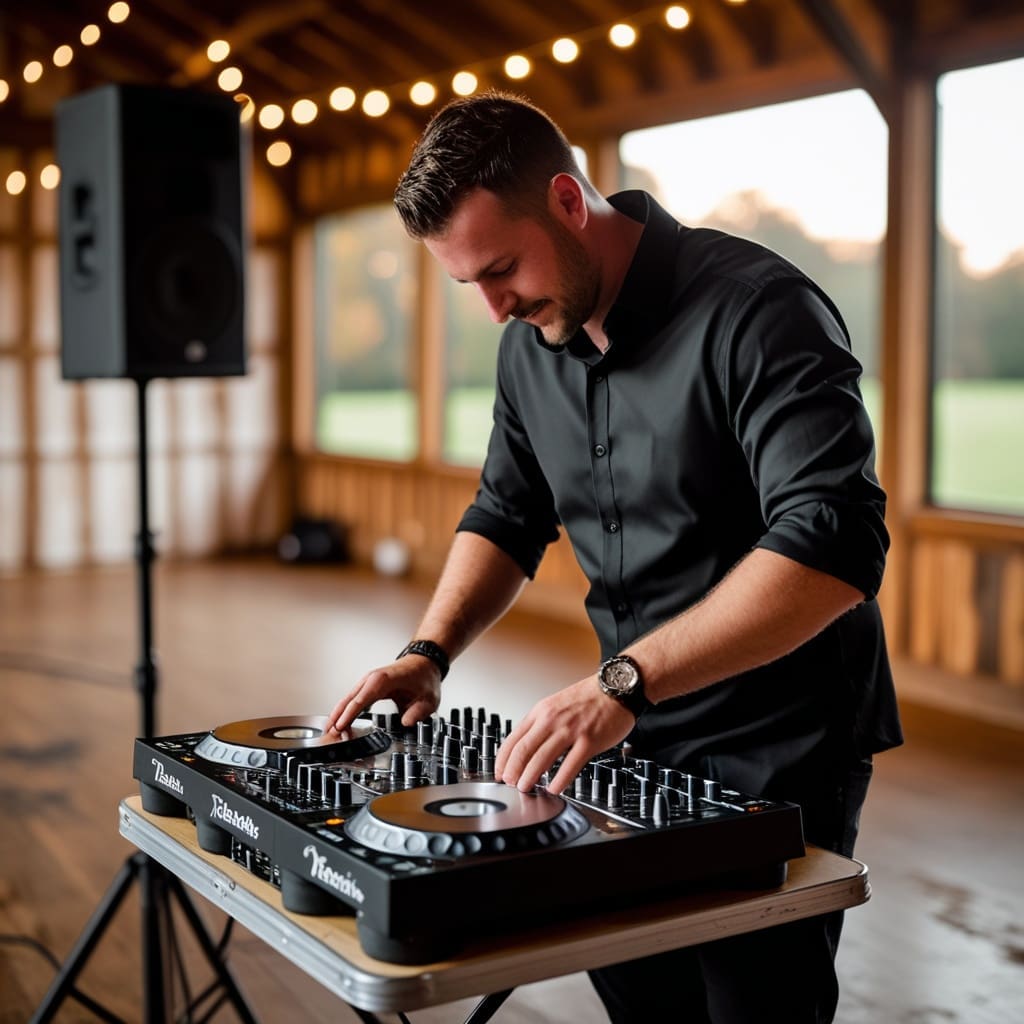
A contract should specify exactly what equipment the DJ brings, including speaker count, wireless microphone quantity, and lighting package details, since “professional sound system” alone is too vague to hold anyone accountable if the equipment underperforms for your guest count. For a reception of 150 guests, industry standards generally call for at least two main speakers rated for the room size, plus a backup speaker or amplifier on-site in case of failure.
Equally important is the personnel substitution clause. Ask whether the contract names a specific DJ by name or simply reserves “a DJ from our company.” If a specific individual is named, confirm what happens if that person becomes ill or unavailable. A well-written clause states that the company will provide a comparable substitute DJ with access to your planning notes, timeline, and song requests, and that you will be notified as soon as reasonably possible, ideally at least 72 hours before the event when the situation allows it.
Overtime, Extra Hours, and Add-On Fees
Overtime charges typically run $100 to $250 per additional hour, billed in 30 or 60 minute increments, and the contract should state clearly whether overtime must be requested and paid in advance or can be settled the night of the event. Some DJs cap total reception time at six hours from the contracted start and refuse to extend past that limit regardless of payment, particularly if venue curfews restrict amplified sound after a set hour such as 11:00 p.m. or midnight, which is common in residential zoning areas.
Other add-on fees worth confirming in advance include:
- Travel fees for venues located more than 25 to 30 miles from the DJ’s home base, often $1 to $2 per mile beyond that radius.
- Ceremony sound add-ons, typically $150 to $400 if the ceremony location is separate from the reception space and requires a second setup.
- Uplighting or dance floor lighting packages, generally $200 to $600 depending on the number of fixtures.
- MC or emcee services for announcements and toasts, sometimes bundled into the base fee and sometimes billed as a $100 to $300 add-on.
- Early setup or teardown outside standard hours, which can add $50 to $150 if you need equipment in place several hours before doors open.
Force Majeure and Weather Clauses
Force majeure clauses excuse both parties from performance obligations when events outside anyone’s control make the wedding impossible, such as natural disasters, government shutdown orders, or venue closure. Since 2020, most wedding vendor contracts have expanded these clauses to explicitly address pandemics, government-mandated gathering limits, and public health emergencies, a change that was rare in contracts written before that period.
A properly drafted force majeure clause should specify what happens to your deposit and payments if the clause is triggered. Some vendors offer a full date transfer with no penalty, while others retain the deposit and only waive cancellation penalties beyond that amount. Confirm whether outdoor weather, such as rain forcing a last-minute venue change, counts as force majeure or whether it falls under the standard cancellation and rescheduling terms instead, since these are treated very differently in most contracts.
Comparing Common Contract Clauses Side by Side
The table below is presented as a structured comparison in list form, since it helps to see how strong, average, and weak versions of the same clause differ in practice.
- Deposit terms: Strong contracts specify an exact percentage (25 to 30 percent) and exact due date. Weak contracts simply say “deposit due at booking” with no percentage stated.
- Cancellation terms: Strong contracts include a dated sliding scale with specific dollar or percentage amounts. Weak contracts state only “deposit is non-refundable” with no further detail on late cancellations.
- Liability insurance: Strong contracts name a specific coverage amount (for example, $1,000,000 per occurrence) and promise a COI on request. Weak contracts do not mention insurance at all.
- Backup equipment: Strong contracts state backup gear will be on-site. Weak contracts make no mention of backup equipment or failure scenarios.
- Overtime fees: Strong contracts list an exact hourly rate. Weak contracts say “overtime available upon request” with no rate listed.
Questions to Ask Before You Sign
Bring this list to your DJ meeting or send it by email before you commit to a deposit:
- What is the exact deposit amount, and is it labeled refundable or non-refundable in the contract language?
- What is the cancellation policy if I need to cancel, broken down by how many days before the event?
- What is the cancellation policy if you, the DJ, need to cancel or become unavailable?
- Can you provide a certificate of insurance showing at least $1 million in general liability coverage?
- Is backup sound equipment brought to every event, and is that stated in writing?
- What is the overtime rate per hour, and how is overtime requested and paid on the day of the event?
- Does the contract name a specific DJ, and what happens if that person cannot perform?
- Are travel fees, ceremony sound, and lighting bundled into the quoted price, or are they separate line items?

Call to Action: Review Before You Sign
Request a full copy of the wedding DJ contract at least one week before your scheduled deposit deadline, and read every clause slowly rather than skimming to the signature line. If any of the terms discussed here, deposit percentage, cancellation windows, insurance coverage, or backup equipment, are missing or vague, ask the vendor to add specific language before you send payment. A reputable DJ will welcome these questions, since a clear contract protects the vendor from disputes just as much as it protects you.
Conclusion
A wedding DJ contract is not paperwork to rush through between cake tastings and venue walkthroughs. It is the document that decides what happens to your money and your reception music if anything deviates from plan, and something almost always does. Reading each clause carefully, asking direct questions about deposits, cancellations, insurance, and backup plans, and getting every verbal promise in writing takes less than an hour but can save your wedding day from turning into a dispute over money instead of a celebration.
Frequently Asked Questions
Is a wedding DJ deposit ever refundable?
Rarely, and only if the contract explicitly states so. Most deposits, sometimes called retainers, are treated as earned the moment you pay them because they compensate the DJ for turning away other bookings on your date. If refundability matters to you, ask the vendor to state the terms in writing rather than assuming a standard policy applies.
What happens if a wedding DJ does not show up?
A well-written contract obligates the company to refund all payments and may include an additional penalty fee. Without that clause, your only recourse is a breach of contract claim, which takes time and does not solve the problem of music on your actual wedding day. This is why confirming the vendor’s backup personnel policy before signing matters so much.
How much liability insurance should a wedding DJ carry?
Most venues require at least $1 million per occurrence and $2 million in aggregate. Ask for a certificate of insurance directly rather than accepting a verbal statement that coverage exists, since some venues will deny entry to uninsured vendors on the day of the event.
Can I negotiate wedding DJ contract terms?
Yes, most clauses including payment schedule, overtime rates, and cancellation windows are negotiable before signing. Once both parties sign, the terms are legally binding, so any changes should be made in writing as a signed addendum rather than a verbal agreement after the fact.
What is a reasonable overtime fee for a wedding DJ?
Typical overtime rates run $100 to $250 per additional hour. Confirm whether the fee is billed in 30 or 60 minute increments and whether payment is due immediately or can be added to a final invoice after the event.