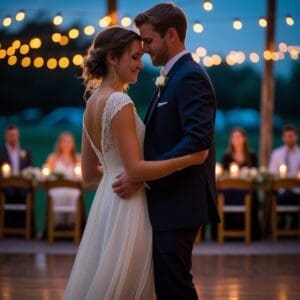
The father daughter dance is one of the most personal moments of your wedding day. Unlike the first dance, which is about your future, this one is about where you came from. The right song tells a small story about two specific people. The wrong one just fills two minutes of floor time.
Most couples default to the same twenty songs every DJ has played for decades. That’s not necessarily bad, but if your relationship with your dad is anything other than “generic and sweet,” there’s probably a better option out there. This guide walks through the full picture: genres, tempo choices, emotional tone, and how to narrow it down to the one that actually fits.
Key Takeaways
- Tempo matters as much as lyrics — a slow song forces a sway, a mid-tempo song gives you options for movement without needing choreography.
- Genre shapes the emotional tone — country songs tend to be sentimental and nostalgic, pop songs feel celebratory, classic rock reads as personal and unconventional.
- Clichés aren’t always wrong — a “common” song is only a problem if it doesn’t genuinely fit your relationship.
- Lyrics deserve a close read — many popular choices have verses that don’t hold up once you actually listen carefully.
- Your dad’s taste matters too — the best songs feel like they belong to both of you, not just the bride.
- Edit length if needed — most songs can be faded out or trimmed by your DJ to hit the 2.5-to-3-minute sweet spot.
What Makes a Father Daughter Dance Song Actually Work?
Quick Answer: A great father daughter dance song has a tempo you can move to comfortably, lyrics that reflect your actual relationship, and an emotional tone that feels genuine rather than forced. It should feel personal, not performative.
Three things determine whether a song works on the dance floor: tempo, lyrical content, and emotional register. Most people focus entirely on lyrics and ignore the other two.
Tempo is practical. A song clocked between 60 and 80 BPM (beats per minute) gives you a natural slow dance without feeling like a funeral march. Songs in the 80-to-110 BPM range allow for easy movement and a lighter mood without requiring real choreography.
Lyrical content needs a second look. Read the full lyrics before committing. Some beloved options include lines about loss, separation, or a daughter “leaving” the family that can hit harder than expected in a room full of people. Others are warm all the way through.
Emotional register is about honesty. If your relationship with your dad is more funny than tearful, a heartfelt ballad might feel like a performance for the guests rather than a real moment for the two of you. Match the mood to the actual relationship.
Which Father Daughter Dance Songs Are the Most Popular?
Quick Answer: The most frequently played father daughter dance songs include “My Girl” by The Temptations, “Isn’t She Lovely” by Stevie Wonder, “I Loved Her First” by Heartland, “Butterfly Kisses” by Bob Carlisle, and “My Wish” by Rascal Flatts.
These songs dominate wedding playlists for a reason. They’re familiar, they read immediately as emotional to a crowd, and most guests know them. Familiarity creates a shared feeling in the room.
The risk is that they can feel like placeholders. If you and your dad don’t actually have a strong connection to any of them, they function more as background music for the moment than as a meaningful choice.
Popular Father Daughter Dance Songs by Genre
| Song | Artist | Genre | Approx. BPM | Emotional Tone |
|---|---|---|---|---|
| My Girl | The Temptations | Motown/Soul | 92 | Warm, celebratory |
| Isn’t She Lovely | Stevie Wonder | R&B/Soul | 92 | Pure joy, upbeat |
| Butterfly Kisses | Bob Carlisle | Country/Pop | 68 | Deeply sentimental |
| I Loved Her First | Heartland | Country | 72 | Nostalgic, bittersweet |
| My Wish | Rascal Flatts | Country Pop | 76 | Hopeful, forward-looking |
| The Way You Look Tonight | Frank Sinatra | Jazz/Standards | 84 | Elegant, timeless |
| You Are the Best Thing | Ray LaMontagne | Folk/Soul | 93 | Laid-back, genuine |
What Are the Best Country Father Daughter Dance Songs?
Quick Answer: Top country choices include “I Loved Her First” by Heartland, “My Wish” by Rascal Flatts, “Cinderella” by Steven Curtis Chapman, “Stealing Cinderella” by Chuck Wicks, and “He Didn’t Have to Be” by Brad Paisley.
Country songs dominate father daughter dance playlists because the genre leans heavily into family, memory, and passing of time. These themes land naturally for this specific moment.
The tradeoff is that many country choices lean sentimental to the point of heavy. Songs like “Butterfly Kisses” and “Cinderella” are genuinely moving, but they also reliably produce visible crying in the first 30 seconds. Know your crowd and your own emotional preference before going that route.
Country Song Comparison: Tone and Fit
| Song | Artist | BPM | Lyrical Focus | Best For |
|---|---|---|---|---|
| I Loved Her First | Heartland | 72 | Dad’s perspective on letting go | Father-led sentiment |
| Cinderella | Steven Curtis Chapman | 66 | Time passing too quickly | Emotional, tearful moments |
| Stealing Cinderella | Chuck Wicks | 70 | Groom earning dad’s approval | Traditional family dynamics |
| He Didn’t Have to Be | Brad Paisley | 78 | Stepfather love and choice | Blended families |
| My Wish | Rascal Flatts | 76 | Hopeful wishes for the future | Optimistic, forward-looking tone |
What Are the Best Classic and Timeless Father Daughter Dance Songs?
Quick Answer: Classic choices include “The Way You Look Tonight” by Frank Sinatra, “What a Wonderful World” by Louis Armstrong, “Stand by Me” by Ben E. King, “Brown Eyed Girl” by Van Morrison, and “Can’t Help Falling in Love” by Elvis Presley.
Classic songs carry a different kind of emotional weight. They feel less like a wedding song and more like a song that existed long before the wedding. That quality can make them feel more personal, especially if your dad grew up with these artists.
“Brown Eyed Girl” works particularly well for lighter, less formal receptions. It has genuine energy and reads more like a celebration than a farewell. “What a Wonderful World” is the opposite: quiet, almost meditative, and works best when you want the room to slow down completely.
Classic Songs: Decade, Tempo, and Mood
| Song | Artist | Era | BPM | Dance Style |
|---|---|---|---|---|
| The Way You Look Tonight | Frank Sinatra | 1950s | 84 | Foxtrot, slow ballroom |
| What a Wonderful World | Louis Armstrong | 1960s | 65 | Gentle sway |
| Stand by Me | Ben E. King | 1960s | 76 | Easy two-step |
| Brown Eyed Girl | Van Morrison | 1967 | 150 | Upbeat, casual movement |
| Can’t Help Falling in Love | Elvis Presley | 1961 | 64 | Slow waltz feel |
Note that “Brown Eyed Girl” at 150 BPM is a full-energy song. If you want to dance to it rather than sway to it, that’s great. If you were expecting a slow dance, it will catch you off guard. Preview every song before you commit.
What Are Some Unique Father Daughter Dance Songs That Aren’t Overplayed?
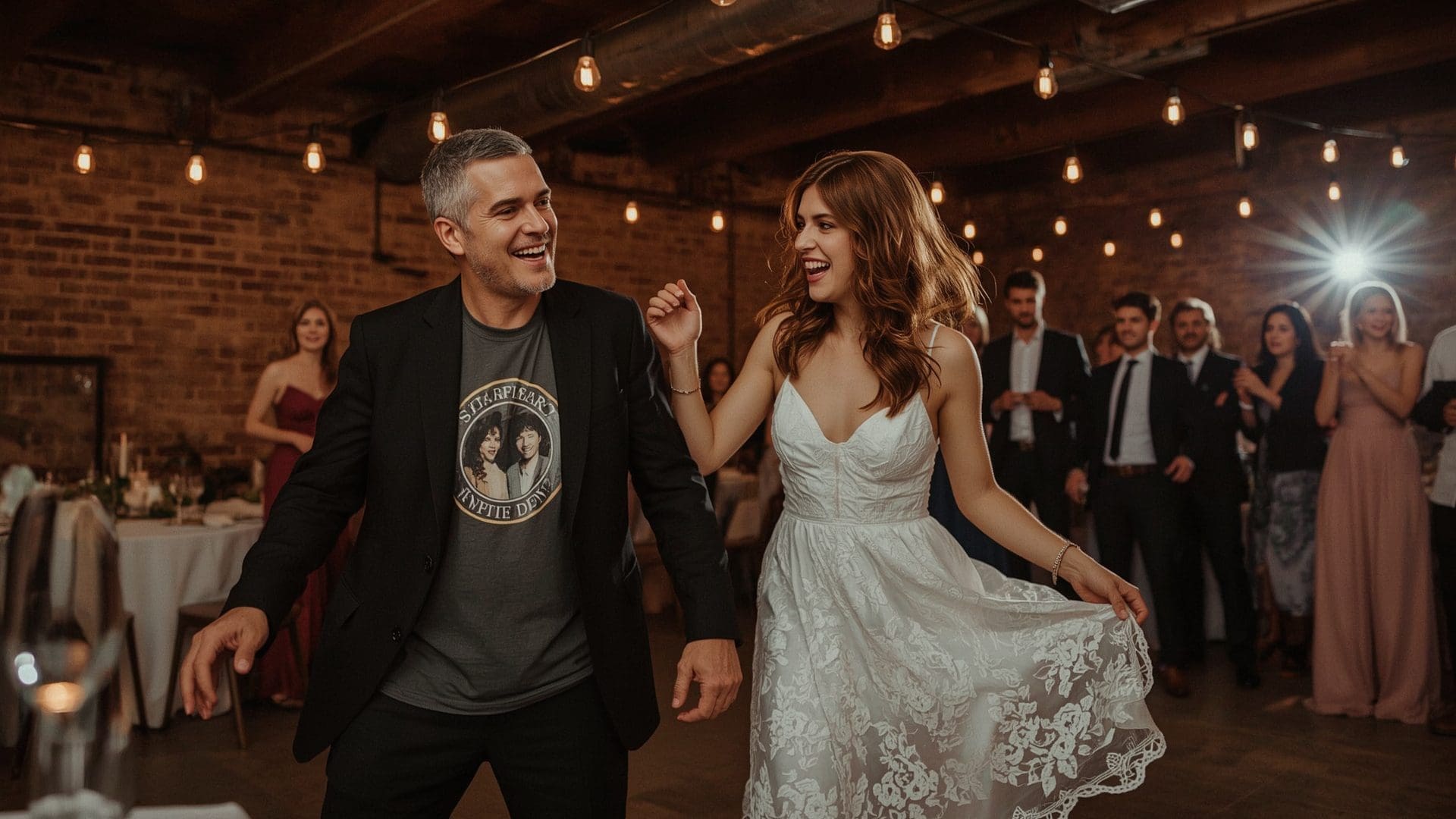
Quick Answer: Less common but genuinely strong choices include “Sweet Child O’ Mine” by Guns N’ Roses, “Forever Young” by Rod Stewart, “Grow Old With Me” by Tom Odell, “Hero” by Enrique Iglesias, and “You’ve Got a Friend” by James Taylor.
Unique doesn’t have to mean obscure. It means songs that haven’t been played at every wedding for the last fifteen years. A well-known song that isn’t a wedding staple can feel more genuine than a traditional choice that everyone in the room predicts the second the intro starts.
“Sweet Child O’ Mine” is an unexpected choice that works surprisingly well. It’s recognizable, it has real emotional pull in the guitar intro, and it signals something about the personality of the family. If you and your dad both love rock music, it’s honest in a way that a standard country ballad wouldn’t be.
Unique Father Daughter Song Options by Personality Type
- Rock family: “Sweet Child O’ Mine” (Guns N’ Roses), “Landslide” (Fleetwood Mac), “The Scientist” (Coldplay)
- Funny or light-hearted: “My Girl” (Madness), “Daughters” (John Mayer), “You Are My Sunshine” (various)
- Indie or alternative: “First Day of My Life” (Bright Eyes), “Better Together” (Jack Johnson), “Bloom” (The Paper Kites)
- Pop and modern: “Grow As We Go” (Ben Platt), “You Learn” (Alanis Morissette), “Golden” (Harry Styles)
- Step-father or non-biological father: “He Didn’t Have to Be” (Brad Paisley), “A Song for My Daughter” (Ray Allaire), “The Greatest Man I Never Knew” (Reba McEntire)
How Do You Choose Between a Slow Song and an Upbeat Song?
Quick Answer: Choose a slow song (60-80 BPM) if you want an emotional, intimate moment and a simple sway is enough. Choose an upbeat song (90-120 BPM) if you want a celebratory feel, enjoy moving, or want the moment to feel more fun than tearful.
The choice between slow and upbeat is really a choice about the emotional tone you want for that two-to-three minute window. Neither is wrong. They just create different experiences for you and for your guests.
A slow song gives the room permission to get emotional. Everyone stops talking and watches. The lighting dims and the moment feels weighted. If that’s what you want, lean into it.
An upbeat song shifts the energy. It signals that this is a celebration, not a goodbye. If your dad is the kind of person who would rather laugh than cry, matching that preference shows genuine understanding of who he is.
Tempo Guide for Father Daughter Dance Songs
| Tempo Range (BPM) | Dance Style | Emotional Feel | Example Songs |
|---|---|---|---|
| 55-70 BPM | Gentle sway only | Deeply emotional, tearful | Cinderella, What a Wonderful World |
| 70-85 BPM | Natural slow dance | Warm, intimate | Butterfly Kisses, I Loved Her First |
| 85-100 BPM | Easy movement, no choreography needed | Celebratory, relaxed | My Girl, The Way You Look Tonight |
| 100-120 BPM | Light two-step or casual dancing | Festive, fun | Isn’t She Lovely, Stand by Me |
| 120+ BPM | Full movement, upbeat dancing | High energy, party-like | Brown Eyed Girl, Sweet Child O’ Mine |
How Do You Avoid Picking a Cliché Father Daughter Dance Song?
Quick Answer: A song becomes a cliché when it’s chosen by default, not by meaning. Ask whether the song reflects something real about your relationship with your dad. If you can replace it with any other popular choice and feel the same, it’s probably a placeholder rather than a real pick.
The cliché problem is less about the song itself and more about the reasoning behind the choice. “Butterfly Kisses” played at a wedding where the father and daughter genuinely love that song is not a cliché. The same song played because it’s what people do is.
One useful test: ask your dad if the song reminds him of anything specific. If he immediately connects it to a memory, a road trip, a moment, or even just a feeling he associates with you, that’s the right song. If he shrugs, keep looking.
Another angle: think about what your dad actually listens to. If he’s been a country music fan his whole life and you pick a Frank Sinatra song because it “sounded like a wedding,” that’s the real cliché. Match the music to the person, not to the occasion.
What Should You Do If Your Relationship With Your Dad Is Complicated?
Quick Answer: If your father-daughter relationship is complicated, step-fathers, father figures, or close family friends can stand in for this dance. Choose a song that fits that specific relationship rather than a traditional “dad” song. Songs like “He Didn’t Have to Be” or “You’ve Got a Friend” work well for non-traditional situations.
Not every bride has a straightforward relationship with her father, and the wedding industry doesn’t always reflect that reality. The father daughter dance is a tradition, not a requirement. You can skip it, modify it, or reframe it entirely.
Options worth considering include dancing with a stepfather, a grandfather, a brother, an uncle, or a close family friend. The role matters more than the biological title. Pick a person who genuinely represents that kind of love in your life, and then find a song that fits that specific dynamic.
You can also do a group dance. Some couples invite all fathers and daughters on the floor simultaneously after the formal dance begins. This turns an intimate moment into a shared one and takes some pressure off the spotlight.
How Long Should a Father Daughter Dance Song Be?
Quick Answer: The ideal length for a father daughter dance song is 2.5 to 3 minutes. Most original recordings run 3-5 minutes, but a skilled DJ can fade out any song cleanly at the right moment without it feeling abrupt.
Song length is almost never a dealbreaker because most DJs handle this routinely. You don’t need to find a song that happens to be exactly 2.5 minutes. You need to find the right song, then tell your DJ where you want it to end.
If you love the first two verses and chorus of a song but the bridge goes somewhere emotionally different, mark the edit point. The DJ can fade out before the song changes mood. This is especially useful with songs like “Sweet Child O’ Mine,” which builds dramatically in its second half.
When Should the Father Daughter Dance Happen During the Reception?
Quick Answer: The father daughter dance typically happens directly after the first dance, early in the reception. This keeps all formal dances grouped together and lets guests settle into the celebration before open dancing begins.
Most reception timelines place the first dance, then the father daughter dance, then the mother son dance (if included) all in sequence. This grouping works because it gets the formal moments done early, gives guests a clear emotional arc, and opens the floor for everyone afterward.
Some couples prefer to move the father daughter dance to right after dinner as a way to re-engage guests who have been seated for a while. Both placements work. Just coordinate with your DJ and planner so the transitions feel seamless rather than abrupt.
What Are the Most Common Mistakes People Make Choosing This Song?
Quick Answer: The most common mistakes are choosing based on popularity alone, not reading the full lyrics, picking a song with lyrics about romantic love rather than parental love, and ignoring tempo until they’re on the dance floor with no idea what to do.
Reading the full lyrics is the one step most people skip. Several well-known songs have lines that sound emotional in a vague sense but actually describe a romantic relationship rather than a father-daughter one. Playing those lyrics over a PA system in front of two hundred people is awkward.
Another common issue is ignoring how the song actually sounds without headphones in a large room. A song that feels intimate on your phone speaker can feel completely different at reception volume with a full crowd. Ask your DJ to play a clip through their actual system before you finalize the choice.
Finally, some couples choose a song that one person loves and the other has no connection to. The best dance songs are genuinely shared. If your dad has never heard the song you picked, that’s worth reconsidering.
Frequently Asked Questions
Can you have two father daughter dance songs?
Yes. Some brides dance with both a biological father and a stepfather, using a different song for each. Your DJ can blend the two songs or simply play them back to back. Coordinate timing in advance so both dances feel intentional rather than rushed.
What if my father passed away? Can I still do this dance?
Absolutely. Many brides honor a late father by dancing with another family member while a meaningful song plays, or by having an empty chair moment with a photo display. Some choose a song that was special to their father specifically as a tribute. There is no single right way to handle this.
Should the bride or the father pick the song?
The best approach is choosing it together. Start by each person writing down two or three songs that feel meaningful, then compare. Overlap means you’ve found your song. If there’s no overlap, talk about why each choice matters. The conversation itself usually helps narrow it down.
Is it okay to use a song that isn’t specifically about fathers and daughters?
Yes, and some of the best choices aren’t. A song that was playing during a specific memory, a family road trip, or a moment you both associate with your relationship carries more weight than a technically appropriate song with no personal history behind it.
How do you handle a father daughter dance if the bride has more than one father figure?
Some brides invite multiple father figures onto the floor after the first 30 seconds of the dance, turning a solo moment into a group one. Others do brief individual dances with each person. Talk to your DJ about the logistics so the moment feels organized and everyone feels included rather than left out.
What genre works best for an outdoor or casual wedding?
Folk, soul, and acoustic pop tend to work best for outdoor or casual settings. Artists like Jack Johnson, Ray LaMontagne, and James Taylor fit a relaxed outdoor atmosphere without feeling too formal. Avoid heavy orchestration or dramatic ballads if the setting is light and open-air.